Listen to this article in summarized format
×
Subscribe to

Unlock AI Briefing and Premium Content
New Year Offer 24 Hours Left
Subscribe NowAlready a member? Sign In
What's Included
- Exclusive Stories
- Daily ePaper Access
- Smart Market Tools
- Curated Investment Ideas
- Ad-lite Experience
Subscription

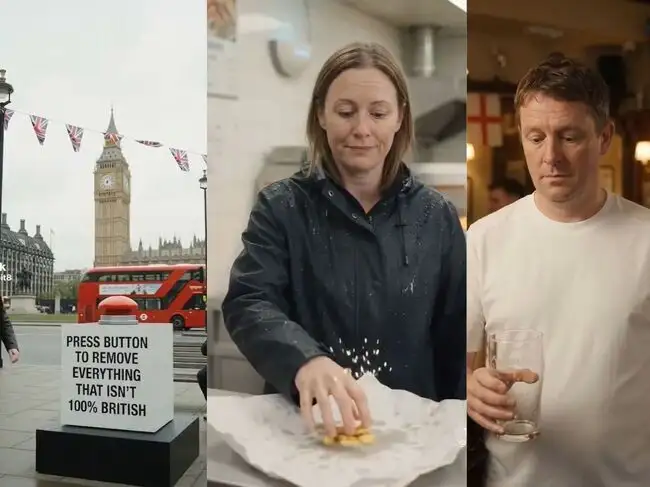
A satirical video titled “Proper Britain here we come” questions what would remain of British life if everything that was not entirely British were suddenly removed. Beginning with a man pressing a large red button against a backdrop of Big Ben, the video imagines familiar foods, drinks, everyday objects and cultural references disappearing one by one, exposing their origins beyond Britain.
The man presses the button, which is labelled with an instruction to remove everything that is not 100% British. What follows is a series of comic scenes in which people discover that ordinary parts of their daily lives have international roots. The video eventually turns the question back on the man who initiated the process, revealing that his own ancestry is far from exclusively British.
Also Read: Manager eats employee's lunch multiple times, employee eats her food in retaliation; now faces HR's disciplinary actions
A woman at a restaurant encounters a similar problem when her fish and chips vanish before she can eat them. The chef explains that the ship used for the fish was Portuguese and the potatoes were Peruvian. When she asks what she is paying for, he replies that she is paying for the paper, which is British.
The video uses these exchanges to highlight how dishes commonly associated with British culture rely on ingredients and influences originating elsewhere.
Inside a pub, a group of men lose a dish they are eating. One says it was invented in Glasgow, only for the waiter to point out that its spices were not British. In another exchange, a customer's lager disappears, with the bartender explaining that the drink was German. When asked whether anything British remains, the bartender points to two glasses of warm bitter and tap water.
The video also shows a child asking his mother for ketchup, only to be told that it is Chinese. In another scene, a table laden with food, including fried potatoes, carrots and ham, gradually empties until only bread remains.
Together, these moments build the joke that removing everything with a foreign origin would leave people unable to enjoy many of the foods and drinks they associate with Britain.
The scene refers to the British royal family's German ancestry and the decision by King George V to adopt the House of Windsor name in 1917, during the First World War.
By including the monarchy alongside food and drink, the video broadens its argument beyond everyday consumption to the historical influences that have shaped British institutions and national identity.
His mother explains that his father was from Lisbon and worked as a waiter. The revelation turns the premise against the man himself: after initiating a purge intended to remove everything that was not entirely British, he discovers that his own family background is substantially connected to another country.
The video ends with the broader suggestion that nobody is entirely one thing. Through humour and exaggerated disappearances, it challenges the idea that a country's culture can be neatly separated from outside influences.
Rather than offering a literal account of British history or the origins of every item shown, the video uses satire to make a point about how food, language, traditions, institutions and family histories are shaped by centuries of cultural exchange.
(You can now subscribe to our Economic Times WhatsApp channel)
The man presses the button, which is labelled with an instruction to remove everything that is not 100% British. What follows is a series of comic scenes in which people discover that ordinary parts of their daily lives have international roots. The video eventually turns the question back on the man who initiated the process, revealing that his own ancestry is far from exclusively British.
Also Read: Manager eats employee's lunch multiple times, employee eats her food in retaliation; now faces HR's disciplinary actions
Tea, fish and chips disappear as their origins are revealed
In one scene, a man sitting in a park loses his sandwich just as he is about to take a bite. Nearby, three construction workers drinking tea find that their brew has disappeared. When one asks where his tea has gone, the supervisor explains that tea comes from India and sugar from the Caribbean. Asked what remains, he lifts a kettle and replies that only hot water is left.A woman at a restaurant encounters a similar problem when her fish and chips vanish before she can eat them. The chef explains that the ship used for the fish was Portuguese and the potatoes were Peruvian. When she asks what she is paying for, he replies that she is paying for the paper, which is British.

The video uses these exchanges to highlight how dishes commonly associated with British culture rely on ingredients and influences originating elsewhere.
Lager, pub food and even ketchup are caught in the purge
The disappearing objects extend beyond food. A man walking his German shepherd in a park watches the dog vanish and simply shrugs, accepting that it was German.Inside a pub, a group of men lose a dish they are eating. One says it was invented in Glasgow, only for the waiter to point out that its spices were not British. In another exchange, a customer's lager disappears, with the bartender explaining that the drink was German. When asked whether anything British remains, the bartender points to two glasses of warm bitter and tap water.
The video also shows a child asking his mother for ketchup, only to be told that it is Chinese. In another scene, a table laden with food, including fried potatoes, carrots and ham, gradually empties until only bread remains.
Together, these moments build the joke that removing everything with a foreign origin would leave people unable to enjoy many of the foods and drinks they associate with Britain.
Video turns its attention to the British monarchy
The satire also extends to the country's royal history. A woman standing outside Buckingham Palace asks a guard where the king has gone. He replies that the king has left for Germany and changed his name in 1917.The scene refers to the British royal family's German ancestry and the decision by King George V to adopt the House of Windsor name in 1917, during the First World War.
By including the monarchy alongside food and drink, the video broadens its argument beyond everyday consumption to the historical influences that have shaped British institutions and national identity.
Man behind the button discovers his own ancestry
In the final sequence, the man who pressed the red button sits on a leather sofa with his mother and shows her a DNA ancestry result. The results displayed in the video attribute 4% of his ancestry to Britain and Ireland and 51% to Portugal.His mother explains that his father was from Lisbon and worked as a waiter. The revelation turns the premise against the man himself: after initiating a purge intended to remove everything that was not entirely British, he discovers that his own family background is substantially connected to another country.
The video ends with the broader suggestion that nobody is entirely one thing. Through humour and exaggerated disappearances, it challenges the idea that a country's culture can be neatly separated from outside influences.
Rather than offering a literal account of British history or the origins of every item shown, the video uses satire to make a point about how food, language, traditions, institutions and family histories are shaped by centuries of cultural exchange.
Add  as a Reliable and Trusted News Source
 Add Now!
(You can now subscribe to our Economic Times WhatsApp channel)
Read More News on
Proper Britain here we come videowhat is truly BritishBritish identity video explainedwhat would happen if everything foreign disappeared from BritainBritish foods with foreign originswhere does tea come fromfish and chips originBritish royal family German ancestryKing George V changed royal family nameman’s DNA test reveals Portuguese ancestry











 ETPrime Membership