

 AP
Democrats captured Georgia's governor's office for the first time since 1998 in Tuesday's midterm elections, securing a major victory in a key presidential battleground as voter discontent over the economy, inflation, healthcare and the future of democracy weighed on Republicans.
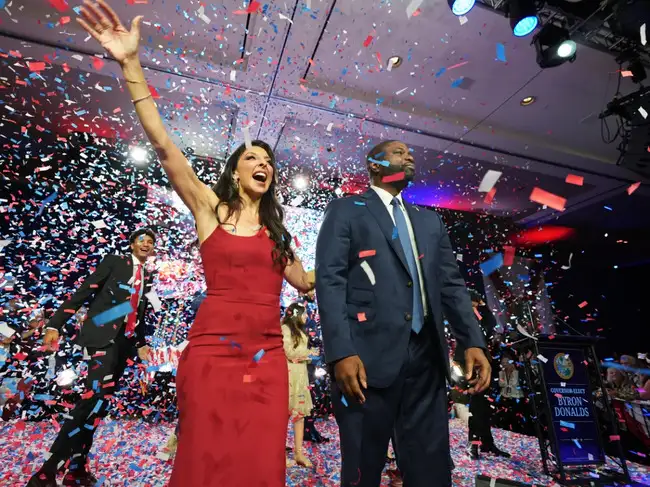
In Florida, however, Republicans retained control of the governor's office, with US Representative Byron Donalds defeating Democrat David Jolly, a former Republican congressman who later became an independent before running as a Democrat. Vote counting was under way in several other closely watched contests, including Texas and Ohio.
Also Read: US Midterm Results 2026: Democrats set to take control of House, DDHQ projects
The Georgia victory gave Democrats fresh momentum in their bid to secure a majority of the country's governorships. Keisha Lance Bottoms, a former Atlanta mayor and White House adviser under former President Joe Biden, defeated Republican Rich Jackson, a billionaire who spent more than $200 million of his own money on the campaign.
Bottoms overcame Republican criticism of her handling of Atlanta during the Covid-19 pandemic to become the country's first Black woman governor. Her win also ended Republican control of Georgia's state government.
During the campaign, Bottoms accused Jackson of building his wealth through a broken healthcare system and profiting from people's suffering.
The scale of Democratic opportunities in this year's gubernatorial elections reflects the political challenges facing Republicans under President Donald Trump, whose poor approval ratings have become a drag on his party. In the weeks before voting, Trump travelled to heavily Republican areas to campaign alongside GOP gubernatorial candidates seeking to benefit from his support.
Thirty-six states, representing about 80% of the US population, were electing governors on Tuesday. Nineteen of those states had open contests, while the rest featured incumbents seeking another term.
Before the elections, Democratic governors represented states accounting for 60% of the country's population, but Republicans held 26 of the 50 governorships.
"Our goal is not just the majority of the population, but the majority of states," Meghan Meehan-Draper, executive director of the Democratic Governors Association, told The Associated Press.
Democrats last held a majority of governorships in 2006, when they flipped six offices during the final midterm elections of Republican President George W. Bush's second term. Republicans regained the advantage four years later.
Follow our live updates of the US Midterm Elections here: Key Senate battlegrounds tilt towards Democrats, party eyes 230 House seats
A larger Democratic presence in state governments could create more resistance to Trump's policies, with governors playing an important role in disputes over federal authority, immigration enforcement, National Guard deployments, conditions attached to federal funding and election rules.
Trump has repeatedly tested the limits of state authority, particularly in Democratic-led states, as his administration has sought to expand federal involvement in areas traditionally managed by state governments.
Alaska has not elected a Democratic governor since 1998, while Iowa and Ohio have not done so since 2006.
Republicans, meanwhile, viewed Kansas as their strongest opportunity to gain an executive office. The traditionally Republican state had a Democratic governor, Laura Kelly, who was term-limited and could not seek re-election.
Wisconsin was another target for the GOP, with Republican US Representative Tom Tiffany challenging Democrat David Crowley, the Milwaukee County executive who narrowly secured his party's nomination.
Republicans were also looking to capture Michigan's open governor's office and make gains in Oregon, where Democratic Governor Tina Kotek faced another challenge from Republican state Senator Christine Drazan.
Democrats, in turn, saw potential openings in Texas, Oklahoma and Nebraska.
Acton's mother had lost custody of her children decades earlier after her husband, Acton's stepfather, was indicted for raping Acton when she was a child.
The advertisement attracted criticism from both parties, including Republican Governor Mike DeWine. Trump, however, praised it, while Vice President JD Vance, who is from Ohio, defended the campaign's decision.
In Texas, Democratic state Representative Gina Hinojosa mounted a competitive challenge to Republican Governor Greg Abbott, who was seeking a third term. No Democrat has won a statewide election in Texas since 1994.
Hinojosa entered the general election with a substantial fundraising disadvantage after emerging from the primary with only a fraction of Abbott's campaign funds. In September, a group of Latino politicians and political figures appealed to the Democratic Governors Association for $10 million in support, arguing that Hinojosa had made the contest competitive.
The association allocated $1 million to her campaign, considerably less than the amounts it spent in Arizona, Georgia, Iowa, Michigan, Nevada, Ohio and Wisconsin.
Abbott's decision to skip Trump's campaign rally in Texas also stood out, highlighting the political sensitivities surrounding the president's involvement in the race.
Governorships were also being contested in all six swing states that played a decisive role in the 2024 presidential election: Arizona, Georgia, Michigan, Nevada, Pennsylvania and Wisconsin.
The outcomes could have implications well beyond the current election cycle. State governors wield considerable influence over election administration, making the results particularly significant ahead of the 2028 presidential election as Trump seeks a greater federal role in overseeing elections.
Three Democratic governors widely viewed as potential presidential contenders in 2028 also secured re-election: Wes Moore in Maryland, JB Pritzker in Illinois and Josh Shapiro in Pennsylvania.
Political analysts say the scale of their victories, along with fundraising strength and the ability to help other Democrats win, could strengthen their standing among donors and party activists as the next presidential race approaches.
In Texas, Hinojosa was seeking to become the state's first Latina governor, while Deb Haaland in New Mexico was aiming to become the first Native American woman to lead a US state.
The elections could also expand Black representation among the country's governors. Seven Black candidates nominated by major parties were on gubernatorial ballots, in addition to Maryland Governor Wes Moore.
Only three Black candidates have been elected governor in the country's nearly 250-year history.
(You can now subscribe to our Economic Times WhatsApp channel)
In Florida, however, Republicans retained control of the governor's office, with US Representative Byron Donalds defeating Democrat David Jolly, a former Republican congressman who later became an independent before running as a Democrat. Vote counting was under way in several other closely watched contests, including Texas and Ohio.
Also Read: US Midterm Results 2026: Democrats set to take control of House, DDHQ projects
The Georgia victory gave Democrats fresh momentum in their bid to secure a majority of the country's governorships. Keisha Lance Bottoms, a former Atlanta mayor and White House adviser under former President Joe Biden, defeated Republican Rich Jackson, a billionaire who spent more than $200 million of his own money on the campaign.
Bottoms overcame Republican criticism of her handling of Atlanta during the Covid-19 pandemic to become the country's first Black woman governor. Her win also ended Republican control of Georgia's state government.

During the campaign, Bottoms accused Jackson of building his wealth through a broken healthcare system and profiting from people's suffering.
The scale of Democratic opportunities in this year's gubernatorial elections reflects the political challenges facing Republicans under President Donald Trump, whose poor approval ratings have become a drag on his party. In the weeks before voting, Trump travelled to heavily Republican areas to campaign alongside GOP gubernatorial candidates seeking to benefit from his support.
Thirty-six states, representing about 80% of the US population, were electing governors on Tuesday. Nineteen of those states had open contests, while the rest featured incumbents seeking another term.
Before the elections, Democratic governors represented states accounting for 60% of the country's population, but Republicans held 26 of the 50 governorships.
"Our goal is not just the majority of the population, but the majority of states," Meghan Meehan-Draper, executive director of the Democratic Governors Association, told The Associated Press.
Democrats last held a majority of governorships in 2006, when they flipped six offices during the final midterm elections of Republican President George W. Bush's second term. Republicans regained the advantage four years later.
Follow our live updates of the US Midterm Elections here: Key Senate battlegrounds tilt towards Democrats, party eyes 230 House seats
A larger Democratic presence in state governments could create more resistance to Trump's policies, with governors playing an important role in disputes over federal authority, immigration enforcement, National Guard deployments, conditions attached to federal funding and election rules.
Trump has repeatedly tested the limits of state authority, particularly in Democratic-led states, as his administration has sought to expand federal involvement in areas traditionally managed by state governments.
A dozen gubernatorial contests in focus
Beyond Georgia, Democrats saw opportunities to capture governorships in Alaska, Iowa and Ohio, where incumbents were barred from seeking another term, as well as Nevada, where state Attorney General Aaron Ford challenged Republican Governor Joe Lombardo.Alaska has not elected a Democratic governor since 1998, while Iowa and Ohio have not done so since 2006.
Republicans, meanwhile, viewed Kansas as their strongest opportunity to gain an executive office. The traditionally Republican state had a Democratic governor, Laura Kelly, who was term-limited and could not seek re-election.
Wisconsin was another target for the GOP, with Republican US Representative Tom Tiffany challenging Democrat David Crowley, the Milwaukee County executive who narrowly secured his party's nomination.
Republicans were also looking to capture Michigan's open governor's office and make gains in Oregon, where Democratic Governor Tina Kotek faced another challenge from Republican state Senator Christine Drazan.
Democrats, in turn, saw potential openings in Texas, Oklahoma and Nebraska.
Ohio and Texas races attract national attention
Ohio's gubernatorial contest drew national attention after Republican candidate Vivek Ramaswamy's campaign released an advertisement featuring criticism of Democratic nominee Amy Acton by her estranged mother.Acton's mother had lost custody of her children decades earlier after her husband, Acton's stepfather, was indicted for raping Acton when she was a child.
The advertisement attracted criticism from both parties, including Republican Governor Mike DeWine. Trump, however, praised it, while Vice President JD Vance, who is from Ohio, defended the campaign's decision.
In Texas, Democratic state Representative Gina Hinojosa mounted a competitive challenge to Republican Governor Greg Abbott, who was seeking a third term. No Democrat has won a statewide election in Texas since 1994.
Hinojosa entered the general election with a substantial fundraising disadvantage after emerging from the primary with only a fraction of Abbott's campaign funds. In September, a group of Latino politicians and political figures appealed to the Democratic Governors Association for $10 million in support, arguing that Hinojosa had made the contest competitive.
The association allocated $1 million to her campaign, considerably less than the amounts it spent in Arizona, Georgia, Iowa, Michigan, Nevada, Ohio and Wisconsin.
Abbott's decision to skip Trump's campaign rally in Texas also stood out, highlighting the political sensitivities surrounding the president's involvement in the race.
Swing states hold stakes beyond 2026
In several major states, Democrats were expected to retain control. New York Governor Kathy Hochul won re-election, while former US health and human services secretary Xavier Becerra was expected to secure victory in California.Governorships were also being contested in all six swing states that played a decisive role in the 2024 presidential election: Arizona, Georgia, Michigan, Nevada, Pennsylvania and Wisconsin.
The outcomes could have implications well beyond the current election cycle. State governors wield considerable influence over election administration, making the results particularly significant ahead of the 2028 presidential election as Trump seeks a greater federal role in overseeing elections.
Three Democratic governors widely viewed as potential presidential contenders in 2028 also secured re-election: Wes Moore in Maryland, JB Pritzker in Illinois and Josh Shapiro in Pennsylvania.
Political analysts say the scale of their victories, along with fundraising strength and the ability to help other Democrats win, could strengthen their standing among donors and party activists as the next presidential race approaches.
2026 elections could deliver historic firsts
The gubernatorial contests also offered the possibility of several historic milestones.In Texas, Hinojosa was seeking to become the state's first Latina governor, while Deb Haaland in New Mexico was aiming to become the first Native American woman to lead a US state.
The elections could also expand Black representation among the country's governors. Seven Black candidates nominated by major parties were on gubernatorial ballots, in addition to Maryland Governor Wes Moore.
Only three Black candidates have been elected governor in the country's nearly 250-year history.
Add  as a Reliable and Trusted News Source
 Add Now!
(You can now subscribe to our Economic Times WhatsApp channel)






 ETPrime Membership