Business News›News›International›US News›The nickel still costs more to make than its face value; the U.S. Mint shipped about 600 million in 2025 at 13.31 cents each
The Economic Times daily newspaper is available online now.
For the past twenty years, the production of nickels has been unprofitable, with costs surpassing their actual value. Increasing metal prices have intensified these production challenges. The U.S. Mint continues to manufacture nickels to meet the ongoing demand from different industries, despite the losses incurred. Although alternative materials have been investigated, none have proven effective so far. To sustain economic stability, the Mint manages its coin circulation program holistically.
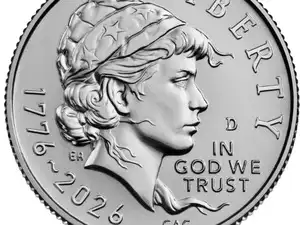
A nickel coin from Denver (Image credit: United States Mint)
Every time someone gets their hands on a nickel, the coin appears to be worth exactly what its face says, five cents. However, what remains hidden behind this small coin is a problem in manufacturing that started in the past 20 years. In the fiscal year (FY) 2025, the U.S. Mint spent around 13.31 cents to manufacture and distribute each nickel, thus costing more to create each coin instead of just having an initial value before it enters circulation.
This was not a new problem either. According to the U.S. Mint's FY 2025 Annual Report, FY 2025 marked the 20th consecutive year in which the production cost of the nickel exceeded its face value. During FY 2025, the Mint shipped roughly 600 million nickels into circulation to meet demand from banks and businesses, even though each one represented a financial loss for the government.
Why does nickel cost so much
The contemporary Jefferson nickel is made from an alloy containing 75% copper and 25% nickel and has changed very little in composition since 1866. Significantly, metals become more expensive over time. Rising prices for raw materials, manufacturing, labor, transportation, and distribution have steadily pushed production costs above the coin's face value, and therefore it has become much more expensive.
Even though the Mint is constantly exploring the possibility of using new materials, introducing another alloy is a rather complicated process. Any change in the composition of this specific alloy must ensure durability and compatibility with vending machines, parking meters, transit fare systems, and coin-counting equipment, and remain recognizable to the public. Even small changes might require making adjustments and expensive updates to thousands of machines across the country.
Live Events
A museum photograph from the Smithsonian’s National Numismatic Collection (Image credit: Wikimedia Commons)
Despite twenty years of losses
The production of the nickel became more expensive than its actual value in the mid-2000s as metal prices climbed sharply. Since then, production costs have remained above five cents. The problem is not limited to the value of the copper and nickel inside the coin. The process of making circulating coins involves purchasing metal, preparing blanks, striking designs, quality inspections, packaging, shipping, and distributing coins through the Federal Reserve. Each step adds to the total cost of placing nickels into circulation. Despite the losses, the Mint continued producing the nickel because Congress requires it to supply enough circulating coins to support commerce across the United States. Businesses, banks, transit systems, laundromats, vending machines, and millions of cash transactions still depend on a steady supply of five-cent coins. Their availability, rather than profitability, remained the Mint's primary responsibility.
For many years, researchers have explored whether it is possible to manufacture the nickel using cheaper alternative materials while guaranteeing performance quality. Congress directed the Mint to study alternative metallic compositions under the Coin Modernization, Oversight, and Continuity Act, leading to years of testing involving plated steel and other metal combinations. Although many alternatives turned out to be promising at the lab stages of testing, none have replaced traditional copper-nickel alloys. Any alternative material would need to balance production costs with reliability, sturdiness, safety, and compatibility with coin-operated mechanisms across the United States.
Although producing nickels at a loss may seem unsustainable, the U.S. Mint does not evaluate each denomination in isolation. Instead, it runs its nationwide coin circulation program as a whole. Higher denominations, such as quarters and dimes, generate profits because they cost only a fraction of their face value, helping offset the losses on nickels and pennies and ensuring the smooth operation of the country’s coin circulation. Despite being expensive to produce, the nickel remains important to the U.S. cash economy, as it is still needed to make exact change for many cash transactions, including purchases in stores, vending machines, and banking services.
By FY 2025, the U.S. Mint had produced nickel at a loss for the 20th consecutive year as it looked for viable ways to save money without jeopardizing performance or interfering with the exchange of goods and services. Whatever the eventual solution is, be it new materials, better manufacturing, or something that Congress does, the nickel is an expression of the delicate balance of economics, interest from the public, and the reality of dealing with billions of coins floating around in the United States.





 as a Reliable and Trusted News Source
 Add Now!