Business News›News›International›US News›Candle wax can be easier to remove when hardened; freeze it first, then use a warm iron and paper towels to lift residue from fabric
The Economic Times daily newspaper is available online now.
To effectively remove candle wax from fabric, begin by freezing the wax to solidify it. Once hardened, gently scrape the fabric to lift off as much wax as possible. Follow this by applying heat with an iron to eliminate any remaining traces. For faint stains that linger, a specialized stain remover may be necessary. Always handle heated materials cautiously and refer to care instructions to achieve optimal results.
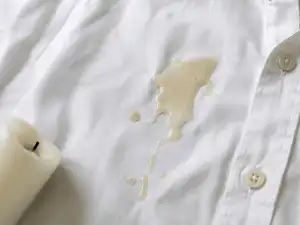
Candle wax spilled on a white shirt (Representative image | Image credit: ChatGPT)
It might seem easy to scrape candle wax off clothes, a kitchen table, or a tablecloth right away, but experts from Iowa State University Extension point out that it is easier to remove the wax when it is hard than when it is soft. The guidance recommends waiting for the wax to harden before trying to remove it. The guidance adds that if the wax does not come off with gentle scraping, placing the item in the freezer allows the wax to freeze completely so it can "pop off" with much less effort. After most of the hardened wax has been removed, any remaining residue can be lifted by placing the fabric between paper towels and pressing it with a warm iron, allowing the melted wax to transfer onto the paper.
Freezing comes before heat
A warm iron over paper towels to lift away the remaining wax (Representative image | Image credit: ChatGPT)
Although it may seem unusual to put clothing with wax stains in the freezer, freezing converts the wax from a soft, sticky substance into a solid, making it easier to remove. Hardened wax can be chipped away more easily and allows you to remove wax stains from fabric with little effort. Heat can only be applied after most of the wax has been eliminated. The extension guidance recommends placing the stained area between two pieces of paper towel and ironing on top of them using a warm iron. As the wax melts, it is absorbed by the paper towels rather than being left on the fabric. By replacing the paper towels with new ones and repeating this step several times, one can remove almost all the wax from the fabric.
The same general principle applies to carpets, but with one slight variation. Instead of freezing the carpet, the guidance recommends securing ice or an ice pack on top of the wax and letting it sit for a minimum of 10 minutes. Keeping the ice inside a sealed bag prevents meltwater from soaking into the carpet and avoids adding unnecessary moisture to the fibers. Once the wax has hardened, it can be scraped off, and the rest can be wiped with paper towels and a warm iron.
Live Events
How to remove the stain left behind
Even after the wax itself is gone, a faint oily stain may still remain on the fabric, particularly if a colored candle was used. The guidance recommends placing the stained area upside down on a clean paper towel while applying a stain removal agent, but without rubbing it in. Once the area is dry, the fabric can be washed according to the laundry instructions or its care label. This final step is important because candle wax is often made with oils and, in some cases, added colorants. Removing only the hardened wax may leave behind a stain that becomes more noticeable after washing if it is not treated first.
Patience is always the key
One reason for freezing the wax is that it becomes hard and brittle, making it easier to scrape off gently. But forceful scraping can push softened wax deeper into the fabric or damage delicate fibers. Allow the wax to harden so most of it can be removed easily before using heat to lift the remaining residue. This same caution applies to the warm iron method. The iron should be warm enough but not extremely hot, and clean paper towels should be replaced as they soak up the melted wax. Continuing with fresh paper towels prevents the wax from going back onto the fabric and helps in removing as much of the residue as possible prior to washing.
A few simple precautions to improve results
Like many stain-removal methods, candle wax removal works best if the cleaning instructions indicate how the cloth should be taken care of. Before applying heat or any stain-removal method, test a small hidden area to make sure the material can handle the treatment. Delicate materials or garments labeled as dry clean only should be cleaned according to their care instructions rather than treated with a household iron.
And if colored candle wax leaves a faint dye stain, further treatment after the wax has been removed is necessary. As an alternative, blotting any trace of color with an appropriate stain remover is recommended, while carpets with colored wax may also require additional treatment with rubbing alcohol after the wax has been lifted.





 as a Reliable and Trusted News Source
 Add Now!

