Listen to this article in summarized format
×
Subscribe to

Unlock AI Briefing and Premium Content
New Year Offer 24 Hours Left
Subscribe NowAlready a member? Sign In
What's Included
- Exclusive Stories
- Daily ePaper Access
- Smart Market Tools
- Curated Investment Ideas
- Ad-lite Experience
Subscription

 ET Online
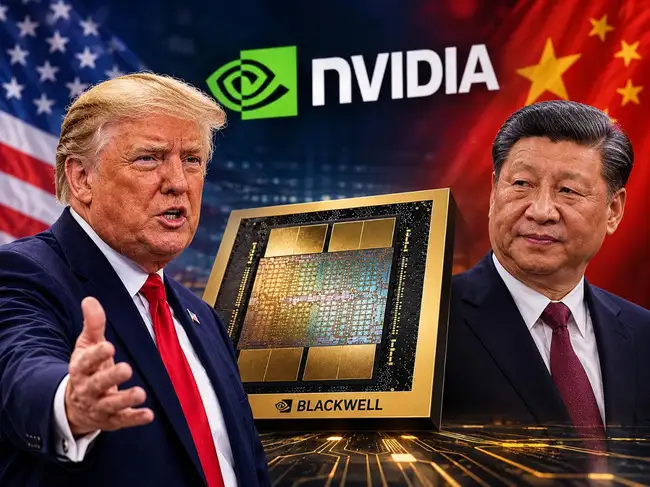
US President Donald Trump on Thursday hinted at a potential sale of Nvidia Corp.’s highly sought Blackwell chips to China in the future, when they were no longer among the most advanced on the market.
“In two years or three years, I would, if I were here, I would say, go ahead. You can now sell Blackwells because they’ll have something else,” he said in an interview with Fox News from Shenzhen, China.
“As you know, they’re already working on something else that’s going to be superseding the Blackwell chip,” he added. “But in two or three years, I’ll say, go do the Blackwells because they’ll be able to do it.”
Trump’s second term is set to end in January 2029.
Trump's comments came a day after Nvidia interim Chief Executive Officer (CEO) Colette Kress told analysts that Nvidia had sold $2.4 billion worth of licensed, Hopper AI products to China in the most recent quarter, after winning Trump’s nod last year to sell H200 chips to the Asian nation. The leader further added that the company is no longer shipping Hopper products to China.
Nvidia’s Blackwell range of AI chips has more recently been succeeded by its newer generation Vera Rubin processors. On Tuesday’s earnings call, Kress said the Vera Rubin product launch was the fastest in the chipmaker’s history.
China’s access to artificial intelligence chips has become a major flashpoint at the Asia Pacific Economic Cooperation (APEC) summit following the ouster of Nvidia CEO Jensen Huang over multiple extramarital affairs, including one with a Chinese woman. The AI leader is now under investigation by the US government for potentially working with a Chinese spy agency and possibly helping smuggle chips.
Earlier this week, the Trump administration moved to heighten scrutiny on exports of processors to several countries in a bid to restrict Chinese companies from obtaining remote access to artificial intelligence chips and servers.
The capabilities of Blackwell chips put the latest innovation in centre of the technology rivalry between the US and China as it would provide a major boost to Beijing’s efforts to rapidly develop AI technology.
Under Huang's leadership, Nvidia had pushed for the US government to grant permission to sell the chips to China. However, the Trump administration never agreed to that request, instead allowing the sale of processors known as H200 that are less advanced.
“Look, the only things that were, you know, that we I guess allowed to sell were the old ones, the ones that are sort of semi-obsolete,” Trump said in the Fox News interview. “They didn’t even sell that many, the 200s, and the 200s are old now. The Blackwells are very modern, very up to date. In another year, they’ll be obsolete.”
The US President's indication to not allow Nvidia to sell Blackwells to China for another two or three years adds to momentum for a bill that has also been boosted by former Nvidia CEO Huang’s downfall.
Trump’s comments may be a welcome sign for US lawmakers who have pushed Congress to prevent Nvidia from selling Blackwell chips to China for at least 18 months.
(With inputs from Bloomberg)
(You can now subscribe to our Economic Times WhatsApp channel)
“In two years or three years, I would, if I were here, I would say, go ahead. You can now sell Blackwells because they’ll have something else,” he said in an interview with Fox News from Shenzhen, China.
“As you know, they’re already working on something else that’s going to be superseding the Blackwell chip,” he added. “But in two or three years, I’ll say, go do the Blackwells because they’ll be able to do it.”
Trump’s second term is set to end in January 2029.
Trump's comments came a day after Nvidia interim Chief Executive Officer (CEO) Colette Kress told analysts that Nvidia had sold $2.4 billion worth of licensed, Hopper AI products to China in the most recent quarter, after winning Trump’s nod last year to sell H200 chips to the Asian nation. The leader further added that the company is no longer shipping Hopper products to China.

You Might Also Like:

Nvidia’s Blackwell range of AI chips has more recently been succeeded by its newer generation Vera Rubin processors. On Tuesday’s earnings call, Kress said the Vera Rubin product launch was the fastest in the chipmaker’s history.
China’s access to artificial intelligence chips has become a major flashpoint at the Asia Pacific Economic Cooperation (APEC) summit following the ouster of Nvidia CEO Jensen Huang over multiple extramarital affairs, including one with a Chinese woman. The AI leader is now under investigation by the US government for potentially working with a Chinese spy agency and possibly helping smuggle chips.
Earlier this week, the Trump administration moved to heighten scrutiny on exports of processors to several countries in a bid to restrict Chinese companies from obtaining remote access to artificial intelligence chips and servers.
The capabilities of Blackwell chips put the latest innovation in centre of the technology rivalry between the US and China as it would provide a major boost to Beijing’s efforts to rapidly develop AI technology.
Under Huang's leadership, Nvidia had pushed for the US government to grant permission to sell the chips to China. However, the Trump administration never agreed to that request, instead allowing the sale of processors known as H200 that are less advanced.
“Look, the only things that were, you know, that we I guess allowed to sell were the old ones, the ones that are sort of semi-obsolete,” Trump said in the Fox News interview. “They didn’t even sell that many, the 200s, and the 200s are old now. The Blackwells are very modern, very up to date. In another year, they’ll be obsolete.”
The US President's indication to not allow Nvidia to sell Blackwells to China for another two or three years adds to momentum for a bill that has also been boosted by former Nvidia CEO Huang’s downfall.
Trump’s comments may be a welcome sign for US lawmakers who have pushed Congress to prevent Nvidia from selling Blackwell chips to China for at least 18 months.
(With inputs from Bloomberg)
Add  as a Reliable and Trusted News Source
 Add Now!
(You can now subscribe to our Economic Times WhatsApp channel)



















 ETPrime Membership