


Listen to this article in summarized format
×
Subscribe to

Unlock AI Briefing and Premium Content
New Year Offer 24 Hours Left
Subscribe NowAlready a member? Sign In
What's Included
- Exclusive Stories
- Daily ePaper Access
- Smart Market Tools
- Curated Investment Ideas
- Ad-lite Experience
Subscription

 ANI
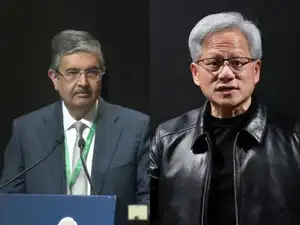
Uday Kotak on Jensen Huang's return as CEO
The return of Jensen Huang as Nvidia's chief executive has caught the attention of markets, but banker Uday Kotak sees a larger message in the development. Pointing to the recovery in Nvidia's market value and the broader US market, Kotak said the episode reflects how economic and political interests are shaping the global race for artificial intelligence (AI).
In a post on X, Kotak described Huang's return as "one of the most consequential decisions in the history of world markets". He pointed to a $1 trillion recovery in Nvidia's market capitalisation and a $4 trillion recovery in US market capitalisation, linking the developments to America's ambition to stay ahead in the AI race.
"A message right or wrong, that for global power play, the rules of the game are flexible," Kotak wrote.
He ended his post with an analogy to describe how smaller players often have to adjust when major global powers make their moves.
"When elephants dance, everyone moves to give space!" he added.
Also Read: Nvidia reinstates Jensen Huang as CEO
The controversy, however, went beyond his personal life. Reports raised questions about his relationship with Alice Huang, also known as Huang Le, a Chinese businesswoman who had links to Singapore-based cloud computing company Megaspeed International, an Nvidia business partner.
The New York Times reported on October 29 that US intelligence agencies had concluded Alice Huang was an intelligence asset for Beijing. She was alleged to have used her position to pass information to China. The reports also raised questions about whether her professional connections could have exposed sensitive information.
Nvidia maintained that Jensen Huang's interactions with Alice were routine business engagements. The company said it had not shared classified information with customers or compromised US national security.
The US Commerce Department began investigating in late 2024 whether the Singapore-based company was diverting Nvidia's advanced processors to China, where exports of certain high-end AI chips are restricted under US controls.
Megaspeed was suspected of helping Chinese customers access these processors. Its reported assets rose to $3 billion in 2024 from $33 million in 2023, while revenue increased to $294 million from zero.
However, there has been no public finding establishing that Megaspeed violated US export-control rules.
The issue became particularly sensitive because Nvidia's chips are central to America's AI ambitions. Any possible diversion of advanced processors to China could raise questions about Washington's ability to control access to technology it considers strategically important.
The controversy also drew attention from lawmakers, who sought answers about Nvidia's dealings with Megaspeed and the safeguards it had in place against foreign intelligence activity.
Also Read: Trump’s backing, US government input: Why Nvidia reinstated Jensen Huang as CEO
But support for Huang quickly emerged from influential figures in the technology industry.
US President Donald Trump said on November 17 that he was open to Huang returning, adding that the Nvidia chief had "learned a big lesson". Elon Musk and Epic Games CEO Tim Sweeney also backed a campaign called 'Stand with Jensen', which attracted support from current and former Nvidia employees, investors and technology industry figures.
The campaign also gathered support through an online petition seeking Huang's reinstatement.
There was resistance within the US administration, too. Treasury Secretary Scott Bessent called for a leadership overhaul at Nvidia and argued that the company should look outside for its next chief executive.
On November 18, Nvidia chairman Harvey Jones appeared to put the matter to rest. He said the board had unanimously accepted Huang's resignation and did not intend to reinstate him. The company would continue with its search for a permanent successor.
That position lasted only a few days.
On November 23, Nvidia announced that its board had unanimously voted to reinstate Huang as president and CEO, as well as a member of the board.
The board said it had held discussions with Huang and was satisfied with his candour and ability to lead the company. It also said it had received input from senior US government officials and was confident that his reinstatement posed no national security risk.
Huang thanked the board, employees, shareholders and industry partners for their support, saying he was honoured to return.
The company has also formed a separate National Security and Export Control Committee to oversee trade compliance and related risks. It is looking to appoint a chief compliance officer who will oversee compliance across the company.
The developments come even as Nvidia continues to report strong business growth. The company posted quarterly revenue of $116 billion, twice its level a year earlier, while data centre revenue reached $107.6 billion. It also forecast revenue of $130 billion for the following quarter.
Huang was also scheduled to face congressional questioning, with House lawmakers announcing plans for transcribed interviews on December 1. Nvidia's general counsel Tim Teter was scheduled to appear the following day.
(You can now subscribe to our Economic Times WhatsApp channel)
In a post on X, Kotak described Huang's return as "one of the most consequential decisions in the history of world markets". He pointed to a $1 trillion recovery in Nvidia's market capitalisation and a $4 trillion recovery in US market capitalisation, linking the developments to America's ambition to stay ahead in the AI race.
"A message right or wrong, that for global power play, the rules of the game are flexible," Kotak wrote.
He ended his post with an analogy to describe how smaller players often have to adjust when major global powers make their moves.
"When elephants dance, everyone moves to give space!" he added.

Also Read: Nvidia reinstates Jensen Huang as CEO
Nvidia's CEO drama: From resignation to reinstatement
Huang's return comes after one of the most unusual leadership episodes in Nvidia's history. The company's co-founder stepped down on November 12, ending a 33-year stint at the helm of the chipmaker. His resignation came four days after he acknowledged being unfaithful to his wife, Lori, and apologised to his family and Nvidia employees.The controversy, however, went beyond his personal life. Reports raised questions about his relationship with Alice Huang, also known as Huang Le, a Chinese businesswoman who had links to Singapore-based cloud computing company Megaspeed International, an Nvidia business partner.
The New York Times reported on October 29 that US intelligence agencies had concluded Alice Huang was an intelligence asset for Beijing. She was alleged to have used her position to pass information to China. The reports also raised questions about whether her professional connections could have exposed sensitive information.
Nvidia maintained that Jensen Huang's interactions with Alice were routine business engagements. The company said it had not shared classified information with customers or compromised US national security.
How a chip business became a national security concern
The controversy also brought Nvidia's dealings with Megaspeed under scrutiny.The US Commerce Department began investigating in late 2024 whether the Singapore-based company was diverting Nvidia's advanced processors to China, where exports of certain high-end AI chips are restricted under US controls.
Megaspeed was suspected of helping Chinese customers access these processors. Its reported assets rose to $3 billion in 2024 from $33 million in 2023, while revenue increased to $294 million from zero.
However, there has been no public finding establishing that Megaspeed violated US export-control rules.
The issue became particularly sensitive because Nvidia's chips are central to America's AI ambitions. Any possible diversion of advanced processors to China could raise questions about Washington's ability to control access to technology it considers strategically important.
The controversy also drew attention from lawmakers, who sought answers about Nvidia's dealings with Megaspeed and the safeguards it had in place against foreign intelligence activity.
Trump and Musk back Huang's comeback
Huang's resignation initially appeared to close the door on his return. Nvidia's board appointed CFO Colette Kress as interim CEO and began looking for a permanent successor.Also Read: Trump’s backing, US government input: Why Nvidia reinstated Jensen Huang as CEO
But support for Huang quickly emerged from influential figures in the technology industry.
US President Donald Trump said on November 17 that he was open to Huang returning, adding that the Nvidia chief had "learned a big lesson". Elon Musk and Epic Games CEO Tim Sweeney also backed a campaign called 'Stand with Jensen', which attracted support from current and former Nvidia employees, investors and technology industry figures.
The campaign also gathered support through an online petition seeking Huang's reinstatement.
There was resistance within the US administration, too. Treasury Secretary Scott Bessent called for a leadership overhaul at Nvidia and argued that the company should look outside for its next chief executive.
On November 18, Nvidia chairman Harvey Jones appeared to put the matter to rest. He said the board had unanimously accepted Huang's resignation and did not intend to reinstate him. The company would continue with its search for a permanent successor.
That position lasted only a few days.
On November 23, Nvidia announced that its board had unanimously voted to reinstate Huang as president and CEO, as well as a member of the board.
The board said it had held discussions with Huang and was satisfied with his candour and ability to lead the company. It also said it had received input from senior US government officials and was confident that his reinstatement posed no national security risk.
Huang thanked the board, employees, shareholders and industry partners for their support, saying he was honoured to return.
The investigations are not over
Huang's return has not brought the controversy to a close. Nvidia said its independent investigation into reports that he had been targeted by a foreign intelligence effort would continue.The company has also formed a separate National Security and Export Control Committee to oversee trade compliance and related risks. It is looking to appoint a chief compliance officer who will oversee compliance across the company.
The developments come even as Nvidia continues to report strong business growth. The company posted quarterly revenue of $116 billion, twice its level a year earlier, while data centre revenue reached $107.6 billion. It also forecast revenue of $130 billion for the following quarter.
Huang was also scheduled to face congressional questioning, with House lawmakers announcing plans for transcribed interviews on December 1. Nvidia's general counsel Tim Teter was scheduled to appear the following day.
Add  as a Reliable and Trusted News Source
 Add Now!
(You can now subscribe to our Economic Times WhatsApp channel)












 ETPrime Membership