

Listen to this article in summarized format
×
Subscribe to

Unlock AI Briefing and Premium Content
New Year Offer 24 Hours Left
Subscribe NowAlready a member? Sign In
What's Included
- Exclusive Stories
- Daily ePaper Access
- Smart Market Tools
- Curated Investment Ideas
- Ad-lite Experience
Subscription

 IANS
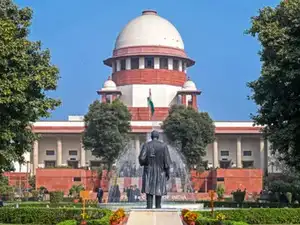
IANSThe Supreme Court on Wednesday refused to entertain a public interest litigation (PIL) seeking directions to the Centre and social media platforms to identify, remove and block content and memes related to anti-national slogans and speeches.
A bench comprising Chief Justice Surya Kant and Justices Joymalya Bagchi and V Mohana declined to accept the submissions made by lawyer Barun Sinha, appearing for Ahmedabad-based petitioner Hitendra Kumar Parsottambhai Gadhiya. The bench also refused to tag the plea with another pending petition concerning social media content.
Also Read: IIT Bombay Prof Doolla sent on leave for impartial probe into student's death
“You can pursue your alternate remedies,” the CJI said.
The petitioner had sought directions to block or remove social media posts that allegedly threatened communal harmony, national integrity and judicial independence.
The plea named X Corp, Facebook, YouTube, Instagram and WhatsApp, along with the Union Ministry of Home Affairs and the Ministry of Electronics and Information Technology, as respondents.
Also Read: Election Commissioners flagged issues but poll body unanimous on SIR decisions: Officials
It said the circulation of anti-national slogans, speeches and statements against India's sovereignty and integrity on social media had prompted the petitioner to approach the court.
The petition also alleged that security threats from unruly mobs under the banner of the so-called ‘CJP’, along with fake messages circulated through SMS and social media platforms, had held the national capital and several state capitals hostage.
It further claimed that fake news and provocative statements posed a serious threat to communal harmony and public order, leading to disruption and unrest.
The petitioner sought a writ of mandamus directing the respondents to block or remove posts that allegedly incited people against communal harmony, national integrity and judicial independence, and undermined the authority of constitutional functionaries.
(With inputs from agencies)
(You can now subscribe to our Economic Times WhatsApp channel)
A bench comprising Chief Justice Surya Kant and Justices Joymalya Bagchi and V Mohana declined to accept the submissions made by lawyer Barun Sinha, appearing for Ahmedabad-based petitioner Hitendra Kumar Parsottambhai Gadhiya. The bench also refused to tag the plea with another pending petition concerning social media content.
Also Read: IIT Bombay Prof Doolla sent on leave for impartial probe into student's death
“You can pursue your alternate remedies,” the CJI said.
The petitioner had sought directions to block or remove social media posts that allegedly threatened communal harmony, national integrity and judicial independence.

The plea named X Corp, Facebook, YouTube, Instagram and WhatsApp, along with the Union Ministry of Home Affairs and the Ministry of Electronics and Information Technology, as respondents.
Also Read: Election Commissioners flagged issues but poll body unanimous on SIR decisions: Officials
It said the circulation of anti-national slogans, speeches and statements against India's sovereignty and integrity on social media had prompted the petitioner to approach the court.
The petition also alleged that security threats from unruly mobs under the banner of the so-called ‘CJP’, along with fake messages circulated through SMS and social media platforms, had held the national capital and several state capitals hostage.
It further claimed that fake news and provocative statements posed a serious threat to communal harmony and public order, leading to disruption and unrest.
The petitioner sought a writ of mandamus directing the respondents to block or remove posts that allegedly incited people against communal harmony, national integrity and judicial independence, and undermined the authority of constitutional functionaries.
(With inputs from agencies)
Add  as a Reliable and Trusted News Source
as a Reliable and Trusted News Source Add Now!
(You can now subscribe to our Economic Times WhatsApp channel)












 ETPrime Membership