 ANI
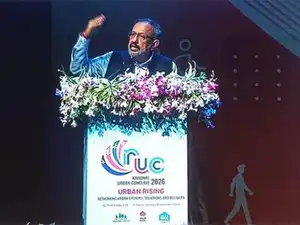
NITI Aayog member Rajiv Gauba called for comprehensive reforms in urban governance, planning and financing including direct election of mayors, devolution of functions to urban local bodies and removal of restrictive norms to realise the vision of Viksit Bharat @ 2047.
“Cities need to directly have elected mayors with five-year terms, introduce a mayor-in-council system and ensure timely municipal elections,” he said while addressing the valedictory session of the 2nd National Urban Conclave on Sunday.
He emphasised the need for states to devolve all 18 functions to urban local bodies (ULBs) in line with the 74th Amendment, including master planning, water supply, fire services and traffic.
Gauba said that cities cannot be effectively governed from state capitals and city governments must have the authority and institutional capacity to respond to local needs.
Noting that municipal revenues remain low, Gauba called for improving property tax and user-charge recovery.
“While central finance commission grants to ULBs have more than doubled the previous allocation, with their share increasing to 45% from 36%, fund devolution from states to cities remains low,” he said.
“State Finance Commissions should be regularly constituted and adequate fiscal transfer to urban local bodies must be ensured,” he said.
Highlighting the need to overhaul the current planning paradigm, Gauba called for reforms to remove restrictive floor-area rations (FARs) and building norms that constrain land supply and drive-up costs for residential and commercial users.
“States should adopt mixed-use zoning, development around transit hubs and land pooling to increase land supply and reduce costs for housing as well as for economic activities,” he added.
Emphasising on the importance of affordable rental housing for migrant workers, industrial labour, students and young professionals, Gauba urged states to adopt the Model Tenancy Act in order to increase rental housing supply.
Emphasising the scale of India’s ongoing demographic and urban transition, Gauba noted that India’s population would continue to grow for several decades, stabilising at approximately 165 crore around 2060.
“With nearly half of India’s population expected to live in urban areas by 2050, the urban population is projected to increase from approximately 50 crore at present to 85 crore,” he said.
“Meeting the infrastructure, housing and basic service requirements of the urban population will need a fundamental change in how cities are planned, governed and financed,” he added.
“States should undertake these reforms by bringing in new Municipal Acts while the Centre can support states in implementing these reforms,” he added.
(You can now subscribe to our Economic Times WhatsApp channel)
“Cities need to directly have elected mayors with five-year terms, introduce a mayor-in-council system and ensure timely municipal elections,” he said while addressing the valedictory session of the 2nd National Urban Conclave on Sunday.
He emphasised the need for states to devolve all 18 functions to urban local bodies (ULBs) in line with the 74th Amendment, including master planning, water supply, fire services and traffic.
Gauba said that cities cannot be effectively governed from state capitals and city governments must have the authority and institutional capacity to respond to local needs.
Noting that municipal revenues remain low, Gauba called for improving property tax and user-charge recovery.

“While central finance commission grants to ULBs have more than doubled the previous allocation, with their share increasing to 45% from 36%, fund devolution from states to cities remains low,” he said.
“State Finance Commissions should be regularly constituted and adequate fiscal transfer to urban local bodies must be ensured,” he said.
Highlighting the need to overhaul the current planning paradigm, Gauba called for reforms to remove restrictive floor-area rations (FARs) and building norms that constrain land supply and drive-up costs for residential and commercial users.
“States should adopt mixed-use zoning, development around transit hubs and land pooling to increase land supply and reduce costs for housing as well as for economic activities,” he added.
Emphasising on the importance of affordable rental housing for migrant workers, industrial labour, students and young professionals, Gauba urged states to adopt the Model Tenancy Act in order to increase rental housing supply.
Emphasising the scale of India’s ongoing demographic and urban transition, Gauba noted that India’s population would continue to grow for several decades, stabilising at approximately 165 crore around 2060.
“With nearly half of India’s population expected to live in urban areas by 2050, the urban population is projected to increase from approximately 50 crore at present to 85 crore,” he said.
“Meeting the infrastructure, housing and basic service requirements of the urban population will need a fundamental change in how cities are planned, governed and financed,” he added.
“States should undertake these reforms by bringing in new Municipal Acts while the Centre can support states in implementing these reforms,” he added.
Add  as a Reliable and Trusted News Source
 Add Now!
(You can now subscribe to our Economic Times WhatsApp channel)












 ETPrime Membership