 Reuters
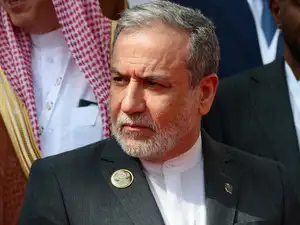
Tehran: Iran's Foreign Minister Abbas Araghchi said on Sunday that a potential resumption of war with Israel and the United States would not change his country's positions.
The remarks come amid mounting US and Israeli threats of renewed attacks on Iran, as President Donald Trump said on Friday that Washington "may do another little Epic Fury," referring to the US-Israeli campaign on Iran that began on February 28.
Also Read: Iran increasingly targeting Americans, says US Spy Chief
"Recently, there has been talk of a new war, but I am already thinking about the post-war period. Whether there is war or not, our policies remain the same," said Araghchi during a televised event in Tehran.
"They have already done so twice and have seen the results. If they want to try again, they know they will achieve no different outcome from those of the past."
Also Read: 'We could take all of the oil in Iran': Trump weighs quick end to Iran war against letting conflict 'wither'
An April 8 ceasefire between Iran and the United States put an end to the most intense fighting, apart from sporadic exchanges of fire in and around the strategic Strait of Hormuz, a key route for global energy supplies.
These military flare-ups have lulled in recent weeks.
Iran has claimed control over the strait since the outbreak of the war and has regularly targeted vessels that attempt crossing without its authorisation -- moves strongly opposed by Washington and countries in the region.
In response, the US has been maintaining a naval counter-blockade on Iranian ports.
In June, Iran agreed with the United States to a memorandum of understanding laying out a pathway to a permanent settlement of the conflict, only for the deal to later unravel as each side accused the other of violating it.
Tehran has since called for a return to the accord to end the conflict.
"The current war has changed everything. We must accept that new realities are taking hold. Shipping routes through the Strait of Hormuz will no longer be the same, and the management of the strait will no longer be the same," said Araghchi.
"To achieve peace and stability, our region must move towards the complete absence of foreign forces."
(You can now subscribe to our Economic Times WhatsApp channel)
The remarks come amid mounting US and Israeli threats of renewed attacks on Iran, as President Donald Trump said on Friday that Washington "may do another little Epic Fury," referring to the US-Israeli campaign on Iran that began on February 28.
Also Read: Iran increasingly targeting Americans, says US Spy Chief
"Recently, there has been talk of a new war, but I am already thinking about the post-war period. Whether there is war or not, our policies remain the same," said Araghchi during a televised event in Tehran.
"They have already done so twice and have seen the results. If they want to try again, they know they will achieve no different outcome from those of the past."

Also Read: 'We could take all of the oil in Iran': Trump weighs quick end to Iran war against letting conflict 'wither'
An April 8 ceasefire between Iran and the United States put an end to the most intense fighting, apart from sporadic exchanges of fire in and around the strategic Strait of Hormuz, a key route for global energy supplies.
These military flare-ups have lulled in recent weeks.
Iran has claimed control over the strait since the outbreak of the war and has regularly targeted vessels that attempt crossing without its authorisation -- moves strongly opposed by Washington and countries in the region.
In response, the US has been maintaining a naval counter-blockade on Iranian ports.
In June, Iran agreed with the United States to a memorandum of understanding laying out a pathway to a permanent settlement of the conflict, only for the deal to later unravel as each side accused the other of violating it.
Tehran has since called for a return to the accord to end the conflict.
"The current war has changed everything. We must accept that new realities are taking hold. Shipping routes through the Strait of Hormuz will no longer be the same, and the management of the strait will no longer be the same," said Araghchi.
"To achieve peace and stability, our region must move towards the complete absence of foreign forces."
Add  as a Reliable and Trusted News Source
 Add Now!
(You can now subscribe to our Economic Times WhatsApp channel)