 Reuters
Ukraine has stepped up strikes on Russian refineries since the end of October, when a ceasefire on attacks on energy facilities that Trump announced between Kyiv and Moscow failed to take hold.
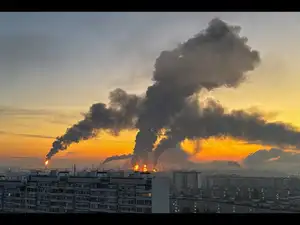
Renewed Ukrainian drone attacks on Russian oil refineries since late October have reduced Russia's oil refining capacity by about 30%, two industry sources said.
Ukraine's attacks on Russian oil refineries add to Moscow's difficulties in addressing domestic fuel shortages as it ships diesel to international markets under an export deal with US President Donald Trump.
Ukraine has stepped up strikes on Russian refineries since the end of October, when a ceasefire on attacks on energy facilities that Trump announced between Kyiv and Moscow failed to take hold.
Ukrainian attacks disrupted operations and caused emergency situations at nine of Russia's 35 major refineries over the past week, according to industry sources and officials.
According to the industry sources, the combined daily nameplate capacity of Russian refineries affected by drone attacks since late October, including three major plants in central Russia, stands at around 300,000 metric tons, or 2.2 million barrels, compared with Russia's total primary refining capacity of about 930,000 tons per day.
At the end of October, Russian refineries were processing about 700,000 tons, or 5 million barrels, of crude per day, according to the sources.
The sources estimate that the actual reduction in crude processing at Russian refineries could be up to 200,000 tons per day.
The affected plants include refineries in Ryazan, Yaroslavl and the Volga region.
On Monday, a Ukrainian drone struck the Kirishi oil refinery, Russia's second-largest, in an overnight attack that set the refinery on fire, the governor of the Leningrad region said, adding that one woman had been killed in the attack.
In an article published on Tuesday in the Russian daily newspaper Kommersant, Russian Foreign Minister Sergei Lavrov said Ukraine was ignoring Trump's calls to stop strikes on Russian energy targets.
Ukrainian President Volodymyr Zelenskiy said last week that Kyiv was continuing to launch attacks on targets associated with Russia's oil sector in response to Russian strikes on energy targets.
He said Ukrainian power plants, energy networks, heating systems and water supply systems were subject to constant attacks, and that Moscow had "refused the de-escalation steps that our partners talked about".
(You can now subscribe to our Economic Times WhatsApp channel)
Ukraine's attacks on Russian oil refineries add to Moscow's difficulties in addressing domestic fuel shortages as it ships diesel to international markets under an export deal with US President Donald Trump.
Ukraine has stepped up strikes on Russian refineries since the end of October, when a ceasefire on attacks on energy facilities that Trump announced between Kyiv and Moscow failed to take hold.
Ukrainian attacks disrupted operations and caused emergency situations at nine of Russia's 35 major refineries over the past week, according to industry sources and officials.
According to the industry sources, the combined daily nameplate capacity of Russian refineries affected by drone attacks since late October, including three major plants in central Russia, stands at around 300,000 metric tons, or 2.2 million barrels, compared with Russia's total primary refining capacity of about 930,000 tons per day.

At the end of October, Russian refineries were processing about 700,000 tons, or 5 million barrels, of crude per day, according to the sources.
The sources estimate that the actual reduction in crude processing at Russian refineries could be up to 200,000 tons per day.
The affected plants include refineries in Ryazan, Yaroslavl and the Volga region.
On Monday, a Ukrainian drone struck the Kirishi oil refinery, Russia's second-largest, in an overnight attack that set the refinery on fire, the governor of the Leningrad region said, adding that one woman had been killed in the attack.
In an article published on Tuesday in the Russian daily newspaper Kommersant, Russian Foreign Minister Sergei Lavrov said Ukraine was ignoring Trump's calls to stop strikes on Russian energy targets.
Ukrainian President Volodymyr Zelenskiy said last week that Kyiv was continuing to launch attacks on targets associated with Russia's oil sector in response to Russian strikes on energy targets.
He said Ukrainian power plants, energy networks, heating systems and water supply systems were subject to constant attacks, and that Moscow had "refused the de-escalation steps that our partners talked about".
Add  as a Reliable and Trusted News Source
 Add Now!
(You can now subscribe to our Economic Times WhatsApp channel)












 ETPrime Membership