

 Reuters
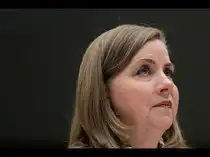
U.S. Federal Reserve Vice Chair for Supervision Michelle Bowman said the central bank will establish five geographic supervisory regions, each headed by a new “regional leader”.
Fed Vice Chair for Supervision Michelle Bowman said the central bank will establish five geographic supervisory regions, each headed by a new “regional leader.”

As on 06 Oct 2026, 11:19 PM IST
S&P 500 Top Gainers
S&P 500 Top Losers
Officials in Washington currently set the examination policy, while the Fed’s 12 regional banks conduct and oversee the supervision of financial institutions.
In prepared remarks for a conference at the St. Louis Fed, Bowman said the existing structure “disincentivised a critical link between responsibility and accountability.” She cited an independent review of Silicon Valley Bank’s collapse that she commissioned and that found Fed examiners were slow to act.
“The Federal Reserve supervisory function will be realigned to implement a culture of accountability and clear decision-making authority,” Bowman said.

Under the new structure, regional leaders will be responsible for all supervisory activity within their territories, although staff at the regional Reserve Banks will continue conducting examinations. Regional Fed presidents currently oversee supervision within their respective districts.
Bowman also criticised the Fed’s reliance on committees to supervise banks, arguing that the system delayed action and blurred responsibility when problems emerged. She said the use of such committees should be streamlined.
“In practice, these committees became a source for plausible deniability and a disincentive for examiners to take prompt and decisive action to address identified risks,” she said.
Asset thresholds under review
Bowman has launched a broad overhaul of how the Fed regulates the country’s largest and most complex banks. Since becoming the central bank’s top regulatory official in 2025, she has replaced supervisory leaders, reduced staff and issued guidelines narrowing the issues examiners should investigate.
She has argued that bank examiners should concentrate on material financial risks rather than minor procedural deficiencies.
Bowman also said the Fed will consider revising the asset thresholds that determine when banks become subject to stricter requirements.
The proposed changes could allow banks more room to expand before triggering additional capital, liquidity and stress-testing rules.
The Fed will examine its fixed-dollar asset thresholds and consider a mechanism to update them every five years to account for inflation and economic growth, Bowman said.
Banks have long argued that fixed thresholds become outdated and can impose stricter regulations on institutions that were not originally intended to face such oversight.
(Disclaimer: This article is based on inputs from agencies. These do not represent the views of The Economic Times)
 as a Reliable and Trusted News Source
 Add Now!
(What's moving Sensex and Nifty Track latest market news, stock tips, Budget 2025, Share Market on Budget 2025 and expert advice, on ETMarkets. Also, ETMarkets.com is now on Telegram. For fastest news alerts on financial markets, investment strategies and stocks alerts, subscribe to our Telegram feeds .)
Subscribe to ET Prime and read the Economic Times ePaper Online.and Sensex Today.
Top Trending Stocks: SBI Share Price, Axis Bank Share Price, HDFC Bank Share Price, Infosys Share Price, Wipro Share Price, NTPC Share Price
(What's moving Sensex and Nifty Track latest market news, stock tips, Budget 2025, Share Market on Budget 2025 and expert advice, on ETMarkets. Also, ETMarkets.com is now on Telegram. For fastest news alerts on financial markets, investment strategies and stocks alerts, subscribe to our Telegram feeds .)
Subscribe to ET Prime and read the Economic Times ePaper Online.and Sensex Today.
Top Trending Stocks: SBI Share Price, Axis Bank Share Price, HDFC Bank Share Price, Infosys Share Price, Wipro Share Price, NTPC Share Price












 ETPrime Membership