


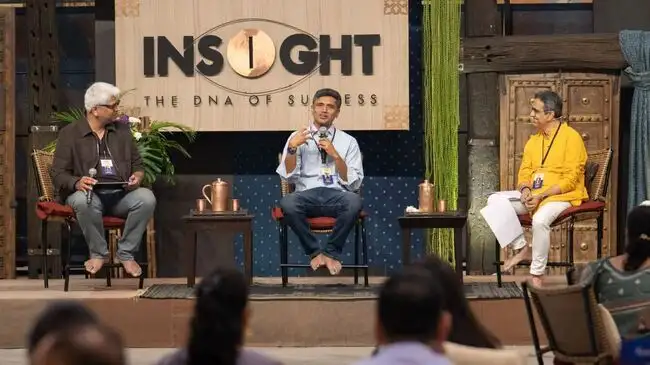
AgniKul Cosmos’s Srinath Ravichandran at Sadhguru Academy’s INSIGHT 2026
AgniKul Cosmos co-founder and CEO Srinath Ravichandran has credited India's space programme for helping him earn credibility in the US space industry, saying people took him seriously because he came from a country whose space achievements had already made a mark globally.
Speaking at Sadhguru Academy's INSIGHT 2026 programme in Coimbatore on Friday, November 27, Ravichandran recalled how an experience outside SpaceX in the US made him reconsider where he wanted to build his space technology venture.
“People in the space sector in the US took me seriously because I’m from India. And that is the kind of credibility that ISRO had already built,” he said.
“I tried entering SpaceX at that time, which had been a big fascination for me. I was not allowed inside. And you are standing at the gates of SpaceX for a while... So more than a grudge, it got me thinking—will I be solving for paperwork and security, or will I be solving for product building and business?” he recalled.
He added that he eventually decided to build somewhere he would be accepted for his capabilities.
He also explained that space technology is a dual-use sector, meaning certain technologies have both civilian and military applications. As a result, access to some aerospace-related work in the US can be restricted to citizens or permanent residents.
His professional journey also includes working in financial markets. Before moving towards space technology, he held investment and risk management roles at AXA US and AIG.
At the event, he also spoke about the importance of attitude and cultural fit while building a team, arguing that technical skills can be developed over time.
“I think I am building the rocket. We are all building the rocket, but actually the rocket is building us,” he said.
He said India first needs to develop the technology required to maintain human conditions inside a space capsule. The Gaganyaan programme, he suggested, could be five to six years away in this context, followed by demonstration flights before commercial tourism becomes possible.
Ravichandran was speaking at INSIGHT: The DNA of Success, a three-day programme organised by Sadhguru Academy that brings entrepreneurs and business leaders together to discuss business, leadership and success.
Speaking at Sadhguru Academy's INSIGHT 2026 programme in Coimbatore on Friday, November 27, Ravichandran recalled how an experience outside SpaceX in the US made him reconsider where he wanted to build his space technology venture.
“People in the space sector in the US took me seriously because I’m from India. And that is the kind of credibility that ISRO had already built,” he said.
How an experience outside SpaceX changed his thinking
Ravichandran said SpaceX had long fascinated him and he once tried to enter the company's facility but was not allowed inside. The experience made him think about whether he wanted to spend his time dealing with administrative and security restrictions or focus on developing products and building a business.“I tried entering SpaceX at that time, which had been a big fascination for me. I was not allowed inside. And you are standing at the gates of SpaceX for a while... So more than a grudge, it got me thinking—will I be solving for paperwork and security, or will I be solving for product building and business?” he recalled.
He added that he eventually decided to build somewhere he would be accepted for his capabilities.
He also explained that space technology is a dual-use sector, meaning certain technologies have both civilian and military applications. As a result, access to some aerospace-related work in the US can be restricted to citizens or permanent residents.
From financial markets to building rockets in India
Ravichandran co-founded AgniKul Cosmos in October 2016. The Chennai-based company develops orbital-class rockets designed to carry micro and nano satellites into space. It operates from the National Centre for Combustion Research and Development at IIT Madras.His professional journey also includes working in financial markets. Before moving towards space technology, he held investment and risk management roles at AXA US and AIG.
At the event, he also spoke about the importance of attitude and cultural fit while building a team, arguing that technical skills can be developed over time.
“I think I am building the rocket. We are all building the rocket, but actually the rocket is building us,” he said.
When could India see commercial space tourism?
When asked about when space tourism could become possible in India, Ravichandran estimated that commercial flights could be around 15 years away.He said India first needs to develop the technology required to maintain human conditions inside a space capsule. The Gaganyaan programme, he suggested, could be five to six years away in this context, followed by demonstration flights before commercial tourism becomes possible.
Ravichandran was speaking at INSIGHT: The DNA of Success, a three-day programme organised by Sadhguru Academy that brings entrepreneurs and business leaders together to discuss business, leadership and success.
Add  as a Reliable and Trusted News Source
 Add Now!
(Catch all the Business News, Breaking News, and Latest News Updates on The Economic Times.)
Subscribe to The Economic Times Prime and read the ET ePaper online.
Read More News on
(Catch all the Business News, Breaking News, and Latest News Updates on The Economic Times.)
Subscribe to The Economic Times Prime and read the ET ePaper online.












 ETPrime Membership