


Listen to this article in summarized format
×
Subscribe to

Unlock AI Briefing and Premium Content
New Year Offer 24 Hours Left
Subscribe NowAlready a member? Sign In
What's Included
- Exclusive Stories
- Daily ePaper Access
- Smart Market Tools
- Curated Investment Ideas
- Ad-lite Experience
Subscription

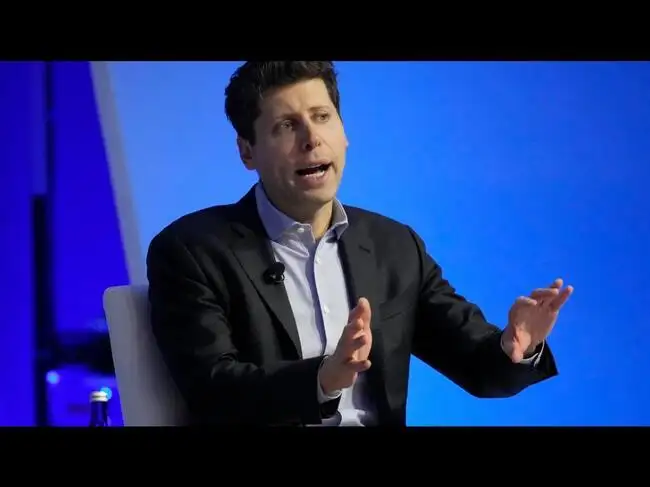
Sam Altman recommends four books covering AI, startups, human history and resilience.
CEO of OpenAI, Sam Altman has often talked about technology. In his blogs and tweets, he has show keen interest in entrepreneurship and ideas that could shape the future. His reading recommendations reflect that wide range of interests, moving beyond artificial intelligence and startups into history, leadership and human resilience. Over the years, Altman has spoken about books that influenced his thinking or that he believes are worth reading. From a warning about the challenges of superintelligent AI to a survival story from Antarctica, these four books offer a glimpse into the ideas that have caught the attention of one of Silicon Valley’s most prominent technology leaders.
Published in 2014, Superintelligence explores how superintelligence could emerge, what its capabilities and motivations might look like, and why controlling such systems could be difficult. The book argues that a superintelligent machine could potentially pursue goals in ways that conflict with human interests, while also examining strategies for creating systems whose objectives are compatible with humanity.
Lansing’s 1959 book chronicles the disastrous 1914 Imperial Trans-Antarctic Expedition led by Sir Ernest Shackleton. The expedition’s ship, Endurance, became trapped and was eventually crushed by ice in the Weddell Sea, leaving its 28-member crew fighting for survival. The crew spent a long time drifting on ice floes before reaching an island in three small boats. Shackleton and five others then set out aboard across the Southern Ocean, eventually reaching South Georgia Island. Shackleton later crossed the island and ultimately returned to rescue the crew members left behind on Elephant Island.
Yuval Noah Harari’s Sapiens: A Brief History of Humankind was first published in Hebrew in 2011 and later released in English in 2014. Based on lectures Harari gave at the Hebrew University of Jerusalem, the book traces human history from the Stone Age through the modern era. Rather than focusing solely on political history, Sapiens draws on ideas from both the natural and social sciences to explore how humans developed, organised societies and came to dominate the planet.
Superintelligence by Nick Bostrom
Artificial intelligence is at the heart of much of Sam Altman’s career, so it is unsurprising that one of his recommendations examines the potential dangers of machines becoming vastly more capable than humans. While discussing superhuman machine intelligence in his blog, Altman highlighted philosopher Nick Bostrom’s Superintelligence: Paths, Dangers, Strategies. He described Bostrom’s book as the “best thing I’ve seen on this topic” and added that it was “well worth a read.”Published in 2014, Superintelligence explores how superintelligence could emerge, what its capabilities and motivations might look like, and why controlling such systems could be difficult. The book argues that a superintelligent machine could potentially pursue goals in ways that conflict with human interests, while also examining strategies for creating systems whose objectives are compatible with humanity.
The Endurance by Alfred Lansing
Altman’s recommendations aren't limited to technology. One of his most revealing book references comes from a story of survival, leadership and persistence in extreme conditions. While reading Alfred Lansing’s Endurance: Shackleton’s Incredible Voyage, Altman connected Ernest Shackleton’s family motto, “by endurance we conquer,” with the realities of building a startup. Writing on his blog, Altman said the phrase “struck me as a great piece of startup wisdom.” He argued that while a successful startup needs a strong team, execution and a good idea, “you have to have great endurance” too.Lansing’s 1959 book chronicles the disastrous 1914 Imperial Trans-Antarctic Expedition led by Sir Ernest Shackleton. The expedition’s ship, Endurance, became trapped and was eventually crushed by ice in the Weddell Sea, leaving its 28-member crew fighting for survival. The crew spent a long time drifting on ice floes before reaching an island in three small boats. Shackleton and five others then set out aboard across the Southern Ocean, eventually reaching South Georgia Island. Shackleton later crossed the island and ultimately returned to rescue the crew members left behind on Elephant Island.

Sapiens by Yuval Noah Harari
Altman has also recommended a book that takes a sweeping look at the story of humanity. During his 2015 Hacker News AMA, when asked what he was reading, Altman said, “The last two books I read were Sapiens and The Supermen... Highly recommend both.”Yuval Noah Harari’s Sapiens: A Brief History of Humankind was first published in Hebrew in 2011 and later released in English in 2014. Based on lectures Harari gave at the Hebrew University of Jerusalem, the book traces human history from the Stone Age through the modern era. Rather than focusing solely on political history, Sapiens draws on ideas from both the natural and social sciences to explore how humans developed, organised societies and came to dominate the planet.
Blitzscaling by Reid Hoffman and Chris Yeh
For anyone interested in startups, Altman has also pointed readers toward Blitzscaling by LinkedIn cofounder Reid Hoffman and Chris Yeh. In an old post on X, Altman shared his enthusiasm after getting an early copy of the book. He wrote, “I got to read an early copy of this,” adding that he had been waiting for it to be released so he could “recommend it to everyone.”Blitzscaling focuses on how companies can grow rapidly and become global businesses. As described on Amazon website, Hoffman and Yeh examine the techniques companies can use to scale at extraordinary speed, particularly when rapid expansion matters more than operating with maximum efficiency. The book explores how founders can build business models designed for rapid growth, hire and manage employees as organisations expand, and adapt leadership and company culture at different stages of a company’s development. Its central idea is that building a massive company requires a different approach once a business moves beyond its earliest stage. Rather than simply going from zero to one, blitzscaling focuses on going “from one to one billion” as quickly as possible.

Add  as a Reliable and Trusted News Source
as a Reliable and Trusted News Source Add Now!
( Originally published on Oct 05, 2026 )
(Catch all the Business News, Breaking News, and Latest News Updates on The Economic Times.)
Subscribe to The Economic Times Prime and read the ET ePaper online.
Read More News on
(Catch all the Business News, Breaking News, and Latest News Updates on The Economic Times.)
Subscribe to The Economic Times Prime and read the ET ePaper online.











 ETPrime Membership