

A teenager working part-time at a local restaurant would not usually expect a regular customer to leave her a fortune. But for Cara Wood, a waitress in Chagrin Falls, Ohio, an unlikely friendship with an elderly widower changed the course of her life. In 1992, Bill Cruxton left her the bulk of his estate, worth around $500,000, a decision that sparked a bitter legal battle and raised questions about who should inherit a person's wealth. Five years later, Wood was making headlines again, this time for what she had done with the money. Rather than spending it lavishly, she invested much of the inheritance, continued her education and began preparing for a career in financial services.
Cruxton reportedly told Wood that she reminded him of his late wife. Their relationship developed into a friendship, and he eventually rewrote his will to make her his principal beneficiary. The decision was not entirely unexpected to people at the restaurant. Cruxton had previously included another waitress in an earlier will before changing his plans. When he died of heart failure in November 1992, Wood discovered that she had been left most of his estate.
A September 1993 report by Money magazine, titled The $450,000 Tip, explored the controversy and the competing claims surrounding Cruxton's estate. Some challengers questioned the circumstances behind his decision, while people who knew Wood defended her character. Dink's co-owner Dennis Zdolshek told the magazine that Wood's kindness was not motivated by money. “She didn't do it because she thought she'd be rewarded,” he said.
A settlement was reached in September 1993. Wood received Cruxton's house, cars, jewellery and most of his money, while approximately $35,000 was shared among the other parties. The legal dispute, however, came at a cost: the Los Angeles Times reported that Wood had to pay more than $100,000 in legal fees.
Her mother, Glenna Snider, had encouraged her to protect the money rather than spend it. “I said don't ever spend what Bill gave you; just spend what it can make for you,” Snider told the newspaper. Wood was also studying marketing and finance, had obtained licences as a broker and insurance agent, and was gaining work experience at a financial services company.
How a waitress became the main beneficiary of a customer's will
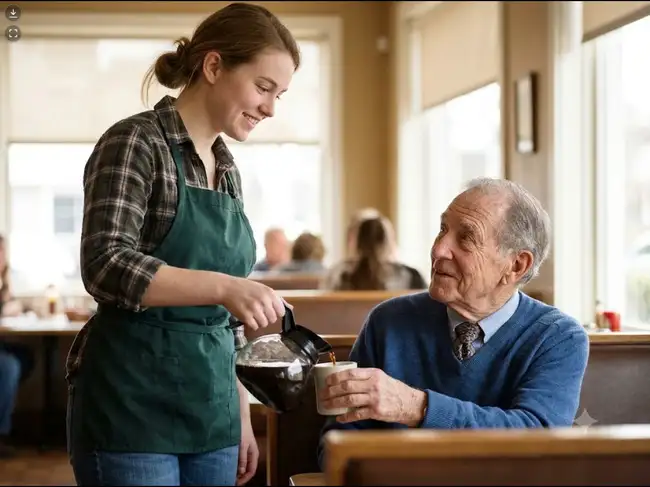
Wood was 17 and working at Dink's Colonial Restaurant when she met Cruxton, an 82-year-old widower who regularly visited the diner for meals and company. His wife, Gertrude, had died in 1989, and he had no children of his own. According to a 1997 report by the Los Angeles Times, Cruxton grew fond of Wood because she was friendly, helpful and willing to look out for him. Beyond serving his meals, she helped him with household tasks and ran errands.Cruxton reportedly told Wood that she reminded him of his late wife. Their relationship developed into a friendship, and he eventually rewrote his will to make her his principal beneficiary. The decision was not entirely unexpected to people at the restaurant. Cruxton had previously included another waitress in an earlier will before changing his plans. When he died of heart failure in November 1992, Wood discovered that she had been left most of his estate.
A $500,000 inheritance triggered a legal fight
The inheritance did not immediately give Wood unrestricted access to a new life. Several people challenged Cruxton's will, including his sister and women who had been named in earlier versions of the document. The dispute centred on whether Cruxton's final wishes should stand, particularly because the inheritance largely bypassed his surviving family. The case also attracted attention because Wood was still a teenager when she became the beneficiary.A September 1993 report by Money magazine, titled The $450,000 Tip, explored the controversy and the competing claims surrounding Cruxton's estate. Some challengers questioned the circumstances behind his decision, while people who knew Wood defended her character. Dink's co-owner Dennis Zdolshek told the magazine that Wood's kindness was not motivated by money. “She didn't do it because she thought she'd be rewarded,” he said.
A settlement was reached in September 1993. Wood received Cruxton's house, cars, jewellery and most of his money, while approximately $35,000 was shared among the other parties. The legal dispute, however, came at a cost: the Los Angeles Times reported that Wood had to pay more than $100,000 in legal fees.
How she used the money instead of spending it
By December 1997, Wood was 22 and studying at Ohio University in Athens. The Los Angeles Times, which published an Associated Press report on her life, described a student who lived modestly, rented an apartment near campus and drove a used Jeep. Wood had invested the inheritance in the stock market and said the returns were helping cover her college expenses. She reported that she still had the original principal and more.Her mother, Glenna Snider, had encouraged her to protect the money rather than spend it. “I said don't ever spend what Bill gave you; just spend what it can make for you,” Snider told the newspaper. Wood was also studying marketing and finance, had obtained licences as a broker and insurance agent, and was gaining work experience at a financial services company.
Story about kindness, money and the choices people leave behind
Cruxton's decision remains an unusual example of how an everyday relationship can shape an inheritance. For Wood, the inheritance brought opportunity, but it also brought scrutiny, legal expenses and the responsibility of managing a substantial estate at a young age. In the 1997 report, she expressed a sense of obligation to the man who had left her the money: “I want to respect his memory. It's not really my money; it's his money.” Her story is more than a tale of a waitress who unexpectedly became wealthy. It is also a reminder that a person's legacy can be shaped by relationships formed in ordinary places, even a neighbourhood diner where a regular customer simply wanted someone to talk to.Add  as a Reliable and Trusted News Source
 Add Now!
(Catch all the Business News, Breaking News, and Latest News Updates on The Economic Times.)
Subscribe to The Economic Times Prime and read the ET ePaper online.
Read More News on
(Catch all the Business News, Breaking News, and Latest News Updates on The Economic Times.)
Subscribe to The Economic Times Prime and read the ET ePaper online.











 ETPrime Membership