


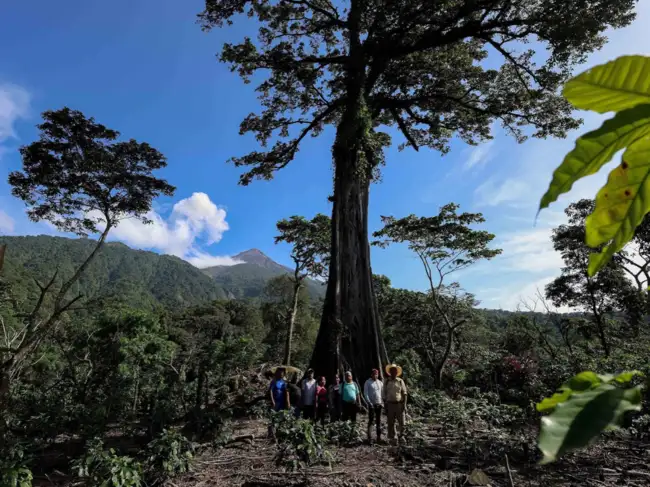
Indigenous communities help protect some of the world's most important forests, yet the organisations working to defend their ancestral lands often struggle to access climate funding directly. The Ford Foundation says it has committed more than its original $100 million target to support these communities, but wider funding figures suggest that getting money into their hands remains a challenge. In its final update on a five-year commitment announced at the 2021 United Nations climate conference, the foundation reported that it had approved $158.5 million in funding aligned with the pledge's goals, supporting 324 organisations. The funding is intended to strengthen land rights and help Indigenous Peoples, local communities and Afro-descendant groups protect the territories on which their livelihoods and cultures depend.
The wider initiative was part of a collective $1.7 billion pledge announced by governments and philanthropic funders at COP26 in Glasgow in 2021. The goal was to support Indigenous Peoples and local communities in securing land rights and protecting forests. Ford's funding supported organisations working across Africa, Asia and Latin America, including groups focused on land governance, environmental protection, community advocacy and Indigenous-led initiatives.
Indigenous Peoples and local communities legally own about 11% of the world’s land, but enforcement of those rights is uneven, the foundation said in its February 2025 report. When communities have authority over their territories, they can draw on generations of local knowledge to manage ecosystems. Their work can help preserve biodiversity, maintain carbon-rich forests and protect resources that local people rely on for food, water and livelihoods.
The Ford Foundation's final report marks a substantial financial commitment, but the broader figures show that funding access remains a central issue. To protect nature, conservation efforts must be sustained by emphasising the role of Indigenous Peoples and local communities, but also by providing them with the tools and capacity to determine how their lands are managed. The next phase of the pledge will be a test of whether global promises can turn into lasting support where it matters most on the ground.
How Ford Foundation Surpassed Its $100 Million Target
The Ford Foundation announced its final progress report on May 13, 2026. Between August 2024 and December 2025 alone, it approved $41.5 million in funding aligned with the pledge. The foundation said additional resources from its Building Institutions and Networks initiative and its social bond helped it exceed the original commitment by nearly 60%.The wider initiative was part of a collective $1.7 billion pledge announced by governments and philanthropic funders at COP26 in Glasgow in 2021. The goal was to support Indigenous Peoples and local communities in securing land rights and protecting forests. Ford's funding supported organisations working across Africa, Asia and Latin America, including groups focused on land governance, environmental protection, community advocacy and Indigenous-led initiatives.
Why Indigenous Land Rights Matter for Forest Protection
Land rights are not just a social justice issue, but can also affect how forests are managed and protected. The Ford Foundation says that Indigenous Peoples' lands hold more than a third of the world's remaining intact forests. Secure rights enable communities to undertake their customary land management practices and to defend their territories from encroachments such as illegal logging, mining and land grabs.Indigenous Peoples and local communities legally own about 11% of the world’s land, but enforcement of those rights is uneven, the foundation said in its February 2025 report. When communities have authority over their territories, they can draw on generations of local knowledge to manage ecosystems. Their work can help preserve biodiversity, maintain carbon-rich forests and protect resources that local people rely on for food, water and livelihoods.
Ford Commits Another $72 Million Through 2030
The foundation says its work will continue beyond the original pledge. It has committed another $72 million for 2026–2030 towards a new $1.8 billion Forest and Land Tenure Pledge announced at COP30 in 2025. The renewed initiative, endorsed by 39 government and philanthropic funders, expands its scope beyond forests to include other land-based ecosystems and explicitly recognises Afro-descendant communities. It also calls for greater direct, flexible and long-term support for the organisations managing and defending their territories.The Ford Foundation's final report marks a substantial financial commitment, but the broader figures show that funding access remains a central issue. To protect nature, conservation efforts must be sustained by emphasising the role of Indigenous Peoples and local communities, but also by providing them with the tools and capacity to determine how their lands are managed. The next phase of the pledge will be a test of whether global promises can turn into lasting support where it matters most on the ground.
Add  as a Reliable and Trusted News Source
 Add Now!
(Catch all the Business News, Breaking News, and Latest News Updates on The Economic Times.)
Subscribe to The Economic Times Prime and read the ET ePaper online.
Read More News on
(Catch all the Business News, Breaking News, and Latest News Updates on The Economic Times.)
Subscribe to The Economic Times Prime and read the ET ePaper online.