

Listen to this article in summarized format
×
Subscribe to

Unlock AI Briefing and Premium Content
New Year Offer 24 Hours Left
Subscribe NowAlready a member? Sign In
What's Included
- Exclusive Stories
- Daily ePaper Access
- Smart Market Tools
- Curated Investment Ideas
- Ad-lite Experience
Subscription

 Reuters
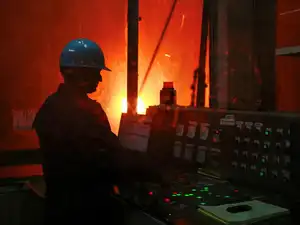
Indian steel mills are facing mounting pressure on margins as higher coking coal prices, driven by supply disruptions in Australia and China and the Iran war, raise steelmaking costs, executives and analysts said.
India, the world's biggest crude steel producer after China, meets 95% of its coking coal needs through imports, with at least half shipped from Australia. Coking coal accounts for nearly 40% of steel production costs.
Squeezed margins could impede investment and delay capacity expansion as Indian steelmakers step up spending to meet buoyant domestic demand driven by infrastructure and strong economic growth.
Also Read: Tata Steel gets CCI nod to acquire additional 23% stake in TM International Logistics
Premium hard coking coal prices jumped 25% from last year to average $236 per metric ton freight on board (FOB) Australia in the first seven months of 2026, said Banmeet Khurmi, lead, metallurgical coal and coke market service, at consultancy CRU in Sydney.
"Prices have been higher this year due to supply disruptions in Australia, slower-than-expected ramp-up at new mines, price support from the conflict in the Middle East and, more recently, a large accident in Shanxi, China," Khurmi said.
Costs are likely to remain high in the second half of the year, partly due to the loss of supply following the Shanxi coal mine disaster, said Freddie Brooks, commodities analyst at BMI, a unit of Fitch Solutions.
Also Read: India's steel ambitions face a coal reality check
For blast furnace-based steelmakers, every $10 a ton increase in coking coal prices adds approximately $7 to $9 per metric ton to steelmaking costs, said an executive at a large steel mill, who was not authorised to speak to the media.
Higher coking coal prices have squeezed margins, three other executives at leading steelmakers said, with little headroom to raise steel prices, given competition from cheap Chinese steel.
Shipments from China have increased despite import tariffs on some grades.
With the higher demand for imports, comes higher transport costs, partly due to disruptions from the U.S.-Iran war.
"Trade flows have tightened with high demand from India and higher diesel, freight and insurance costs," said Hui Ting Sim, vice president at Moody's Ratings.
Australia is expected to continue meeting at least half of India's coking coal needs, although imports from Russia, Mozambique and the United States are also set to rise.
Discounts on Russian coal, which accounted for 24% of India's coking coal imports in recent years, have diminished over the past two years, Khurmi said.
"Over the longer term, we expect Mozambique to overtake the United States and Russia as the second largest exporter of coking coal to India after Australia," Brooks said, adding that Indian companies such as state-run Steel Authority of India and JSW Steel were turning to Mozambique for supplies.
India has been seeking to diversify its coking coal imports and gain access to Mongolia although experts say this remains difficult because of logistical challenges.
(You can now subscribe to our Economic Times WhatsApp channel)
India, the world's biggest crude steel producer after China, meets 95% of its coking coal needs through imports, with at least half shipped from Australia. Coking coal accounts for nearly 40% of steel production costs.
Squeezed margins could impede investment and delay capacity expansion as Indian steelmakers step up spending to meet buoyant domestic demand driven by infrastructure and strong economic growth.
Also Read: Tata Steel gets CCI nod to acquire additional 23% stake in TM International Logistics
Premium hard coking coal prices jumped 25% from last year to average $236 per metric ton freight on board (FOB) Australia in the first seven months of 2026, said Banmeet Khurmi, lead, metallurgical coal and coke market service, at consultancy CRU in Sydney.

"Prices have been higher this year due to supply disruptions in Australia, slower-than-expected ramp-up at new mines, price support from the conflict in the Middle East and, more recently, a large accident in Shanxi, China," Khurmi said.
Costs are likely to remain high in the second half of the year, partly due to the loss of supply following the Shanxi coal mine disaster, said Freddie Brooks, commodities analyst at BMI, a unit of Fitch Solutions.
Also Read: India's steel ambitions face a coal reality check
For blast furnace-based steelmakers, every $10 a ton increase in coking coal prices adds approximately $7 to $9 per metric ton to steelmaking costs, said an executive at a large steel mill, who was not authorised to speak to the media.
Higher coking coal prices have squeezed margins, three other executives at leading steelmakers said, with little headroom to raise steel prices, given competition from cheap Chinese steel.
Shipments from China have increased despite import tariffs on some grades.
IMPORT DEMAND GROWS
Coking coal imports are expected to rise by between 2 million and 3 million tons in 2026-27 from 64 million tons a year earlier, commodities consultancy BigMint said.With the higher demand for imports, comes higher transport costs, partly due to disruptions from the U.S.-Iran war.
"Trade flows have tightened with high demand from India and higher diesel, freight and insurance costs," said Hui Ting Sim, vice president at Moody's Ratings.
Australia is expected to continue meeting at least half of India's coking coal needs, although imports from Russia, Mozambique and the United States are also set to rise.
Discounts on Russian coal, which accounted for 24% of India's coking coal imports in recent years, have diminished over the past two years, Khurmi said.
"Over the longer term, we expect Mozambique to overtake the United States and Russia as the second largest exporter of coking coal to India after Australia," Brooks said, adding that Indian companies such as state-run Steel Authority of India and JSW Steel were turning to Mozambique for supplies.
India has been seeking to diversify its coking coal imports and gain access to Mongolia although experts say this remains difficult because of logistical challenges.
Add  as a Reliable and Trusted News Source
as a Reliable and Trusted News Source Add Now!
(You can now subscribe to our Economic Times WhatsApp channel)
(Catch all the Business News, Breaking News and Latest News Updates on The Economic Times.)
Subscribe to The Economic Times Prime and read the ET ePaper online.
Read More News on
(Catch all the Business News, Breaking News and Latest News Updates on The Economic Times.)
Subscribe to The Economic Times Prime and read the ET ePaper online.






 ETPrime Membership