

 Agencies
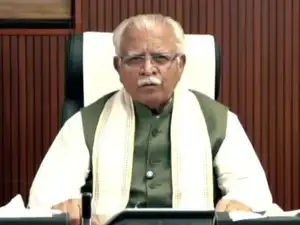
The Centre aims to provide electricity connections for remaining households by March 2027, barring some in remote and hilly areas, Union power minister Manohar Lal said.
Addressing journalists after the two-day Power Ministers’ Conference, he said 14.5 lakh households had been taken up for grid connectivity. “Electricity connections had been completed for around 6.25 lakh households, including those covered through off-grid arrangements,” he said, urging states to complete the remaining work “in mission mode by March next year.”
The minister said difficult terrain and weather could delay connections to some homes in snowbound mountains, forests and border areas. Such households could require another two to four months, depending on conditions, while work elsewhere should be completed by the deadline.
He said the government’s objective was to ensure electricity for every household, round-the-clock supply and affordable power. Discussions at the conference covered generation, transmission, distribution and the financial health of power distribution companies.
States were asked to strengthen billing and collection and accelerate smart metering.
To address concerns about unusually high readings after smart meter installations, the minister said states should consider installing a parallel check meter for three months so consumers could compare readings and have discrepancies examined.
“In many cases, outstanding bills are not appropriately settled and users get a surprise when the smart meters detect discrepancies and present the bills,” he said.
Manohar Lal said states may consider settlement schemes, to prevent accumulated dues from causing concern over the first bill.
The conference also stressed the need for states to enter long-term power purchase agreements rather than depend on short-term purchases to meet their electricity requirements. Officials said states had been encouraged to assess demand and prepare procurement roadmaps to meet their future power requirements.
Energy storage was another focus, with the minister highlighting the need to store surplus solar and wind power for evening and peak-hour demand. Hybrid wind and solar projects were discussed as a way to improve use of transmission infrastructure across different hours.
Officials said battery energy storage was expected to reach between 36 GWh and 40 GWh by the end of the financial year. The minister also called for solarisation of agricultural feeders to supply farmers with daytime electricity and reduce the subsidy burden on states. States were asked to review their resource adequacy plans, covering future demand, generation and transmission needs, and submit reports on proposed changes.
(You can now subscribe to our Economic Times WhatsApp channel)
Addressing journalists after the two-day Power Ministers’ Conference, he said 14.5 lakh households had been taken up for grid connectivity. “Electricity connections had been completed for around 6.25 lakh households, including those covered through off-grid arrangements,” he said, urging states to complete the remaining work “in mission mode by March next year.”
The minister said difficult terrain and weather could delay connections to some homes in snowbound mountains, forests and border areas. Such households could require another two to four months, depending on conditions, while work elsewhere should be completed by the deadline.
He said the government’s objective was to ensure electricity for every household, round-the-clock supply and affordable power. Discussions at the conference covered generation, transmission, distribution and the financial health of power distribution companies.
States were asked to strengthen billing and collection and accelerate smart metering.
To address concerns about unusually high readings after smart meter installations, the minister said states should consider installing a parallel check meter for three months so consumers could compare readings and have discrepancies examined.

“In many cases, outstanding bills are not appropriately settled and users get a surprise when the smart meters detect discrepancies and present the bills,” he said.
Manohar Lal said states may consider settlement schemes, to prevent accumulated dues from causing concern over the first bill.
The conference also stressed the need for states to enter long-term power purchase agreements rather than depend on short-term purchases to meet their electricity requirements. Officials said states had been encouraged to assess demand and prepare procurement roadmaps to meet their future power requirements.
Energy storage was another focus, with the minister highlighting the need to store surplus solar and wind power for evening and peak-hour demand. Hybrid wind and solar projects were discussed as a way to improve use of transmission infrastructure across different hours.
Officials said battery energy storage was expected to reach between 36 GWh and 40 GWh by the end of the financial year. The minister also called for solarisation of agricultural feeders to supply farmers with daytime electricity and reduce the subsidy burden on states. States were asked to review their resource adequacy plans, covering future demand, generation and transmission needs, and submit reports on proposed changes.
Add  as a Reliable and Trusted News Source
 Add Now!
(You can now subscribe to our Economic Times WhatsApp channel)
(Catch all the Business News, Breaking News and Latest News Updates on The Economic Times.)
Subscribe to The Economic Times Prime and read the ET ePaper online.
Read More News on
(Catch all the Business News, Breaking News and Latest News Updates on The Economic Times.)
Subscribe to The Economic Times Prime and read the ET ePaper online.






 ETPrime Membership