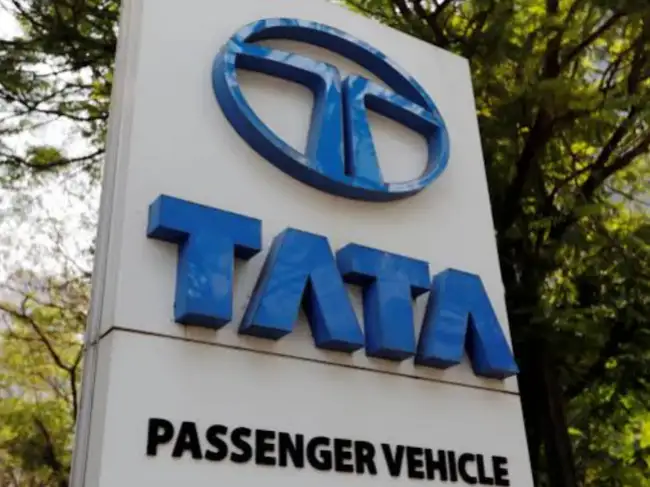
Tata Motors Passenger Vehicles aims to ramp up production to 100,000 vehicles monthly from the next financial year. The company has been selling around 65,000 units monthly but faces supply constraints. Six new models are planned to enhance product offerings, aiming to meet robust demand. An investment of ₹37,500-40,000 crore is intended to boost market share significantly. Tata Motors expects a domestic market growth to 6.4 million units by FY31.
Agencies
Tata Motors Passenger Vehicles targets 100,000 units a month
New Delhi: Tata Motors Passenger Vehicles has asked its suppliers to ramp up capacity to support production of up to 100,000 vehicles a month from the next financial year, as it gears up for a product offensive amid robust domestic demand, two senior industry executives told ET. Tata Motors has been scheduling production of about 75,000 passenger vehicles a month for the last three months but it's "not being able to ramp up fully due to capacity constraints at vendors," one of the executives said.
The targeted 100,000-unit monthly production represents an increase of more than 50% over its average monthly sales of 65,000 units in the first six months of FY27.
The decision to ramp up was communicated at a supplier conference held in Pune last month, the executives said. Tata Motors Passenger Vehicles plans to invest ₹37,500-40,000 crore over FY27-FY31 as it targets a 20% share of India's passenger vehicle market and annual sales of more than 1.2 million units by FY31. Its monthly production capacity is expected to reach 1.3 million units during the period.
The company is the first after Maruti Suzuki to target 100,000-plus PV output a month in the country. The latter crossed that milestone more than 16 years back, and first sold over 100,000 units in May 2010. "With multiple new launches scheduled next year, the company has started prepping for the next phase of growth, which is intended to narrow the gap with the market leader," the executive quoted above said.
Live Events
ET Bureau
Hands on deck
He said the demand is already higher than Tata Motors' production. According to trade insiders, the demand is 7,000-8,000 higher than the 65,000 Tata Motors has been selling on an average every month. The company is scheduled to launch the next generation Nexon in 2027, followed by vehicles from the Avinya series later in the year. Overall, Tata Motors aims to add six new nameplates, taking its portfolio to 15 models by the turn of the decade.
"Unlike competition who has been playing on scale, bringing on-road models which can bring in very high volumes, Tata Motors is looking at addressing every segment where there is meaningful customer demand by filling in gaps in its product portfolio," said the second executive cited above. "It only drove in a new entry-sedan for personal buyers, even as the ICE version of Tigor and Xpres T is being retailed for commercial operations."
A Tata Motors Passenger Vehicles spokesperson said the company continuously reviews and aligns its manufacturing and supply-chain capacities with market demand and its product plans. "However, we do not comment on specific production volumes or supplier-level capacity planning," the person said in response to a query from ET.
Company managing director and CEO Shailesh Chandra had earlier said he expects the domestic passenger vehicle industry to grow to 6.4 million units by FY31, from 4.7 million units in FY26, driven by rising incomes, faster replacement cycles and growing demand for premium vehicles.



 Agencies
 ET Bureau
 as a Reliable and Trusted News Source
 Add Now!






 ETPrime Membership