


 ET Online
Annaprashan and Naamkaran Muhurat November 2026: Dates and Timings
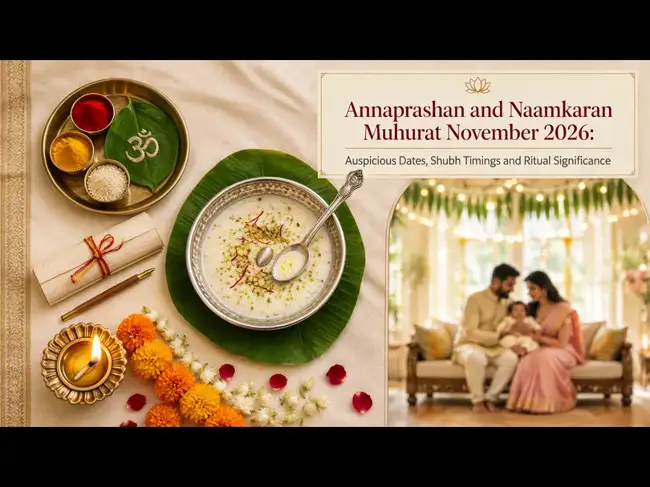
Annaprashan, also known as Mukhe Bhaat in parts of eastern India and the first rice ceremony, is an important Hindu ritual that marks a baby's first introduction to solid food. The ceremony symbolises the beginning of a new phase of growth, nourishment and development.
Traditionally, Annaprashan is performed when a baby is around six months old, although the timing may vary depending on the child's development, family traditions and regional customs. Parents often consult a Hindu Panchang to select an auspicious date and time for the ceremony.
In Hindu tradition, the muhurat is selected by considering the child's birth details, nakshatra, tithi, weekday and planetary positions. November 2026 has two listed auspicious dates for performing Annaprashan.
You May Also Like: Bhoomi Pujan Muhurat November 2026: Check Auspicious Dates, Timings and Nakshatra for Griha Construction
These timings provide the listed auspicious windows for the ceremony. Families should confirm the applicable muhurat according to their city and local Panchang before finalising arrangements.
Also Read: November 2026 Vivah Muhurat: Auspicious Marriage Dates And Shubh Timings
Some common traditions followed during the ceremony include:
Also Read: November 2026 Hindu Festival Calendar: Diwali, Chhath Puja, Dev Diwali and Other Important Dates
The above dates and timings are indicative muhurat windows. The final selection should be made after checking the baby's birth details and the local Panchang.
Some common rituals performed during Naamkaran include:
Traditionally, Annaprashan is performed when a baby is around six months old, although the timing may vary depending on the child's development, family traditions and regional customs. Parents often consult a Hindu Panchang to select an auspicious date and time for the ceremony.
In Hindu tradition, the muhurat is selected by considering the child's birth details, nakshatra, tithi, weekday and planetary positions. November 2026 has two listed auspicious dates for performing Annaprashan.
You May Also Like: Bhoomi Pujan Muhurat November 2026: Check Auspicious Dates, Timings and Nakshatra for Griha Construction
Annaprashan Shubh Muhurat Dates in November 2026
| Date | Day | Shubh Muhurat | Nakshatra |
| November 11, 2026 | Wednesday | 08:06 AM – 09:28 AM | Anuradha |
| November 16, 2026 | Monday | 09:30 AM – 10:51 AM | Shravana |

Also Read: November 2026 Vivah Muhurat: Auspicious Marriage Dates And Shubh Timings
Annaprashan Rituals and Significance
Annaprashan is considered one of the important sixteen Hindu samskaras (sacraments). It celebrates a child's transition from depending primarily on mother's milk to gradually receiving nourishment through solid food.Some common traditions followed during the ceremony include:
- Ganesh Puja: Families begin by worshipping Lord Ganesha and seeking blessings for the child's well-being.
- First feeding: The baby is traditionally offered a small quantity of rice or sweet rice pudding (kheer) by a parent or grandparent.
- Family blessings: Elders bless the child and pray for good health, happiness and prosperity.
- Traditional customs: Some families perform symbolic rituals involving food, books or other objects as part of regional traditions.
Also Read: November 2026 Hindu Festival Calendar: Diwali, Chhath Puja, Dev Diwali and Other Important Dates
Naamkaran Muhurat November 2026: Auspicious Dates and Timings
Naamkaran, or the Hindu naming ceremony, is another significant samskara performed after the birth of a child. The ceremony formally introduces the newborn's name to family members and the wider community. According to Hindu traditions, Naamkaran is commonly performed on the 11th or 12th day after birth, although some families observe it on the 21st day, 101st day or another auspicious date based on family customs and astrological considerations.Naamkaran Shubh Muhurat Dates in November 2026
| Date | Day | Shubh Muhurat | Nakshatra |
| November 6, 2026 | Friday | 08:03 AM – 10:48 AM | Hasta |
| November 11, 2026 | Wednesday | 08:06 AM – 09:28 AM | Anuradha |
| November 16, 2026 | Monday | 09:30 AM – 10:51 AM | Shravana |
| November 20, 2026 | Friday | 07:15 AM – 10:52 AM | Uttara Bhadrapada |
| November 25, 2026 | Wednesday | 08:15 AM – 09:34 AM | Rohini |
| November 26, 2026 | Thursday | 07:11 AM – 08:16 AM | Mrigashira |
Naamkaran Ceremony Rituals and Significance
Naamkaran is traditionally associated with giving a newborn an identity and welcoming the child into the family and community. It is also considered an occasion to seek divine blessings for a happy, healthy and prosperous life.Some common rituals performed during Naamkaran include:
- Ganesh and deity worship: The ceremony often begins with prayers to Lord Ganesha and other family deities.
- Sankalp and prayers: Parents perform a sankalp (sacred resolution) and pray for the child's long life and well-being.
- Name selection: The baby's name may be selected according to the Janma Nakshatra, Rashi or family traditions.
- Whispering the name: In some customs, the father or another elder gently whispers the chosen name into the baby's ear.
- Blessings from elders: Family members bless the newborn and celebrate the occasion with traditional food and gatherings.
Difference Between Annaprashan and Naamkaran
Although both ceremonies are important Hindu samskaras, they mark different milestones in a child's life.| Aspect | Annaprashan | Naamkaran |
| Meaning | First solid food ceremony | Naming ceremony |
| Purpose | Marks the introduction of solid food | Formally gives the child a name |
| Traditional timing | Around six months after birth | Often the 11th or 12th day after birth |
| Main ritual | Offering the baby's first solid food | Announcing or whispering the baby's name |
| Significance | Health, nourishment and growth | Identity, blessings and a positive beginning |
Add  as a Reliable and Trusted News Source
 Add Now!
Disclaimer Statement: This content is authored by a 3rd party. The views expressed here are that of the respective authors/ entities and do not represent the views of Economic Times (ET). ET does not guarantee, vouch for or endorse any of its contents nor is responsible for them in any manner whatsoever. Please take all steps necessary to ascertain that any information and content provided is correct, updated, and verified. ET hereby disclaims any and all warranties, express or implied, relating to the report and any content therein.