


 ET AI
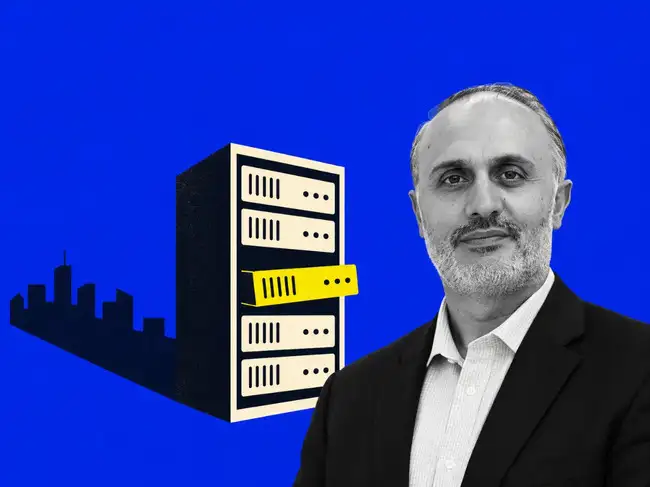
A cyberattack on a large data centre could spread far beyond a temporary outage and disrupt the economy that depends on it, Accenture’s global cybersecurity lead Harpreet Sidhu said, urging India to build security into its new digital infrastructure from the beginning.
The warning comes as India expands the computing capacity needed for AI and cloud services. The government said installed data centre capacity reached about 1.57 gigawatt (GW) in August 2026 and could reach 8 GW by 2030. The expansion will place more banking, telecom, payment and public services inside these facilities, making the physical systems that keep them running an important part of national cyber resilience.
"I think security by design is the way to go forward. So as India is investing into data centers and fabs for the future, I think that those data centers need to be built securely. Because there is a lot of IoT devices in those data centers. There are cooling systems. There is power and backup systems that are all not just interconnected, but they’re connected to the outside world,” Sidhu told ET AI in an exclusive interview.
According to Sidhu, attackers who reach those operational systems could interrupt the physical conditions that keep a facility running. The concentration of workloads could then turn one successful attack into a wider business continuity problem.
“Those systems need to be secured. Because if those systems are hacked, now you are not just talking about a data center going down. You are talking about disruption to an economy,” Sidhu said.
“I have seen situations where it is chaotic and I have seen situations that are very calm, and the difference between the two is one side prepared and had a plan and knew that this would happen and they prepared for it,” he said.
“You prepare, you spar, you practice, so when you do show up to the big day, you are prepared to show up with your best,” Sidhu added.
According to him, recovery plans must identify essential systems, set the restoration order and establish how the organisation will communicate while investigators determine what happened.
“It will happen, so when it does happen, do you have the necessary response plans? Do you have the necessary information about your core, your digital core, so that you know that what systems need to be recovered, in what sequence, what kind of messaging you need to put out to your customers, to your regulators, and how you're going to communicate, because you don't always have all the information up front,” Sidhu said.
“We are starting to see a lot of focus around hackers using AI to scale, drive speed, and evade detection completely, because earlier when they were not using AI, it was a manual labour. They were having to do a lot of reconnaissance and you can only scale so much as a human being,” Sidhu said.
India’s nodal cybersecurity agency also issued a blueprint in May covering governance, technical controls, vulnerability management, incident response and continuous testing. Sidhu said defenders can use AI to analyse security information and respond to threats, although attackers currently have a narrow lead.
“I think the bad guys have a slight advantage, but the good guys are not far behind,” he said. “AI is being used by cyber defenders to defend against AI attacks, and we are starting to see that take better shape,” he added.
The warning comes as India expands the computing capacity needed for AI and cloud services. The government said installed data centre capacity reached about 1.57 gigawatt (GW) in August 2026 and could reach 8 GW by 2030. The expansion will place more banking, telecom, payment and public services inside these facilities, making the physical systems that keep them running an important part of national cyber resilience.
"I think security by design is the way to go forward. So as India is investing into data centers and fabs for the future, I think that those data centers need to be built securely. Because there is a lot of IoT devices in those data centers. There are cooling systems. There is power and backup systems that are all not just interconnected, but they’re connected to the outside world,” Sidhu told ET AI in an exclusive interview.
According to Sidhu, attackers who reach those operational systems could interrupt the physical conditions that keep a facility running. The concentration of workloads could then turn one successful attack into a wider business continuity problem.
“Those systems need to be secured. Because if those systems are hacked, now you are not just talking about a data center going down. You are talking about disruption to an economy,” Sidhu said.

Resilience begins before a breach
Sidhu said preparation often determines whether an organisation can contain a cyberattack. Companies need to decide which systems they must restore first, how they will continue essential services and what they will tell customers and regulators.“I have seen situations where it is chaotic and I have seen situations that are very calm, and the difference between the two is one side prepared and had a plan and knew that this would happen and they prepared for it,” he said.
“You prepare, you spar, you practice, so when you do show up to the big day, you are prepared to show up with your best,” Sidhu added.
According to him, recovery plans must identify essential systems, set the restoration order and establish how the organisation will communicate while investigators determine what happened.
“It will happen, so when it does happen, do you have the necessary response plans? Do you have the necessary information about your core, your digital core, so that you know that what systems need to be recovered, in what sequence, what kind of messaging you need to put out to your customers, to your regulators, and how you're going to communicate, because you don't always have all the information up front,” Sidhu said.
AI is shrinking the response window
The Indian Computer Emergency Response Team (CERT-In) said in a November advisory that it had identified agentic offensive frameworks targeting enterprises, technology providers and government organisations. The systems used automated agents in parallel and changed their attack steps after blocked attempts.“We are starting to see a lot of focus around hackers using AI to scale, drive speed, and evade detection completely, because earlier when they were not using AI, it was a manual labour. They were having to do a lot of reconnaissance and you can only scale so much as a human being,” Sidhu said.
India’s nodal cybersecurity agency also issued a blueprint in May covering governance, technical controls, vulnerability management, incident response and continuous testing. Sidhu said defenders can use AI to analyse security information and respond to threats, although attackers currently have a narrow lead.
“I think the bad guys have a slight advantage, but the good guys are not far behind,” he said. “AI is being used by cyber defenders to defend against AI attacks, and we are starting to see that take better shape,” he added.
Add  as a Reliable and Trusted News Source
 Add Now!