Gold and silver prices have seen a significant drop after reaching record highs. This correction follows a period of rapid gains driven by speculative demand and fear of missing out. Experts suggest this pullback is a healthy market adjustment, but investors should remain cautious and maintain balanced asset allocation.
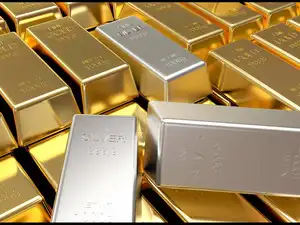
Getty ImagesA speculative surge ends in a sharp correction, raising questions over silver’s role in long-term portfolios.
Gravity has finally caught up with the high-flying precious metals. After a meteoric rise that saw silver MCX futures price climb to Rs.4,20,000 per kg, the white metal declined by 27% on 30 January—its largest single-day fall to date. Despite a small rebound, silver prices are hovering around Rs.2,68,000 per kg as of 3 February—down nearly 33% from the peak.
Meanwhile, gold has also fallen off its perch, shedding 12% from its peak of Rs.1,69,000 per 10 grams. The sell-off in the precious metals has been swift and brutal. Does this signal an end to the rally in silver and gold, puncturing the long-term thesis? Or is this a temporary retreat before the precious metals continue their bull run?
When silver wins gold
For a long time, silver has played second fiddle to gold, as the latter has remained the preferred safe-haven asset amid geopolitical shocks and debasement of fiat currencies. Investors and central banks shored up gold. “The weakening dollar and mounting questions over its reserve-currency status have acted as a significant catalyst for the ongoing bull run in gold,” remarks Chirag Mehta, CIO, Quantum AMC.
Silver mostly tagged along. But narratives often lift assets into higher orbit, and silver found its own compelling story—pulling it out of the shadows of its overachieving cousin.
Silver offers a completely different proposition to gold. Half of the demand for silver is driven by industrial use. It is widely used in the manufacture of smartphones and tablets, solar panels, and electric vehicles, among other applications. This demand far outstrips the supply of silver, which is constrained by limited mining.
The year 2025 was the fifth consecutive year of supply deficit. This rising demand-supply mismatch kept silver prices buoyant in the initial leg of the rally and attracted investors.
But the sharp rise in silver prices in recent weeks was not owing to industrial demand. This was driven solely by speculative demand from investors experiencing fear of missing out (FOMO). “At the core of the rally were familiar and, until recently, credible themes. Silver moved well beyond these fundamentals,” says a report by Mirae Asset Mutual Fund. “Its dual identity, part monetary metal, part industrial input, made it particularly vulnerable to momentum-driven flows. As prices surged, silver increasingly traded less like a hedge and more like a leveraged proxy for speculative risk appetite,” the note adds.
How the safe-haven trade unravelled Gold and silver fell sharply after dollar strengthened.
Safe-haven trade unravels
Now, after the record-breaking rally, several factors are being attributed to the sharp decline in the two precious metals. The immediate trigger was US President Donald Trump’s endorsement of former Federal Reserve Governor Kevin Warsh as his preferred candidate to succeed current Federal Reserve Chair Jerome Powell. The market perceives Warsh as a hawkish policymaker who prefers a tight grip on inflation and tighter monetary conditions. This stoked fears of higher interest rates for longer, triggering a sharp pullback in safe-haven assets that draw strength from a weaker dollar and lower interest rates. The dollar immediately went up against other global currencies, which dampened the allure of safe-haven assets. The dollar debasement trade evaporated.
Furthermore, prices fell as investors began taking profits in both gold and silver after their parabolic rise in recent months. For silver, particularly, a hike in margin requirements on silver futures by the Chicago Mercantile Exchange (CME) seems to have broken the back of speculators. The move forced leveraged traders to liquidate positions, accelerating a wave of selling. "The correction was amplified by extreme overbought conditions after gold and silver touched unprecedented highs just days earlier. Profit-taking cascaded into panic selling as liquidity thinned and volatility spiked," observes Hareesh V., Head of Commodity Research, Geojit Investments.
CHIRAG MEHTA CIO, Quantum AMC Note: “A lot of silver’s strength was driven by narrative rather than substance. The supply-demand mismatch was exaggerated.”
Gold and silver still sitting on hefty gains after dip Recent correction has marginally dented last year’s parabolic gains in the precious metals.
Correlation with dollar index Dollar index has an inverse correlation with precious metals
Commodities can experience crippling drawdowns History suggests gold and silver can go through prolonged downcycles
VIVEK BANKA Founder, Goalteller Note:“One should be careful not to get sucked into euphoria and maintain an asset allocation of not more than 10% towards these metals.”
Taking cues from the past
Narratives change over time. What doesn't change is history. And history tends to repeat itself. Certain assets don't change their innate traits. They tend to revert to old ways. Commodities like gold and silver are no different. In a euphoria-driven rally, investors forget this reality. Silver's nature, particularly, is far more complex than what narratives suggest. It is prone to bouts of high volatility, with sharp up moves that quickly unravel into painful declines and long periods of no returns. Take, for instance, silver's 55% crash after soaring to its lifetime high of Rs.73,288 per kg in April 2011. It marked a crippling, slow descent from which the metal only recovered nine years later, according to data from WhiteOak Capital MF.
In its 30 January report "Gold is Talking, Silver is Screaming", WhiteOak Capital MF raised timely alarms over silver's sharp upmove. When gold "talks," it primarily signals geopolitical tensions and systemic risks within or outside major global economies, and may portend currency devaluation due to these risks, the report observed. But it warned that when silver begins to "scream", outperforming gold with high velocity/parabolic moves, it often signals the final, speculative stage of a run; one that historically ends against investors' best interests.
The gold-silver ratio is a useful indicator of the relative value of gold vis-à-vis silver. This ratio denotes the price of gold relative to that of silver. Historically, the 10-year gold-silver ratio averages approximately 80:1. After the sharp uptick in silver, the gold-silver ratio narrowed to 46:1. When it falls below 50:1, it usually signals a pullback in silver. In previous cycles, a ratio this low has preceded mean reversion, in which silver prices corrected significantly faster than gold, suggests WhiteOak Capital MF. To be sure, gold is also not immune to prolonged drawdowns either. After peaking at `32,147 per 10 gm in September 2012, it took the yellow metal seven years to recover. While a weakening rupee is often used to justify holding metals, history shows that it cannot protect against a speculative burst, the asset manager notes.
What to do now
The sell-off in precious metals serves as another reminder of how markets eventually correct excesses. "For now, the precious metals complex has moved from euphoria to introspection. The reset may ultimately prove healthy, but the events of the past few days will stand as a stark reminder: even as. sets seen as symbols of stability are not immune to excess or to sudden gravity,” Mirae Asset MF mentions in its report.
Investors must guard against narratives. Mehta adds, “A lot of silver’s strength was driven by narrative rather than substance. The supply-demand mismatch was exaggerated as aggregate industrial demand for silver has remained flattish in the last three years.” Mehta adds that commodities are viable till they remain ‘price-viable’. High silver prices could prompt manufacturers to seek lower-cost alternatives.
As the dust begins to settle, it is important to distinguish between gold and silver, insists Mirae Asset MF. "Silver’s outlook is more complex. Its smaller market size and greater interference by speculative flows make it inherently more unstable.” Silver may fetch higher return, but it also entails higher volatility. If the intent is to reduce the volatility associated with equities, adding silver to the mix will not yield the desired results, experts say. Dev Ashish, Founder, StableInvestor, asserts, “Given its historically unreliable nature, silver does not have a case for making it a large or core part of a long-term portfolio.” DSP Mutual Fund suggests that an overweight position in silver is warranted at a gold-silver ratio of 80-100, rather than 45-60. The recent price correction has caused the overvaluation in silver to shrink dramatically, but it is still not favourable from a risk-reward perspective.
However, experts insist gold retains its safe-haven credentials. Sandip Raichura, CEO of Retail Broking and Distribution & Director, PL Capital, asserts, “While multiple geopolitical risks have magnified the move and may be subject to news-based volatility, we believe the world has increasingly become fractured in the medium term and hence demand for valuable resources will do two things – push up commodity prices and push demand for gold as a strategic reserve for the credibility of regional currency blocs.”
Mehta avers, “Any short-term pullback should be viewed as a healthy market adjustment rather than a reversal of the broader trend, potentially creating more favourable conditions for long-term positioning.” While recent positioning was clearly excessive, the underlying investment case for gold has merely been interrupted, not invalidated, suggests Mirae Asset MF. The fund house suggests gold appears relatively better positioned on a risk– reward basis.
Safe haven allocation
Amid the reset, investors should calibrate allocation to precious metals. Vivek Banka, Founder, Goalteller, remarks, “For long-term investors, these metals continue to offer a great hedge against global geopolitical risks and hence an important allocation. However, one should be careful not to get sucked into euphoria and maintain an asset allocation of not more than 10% towards these.” Niranjan Avasthi, Senior Vice President, Edelweiss Mutual Fund, says recent volatility warrants caution and investors should invest in these metals as part of an asset allocation, only, and not overreach.
WhiteOak Capital MF reckons the time for precious metals as a hedge may be over. “Gold and silver are essential insurance, but we don’t buy more insurance after the house has already been saved. It may be prudent to move your capital to an asset that builds wealth, not one that simply waits for a disaster.” The asset manager suggests investors trim precious metals back to a safe-haven level in the portfolio and move harvested gains into diversified Indian equity funds or blue-chip stocks.




 Getty Images

 as a Reliable and Trusted News Source
 Add Now!






 ETPrime Membership