


Listen to this article in summarized format
×
Subscribe to

Unlock AI Briefing and Premium Content
New Year Offer 24 Hours Left
Subscribe NowAlready a member? Sign In
What's Included
- Exclusive Stories
- Daily ePaper Access
- Smart Market Tools
- Curated Investment Ideas
- Ad-lite Experience
Subscription

Related
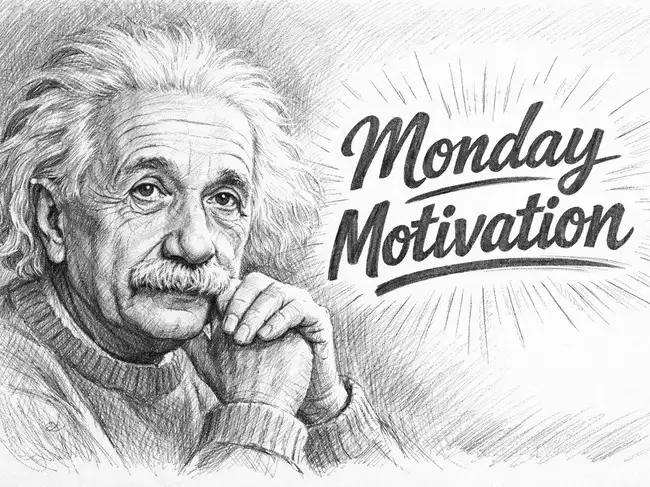
The motivational quote by Albert Einstein, "Life isn't worth living, unless it is lived for someone else," highlights the importance of purpose and connection in our lives. It suggests that true meaning does not come from living only for ourselves, but from helping, caring, and making a difference in the lives of others. In today’s fast-paced world, people often focus on personal success, money, or achievements. However, Einstein reminds us that happiness and fulfillment grow when we support family, friends, and even strangers. Acts of kindness, empathy, and service create a deeper sense of satisfaction that material success alone cannot provide. This quote encourages us to think beyond self-interest and build meaningful relationships. It teaches that life becomes richer when we contribute to something bigger than ourselves.
Albert Einstein is one of the most famous scientists in history, known for changing how we understand the universe. Born in 1879 in Ulm, Einstein showed curiosity from a young age, though he was not always seen as a top student. His love for science and math eventually led him to groundbreaking discoveries that reshaped modern physics.
Einstein is best known for developing the Theory of Relativity, which explained how time, space, and gravity are connected. His famous equation, E=mc², showed that energy and mass are interchangeable. This idea not only advanced science but also had a huge impact on technology and even global politics.
In 1921, Einstein won the Nobel Prize in Physics, not for relativity, but for his work on the photoelectric effect. This discovery helped lay the foundation for quantum mechanics, another key area of modern science. Beyond his achievements, Einstein was also known for his humanitarian views. He spoke out against war and supported civil rights, using his voice to influence society.
Later in life, Einstein moved to the United States, where he worked at Princeton University. He continued his research until his death in 1955. Today, Einstein remains a symbol of intelligence, curiosity, and creativity. His ideas continue to inspire scientists, students, and thinkers around the world, proving that imagination and persistence can truly change the way we see reality.
Albert Einstein is one of the most famous scientists in history, known for changing how we understand the universe. Born in 1879 in Ulm, Einstein showed curiosity from a young age, though he was not always seen as a top student. His love for science and math eventually led him to groundbreaking discoveries that reshaped modern physics.
Einstein is best known for developing the Theory of Relativity, which explained how time, space, and gravity are connected. His famous equation, E=mc², showed that energy and mass are interchangeable. This idea not only advanced science but also had a huge impact on technology and even global politics.
In 1921, Einstein won the Nobel Prize in Physics, not for relativity, but for his work on the photoelectric effect. This discovery helped lay the foundation for quantum mechanics, another key area of modern science. Beyond his achievements, Einstein was also known for his humanitarian views. He spoke out against war and supported civil rights, using his voice to influence society.

Later in life, Einstein moved to the United States, where he worked at Princeton University. He continued his research until his death in 1955. Today, Einstein remains a symbol of intelligence, curiosity, and creativity. His ideas continue to inspire scientists, students, and thinkers around the world, proving that imagination and persistence can truly change the way we see reality.
Add  as a Reliable and Trusted News Source
as a Reliable and Trusted News Source Add Now!