

 Daily Top 5 Daily Top 5 |
Oracle layoffs hit India hard; Qcomm apps print ad money
Want this newsletter delivered to your inbox?
I agree to receive newsletters and marketing communications via e-mail

Thank you for subscribing to Daily Top 5
We'll soon meet in your inbox.
India bore the brunt of Oracle’s latest global layoffs amid rising automation. This and more in today’s ETtech Top 5.
Also in the letter:
■ EV incumbents outpace Ola
■ Tax relief for pre-2017 FDI
■ SpaceX’s mega IPO
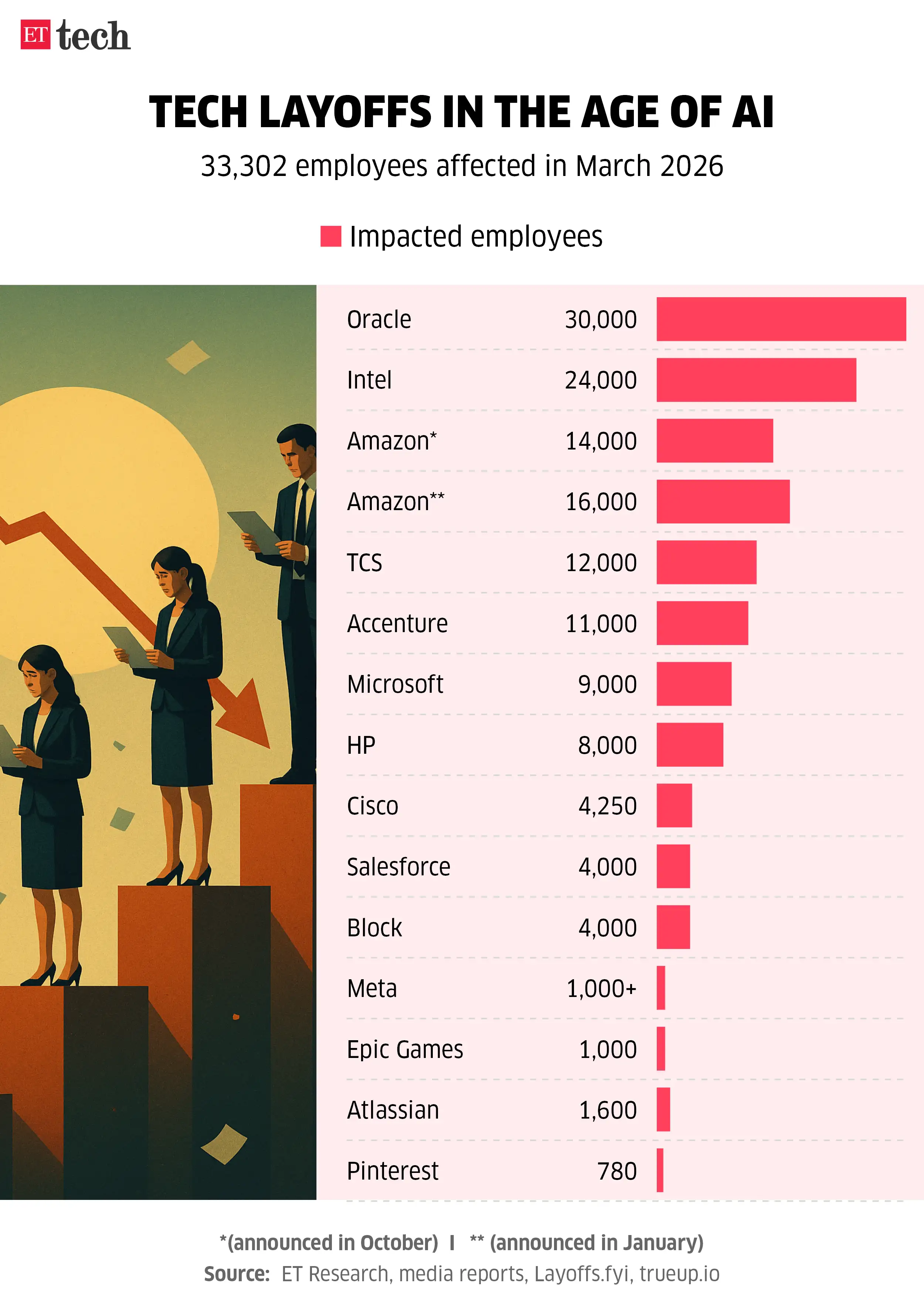
India became ground zero for Oracle’s latest round of layoffs, with the company’s massive India hub – about 50,000 employees, one of its largest bases outside the US – bearing the brunt.
When Oracle moved to streamline its ops and go lean, India turned into the obvious cost-cutting target. ET reported on Thursday that roughly 10,000 workers were in the crosshairs as part of the wider reorganisation.
Who got hit: The axe has largely fallen on customer support, operations and cloud services roles – functions that ballooned during the software-as-a-service (SaaS) boom and are now squarely in the firing line as advances in AI accelerate automation.
Yes, and: On the legal side, India gives multinationals a lot more room to manoeuvre than in more tightly regulated markets like the EU or the UK, where formal consultations and longer processes are the norm.
This is not a one-off. Indian units have been hit in nearly every major tech layoff wave over the last two years, from Intel and Microsoft to Amazon.

India’s technology sector has kicked off the new fiscal year on its back foot. Active tech job openings slipped to 110,000 in April 2026, an 8% drop from March, according to Xpheno’s latest Active Tech Jobs Outlook report.
Fresher demand down:
Ecommerce, quick commerce, and food delivery platforms are on track to clock more than Rs 28,000 crore in ad revenue in 2026 – up 30% year-on-year – turning advertising into a crucial margin lever for businesses that otherwise operate on wafer-thin unit economics.
Revenue breakdown:

Quick commerce sprint:
AI arms insights: As brands step up digital ad spends, platforms are leaning heavily on artificial intelligence (AI) to sharpen targeting and measurement. Quick commerce firms are using AI not just to serve more personalised ads, but also to package consumer insights – such as purchase patterns and cohort behaviour – back to brands as a premium offering.
Also Read: From search to shopping carts, digital ads mint Rs 80,000 crore

India’s electric two-wheeler (e2W) market had a strong FY26, with sales rising and most players growing their share – except Ola Electric, which moved in the opposite direction.
What’s happening? Total e2W registrations exceeded 1.35 million units during the fiscal year, despite production bottlenecks stemming from rare earth material shortages. Average monthly sales hovered around 112,000 units.
Established automakers such as TVS Motor and Bajaj Auto – already big names in the space – reported steady volume gains through the year, tightening their grip on the segment.
By the numbers:
Also Read: Ola Electric sees sales rebound in March but trails peers; lifetime sales cross 1 million mark
What else? October was the standout month, with sales peaking at around 140,000 units, powered by festive-season buying during Dusshera and Diwali, when companies typically roll out discounts and ramp up production.

India has said it will not apply strict tax-avoidance rules to foreign investments made before April 2017, easing investor jitters after a recent court ruling stoked fears of retrospective action.
What’s happening? On Wednesday, the income tax department clarified that gains from pre-April 2027 investments will not be reopened under tougher anti-tax avoidance rules designed to curb aggressive tax planning.
The background: In January, a Supreme Court ruling held that Tiger Global must pay taxes on its $1.6 billion sale of a stake in an Indian company in 2018. The judges said Tiger Global had used its Mauritius entities as mere "conduits" and that no treaty benefit would apply for pre-2017 investments.
Tiger Global denied any wrongdoing. Investors, however, worried that the verdict could give Indian tax authorities grounds to revisit older deals involving pre-2017 investments, especially those routed through low-tax jurisdictions like Mauritius.
Also Read: GAAR shadow over payments abroad worries India Inc
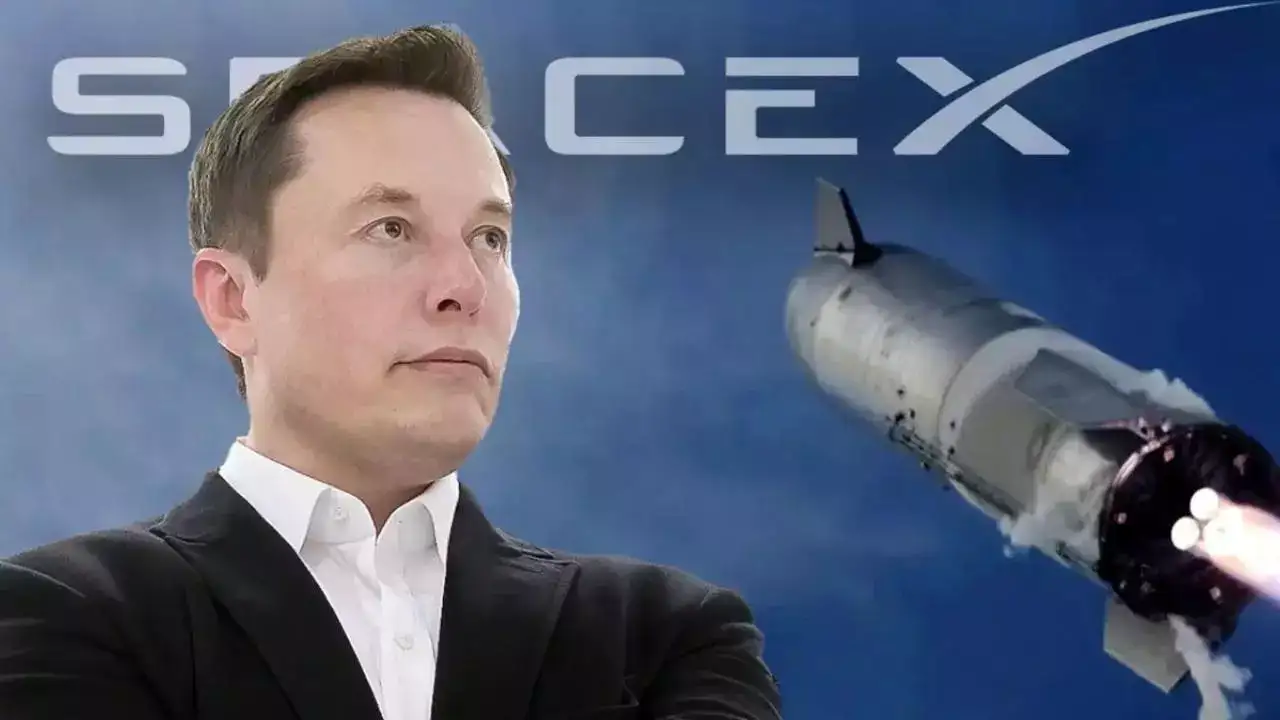
Elon Musk's SpaceX has confidentially filed for a US initial public offering, setting up what could become the largest stock market listing in history – and potentially pushing Musk into trillionaire territory.
Number-wise: The IPO could value SpaceX at more than $1.75 trillion, with the Starbase, Texas-headquartered company eyeing a fundraise of over $50 billion.
This filing follows SpaceX’s merger with Musk’s AI startup xAI, in a deal that pegged the rocket maker’s value at $1 trillion and xAI – the company behind the Grok chatbot – at $250 billion.
Also Read: SpaceX lines up 21 banks for mega IPO, code-named project Apex
Big game: SpaceX dominates the global launch market with its reusable rockets, dramatically cutting the cost of sending satellites into orbit. Musk controls the company alongside a clutch of investment funds and tech companies, including Google parent Alphabet. SpaceX also owns the Starlink satellite constellation, which has become a critical communications backbone in several parts of the world.
Also Read: SpaceX's business and finances: Rockets, satellite communications and budding AI
Also in the letter:
■ EV incumbents outpace Ola
■ Tax relief for pre-2017 FDI
■ SpaceX’s mega IPO
Tech layoffs: India once again in the crosshairs, with 1 in 3 laid off by Oracle based here
India became ground zero for Oracle’s latest round of layoffs, with the company’s massive India hub – about 50,000 employees, one of its largest bases outside the US – bearing the brunt.
When Oracle moved to streamline its ops and go lean, India turned into the obvious cost-cutting target. ET reported on Thursday that roughly 10,000 workers were in the crosshairs as part of the wider reorganisation.
Who got hit: The axe has largely fallen on customer support, operations and cloud services roles – functions that ballooned during the software-as-a-service (SaaS) boom and are now squarely in the firing line as advances in AI accelerate automation.
Yes, and: On the legal side, India gives multinationals a lot more room to manoeuvre than in more tightly regulated markets like the EU or the UK, where formal consultations and longer processes are the norm.
This is not a one-off. Indian units have been hit in nearly every major tech layoff wave over the last two years, from Intel and Microsoft to Amazon.
India’s tech hiring opens FY27 on a cautious note with fresher roles under most pressure: Report
India’s technology sector has kicked off the new fiscal year on its back foot. Active tech job openings slipped to 110,000 in April 2026, an 8% drop from March, according to Xpheno’s latest Active Tech Jobs Outlook report.
Fresher demand down:
- Entry-level hiring is stuck in neutral at around 15,000 openings for a second straight month, and is down nearly 11% year-on-year.
- Roles that are friendly to freshers now make up only 14% of demand, while mid-senior professionals corner 54%.
Ecommerce, quick commerce chasing ad spends with profitability in focus
Ecommerce, quick commerce, and food delivery platforms are on track to clock more than Rs 28,000 crore in ad revenue in 2026 – up 30% year-on-year – turning advertising into a crucial margin lever for businesses that otherwise operate on wafer-thin unit economics.
Revenue breakdown:
- Ecommerce majors such as Amazon and Flipkart are expected to clock Rs 19,000-20,000 crore in ad revenue in 2026, up from Rs 16,000 crore last year, according to Deloitte.
- Quick commerce platforms, including Blinkit, Instamart and Zepto, are projected to generate Rs 4,900 crore in ad revenues this year, up from Rs 3,000 crore in 2025, per Datum Intelligence.
- Food delivery giants Zomato and Swiggy are expected to see a 20-25% jump in their combined 2025 ad revenue of Rs 2,500 crore, according to a senior industry executive.
Quick commerce sprint:
- Quick commerce is seeing the sharpest ramp-up, helped by high-frequency usage and limited in-app inventory that makes ad slots more valuable.
- Festive sales and micro event-led shopping campaigns have spiked on these platforms.
- Instamart, for instance, now highlights upcoming events each week, giving brands more hooks for contextual campaigns.
AI arms insights: As brands step up digital ad spends, platforms are leaning heavily on artificial intelligence (AI) to sharpen targeting and measurement. Quick commerce firms are using AI not just to serve more personalised ads, but also to package consumer insights – such as purchase patterns and cohort behaviour – back to brands as a premium offering.
Also Read: From search to shopping carts, digital ads mint Rs 80,000 crore
Legacy players gain ground in EV two-wheelers as Ola Electric slips
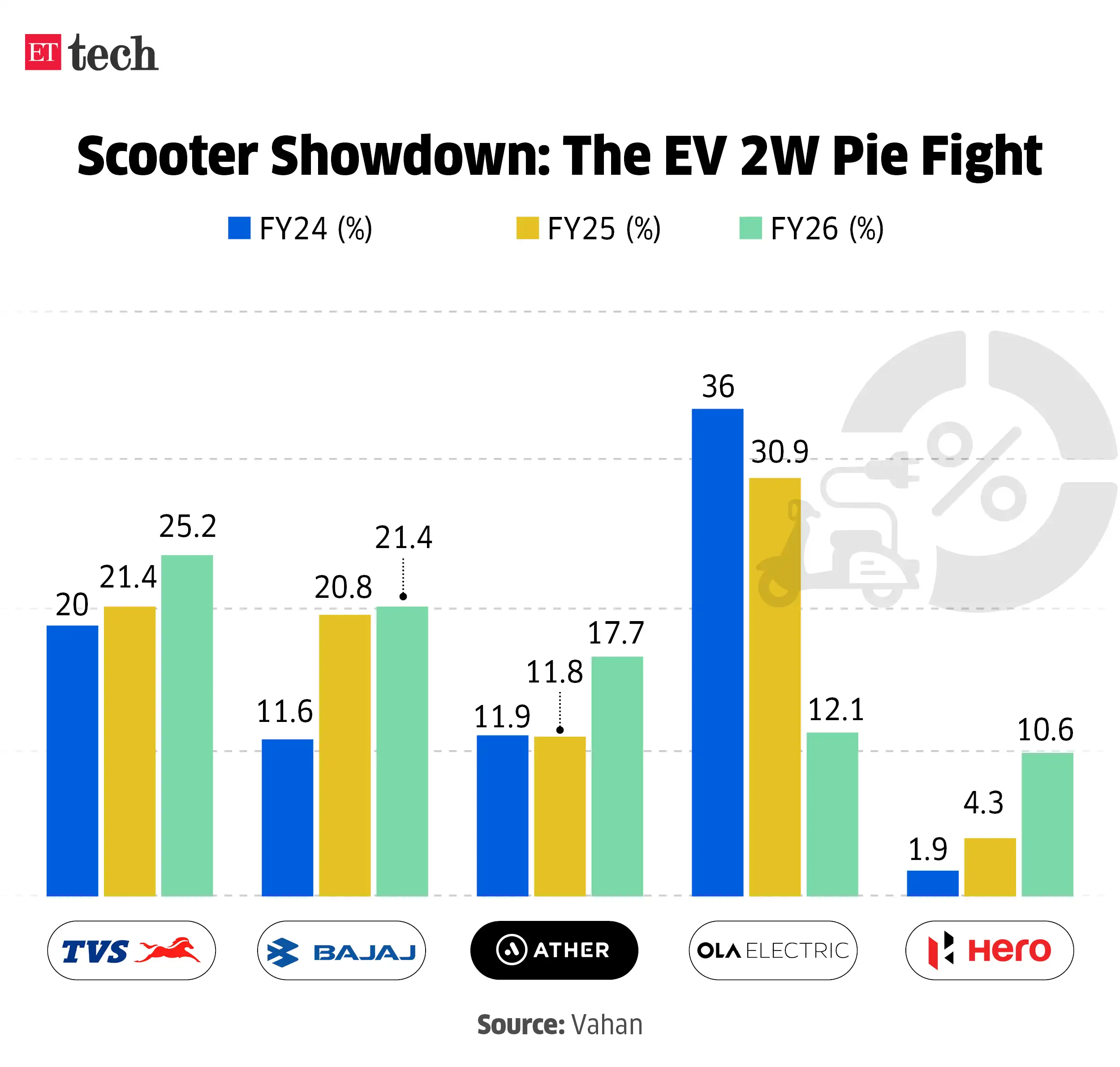
India’s electric two-wheeler (e2W) market had a strong FY26, with sales rising and most players growing their share – except Ola Electric, which moved in the opposite direction.
What’s happening? Total e2W registrations exceeded 1.35 million units during the fiscal year, despite production bottlenecks stemming from rare earth material shortages. Average monthly sales hovered around 112,000 units.
Established automakers such as TVS Motor and Bajaj Auto – already big names in the space – reported steady volume gains through the year, tightening their grip on the segment.
By the numbers:
- TVS Motor scaled up from nearly 20,000 units (22.3% share) in April 2025 to 49,484 units (about 27% share) by March 2026.
- Bajaj Auto grew its market share from 21.4% to 28.5%, becoming the segment leader by March 2026.
- Ather Energy also notched up steady gains, logging 35,736 registrations in March 2026 (19.4% share), up from 13,332 units (15% share) in April 2025.
- Meanwhile, Ola Electric, led by Bhavish Aggarwal, sold 10,118 vehicles in March 2026, with its market share sliding to 5.4% from 22.1% in April 2025.
Also Read: Ola Electric sees sales rebound in March but trails peers; lifetime sales cross 1 million mark
What else? October was the standout month, with sales peaking at around 140,000 units, powered by festive-season buying during Dusshera and Diwali, when companies typically roll out discounts and ramp up production.
India shields pre-2017 foreign investment gains from strict tax rules
India has said it will not apply strict tax-avoidance rules to foreign investments made before April 2017, easing investor jitters after a recent court ruling stoked fears of retrospective action.
What’s happening? On Wednesday, the income tax department clarified that gains from pre-April 2027 investments will not be reopened under tougher anti-tax avoidance rules designed to curb aggressive tax planning.
The background: In January, a Supreme Court ruling held that Tiger Global must pay taxes on its $1.6 billion sale of a stake in an Indian company in 2018. The judges said Tiger Global had used its Mauritius entities as mere "conduits" and that no treaty benefit would apply for pre-2017 investments.
Tiger Global denied any wrongdoing. Investors, however, worried that the verdict could give Indian tax authorities grounds to revisit older deals involving pre-2017 investments, especially those routed through low-tax jurisdictions like Mauritius.
Also Read: GAAR shadow over payments abroad worries India Inc
SpaceX files for mega IPO
Elon Musk's SpaceX has confidentially filed for a US initial public offering, setting up what could become the largest stock market listing in history – and potentially pushing Musk into trillionaire territory.
Number-wise: The IPO could value SpaceX at more than $1.75 trillion, with the Starbase, Texas-headquartered company eyeing a fundraise of over $50 billion.
This filing follows SpaceX’s merger with Musk’s AI startup xAI, in a deal that pegged the rocket maker’s value at $1 trillion and xAI – the company behind the Grok chatbot – at $250 billion.
Also Read: SpaceX lines up 21 banks for mega IPO, code-named project Apex
Big game: SpaceX dominates the global launch market with its reusable rockets, dramatically cutting the cost of sending satellites into orbit. Musk controls the company alongside a clutch of investment funds and tech companies, including Google parent Alphabet. SpaceX also owns the Starlink satellite constellation, which has become a critical communications backbone in several parts of the world.
Also Read: SpaceX's business and finances: Rockets, satellite communications and budding AI
Want this newsletter delivered to your inbox?
I agree to receive newsletters and marketing communications via e-mail
Thank you for subscribing to Daily Top 5
We'll soon meet in your inbox.

