

 Morning Dispatch Morning Dispatch |
Qcomm tests new waters; Emergent’s ARR explained
Want this newsletter delivered to your inbox?
I agree to receive newsletters and marketing communications via e-mail

Thank you for subscribing to Morning Dispatch
We'll soon meet in your inbox.
Happy Tuesday! Quick commerce is expanding into new sectors such as food, beauty and medicine. This and more in today's ETtech Morning Dispatch.
Also in the letter:
■ Cyber threat against India rises
■ Upswing in fintech early-stage deals
■ IT services bench shrinks

India's quick commerce boom, best known so far for grocery deliveries, is rapidly spilling into categories such as food, baby care, construction material and medicine, even as questions over unit economics and scalability refuse to go away.
Cropping up: A clutch of startups has rushed in to tap this demand, raising substantial capital over the past year. According to Tracxn, quick commerce companies across verticals raised $586 million between January 2025 and March 2026.
For instance: Startups that have recently raised funds or are in talks with investors include:
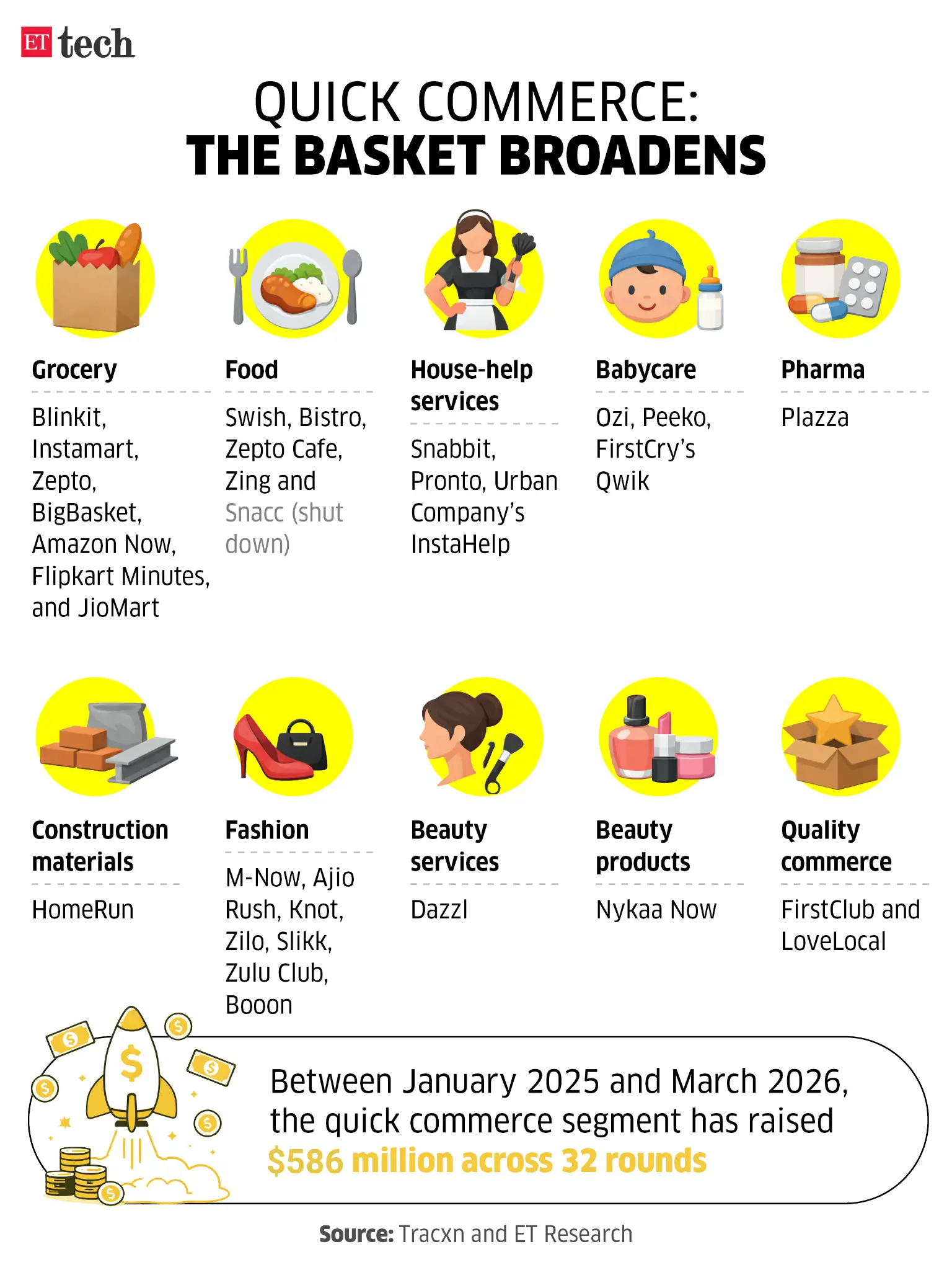
Expansion and scale: Even as these startups ramp up operations on the back of strong consumer demand, doubts linger over whether a model built purely on speed can hold up over the long term.
Experts say the viability of quick commerce, and its adjacent formats, hinges on getting both demand and supply-side economics right, cautioning that the grocery playbook cannot simply be copy-pasted across categories.
Who survives? Instant house help emerged as an early breakout about a year ago, but most other categories are still testing demand and struggling for capital. Gurugram-based Zing, which offered 10-minute food delivery, shut down in August 2025, while Swiggy's 10-minute food-delivery arm, Snacc, also folded earlier this year.
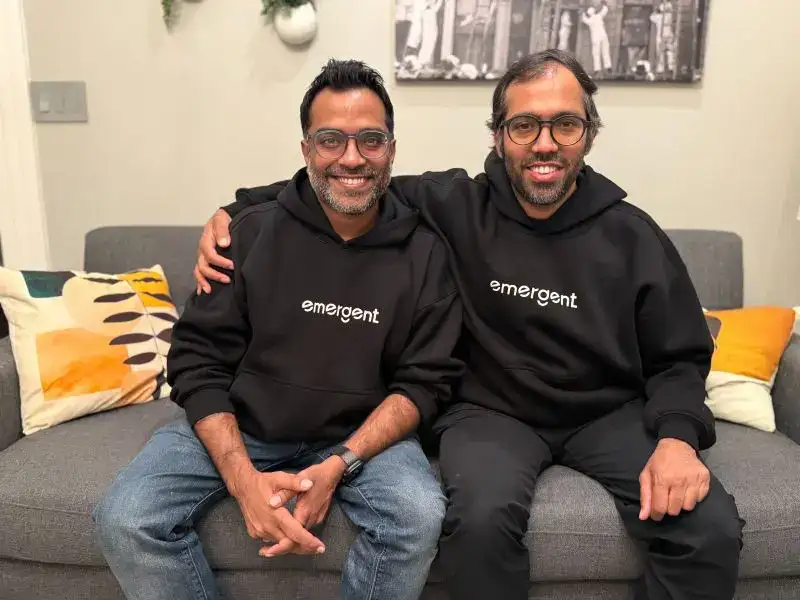 (L-R) Mukund Jha and Madhav Jha, cofounders, Emergent
SoftBank and Lightspeed-backed AI startup Emergent has triggered a debate over its growth claims after saying in February that it had hit $100 million in ARR within eight months of launch, a number many in the ecosystem are now questioning.
Jargon buster: Traditionally, ARR refers to annual recurring revenue, which is stable, contractually committed income. In Emergent's case, however, the figure represents annualised revenue run rate, a far more speculative projection.
Why it matters: Investors and founders say such headline metrics are useful mainly for fundraising. Much like GMV in ecommerce or GOV in quick commerce, they help startups signal momentum and attract capital, one investor told us, but they do not always reflect the underlying economics.
Emergent way: Manav Garg, cofounder of Together Fund, one of Emergent's earliest backers, said, “For companies like Emergent, actual revenue is the primary metric because it reflects what customers are paying today to use the platform. Annualised run rate is simply a way to contextualise current scale in a fast-growing business, where numbers change week on week at this stage due to hypergrowth.”
Also Read: AI startup Emergent raises $70 million from Khosla Ventures, SoftBank; valuation triples to $300 million

Cybersecurity threats against India's critical infrastructure are mounting, as state-backed actors from Europe, Russia, Israel, Iran and Southeast Asia hunt for data they can steal to disrupt operations or extort ransom.
What is happening: Authorities, including CERT-In, RBI, Sebi and the defence ministry, have issued multiple advisories to sectors such as energy, telecom, banking and stock exchanges.
Experts say companies are increasingly worried about vulnerabilities in legacy systems, especially as tensions in West Asia heighten the risk of cyber warfare spilling beyond conflict zones.
Also Read: IT, BFSI & telecom headline India's AI cybersecurity push
Verbatim: “Energy utilities, banks and aviation networks in the Middle East have already emerged as prime targets for state-backed actors, with several recent breaches. If tensions continue to escalate, cyber warfare could spill beyond conflict zones and trigger wider economic disruptions,” PwC's Sundareshwar Krishnamurthy said.
Active campaigns: Security firms are tracking groups such as Handala and Seedworm, both widely considered state-backed advanced persistent threat outfits.
Also Read: Cybersecurity talent squeeze paints a big target on India Inc

Early-stage fintech startups are drawing more capital this fiscal, even as the broader startup ecosystem grapples with muted sentiment and choppy public markets.
Driving the news:
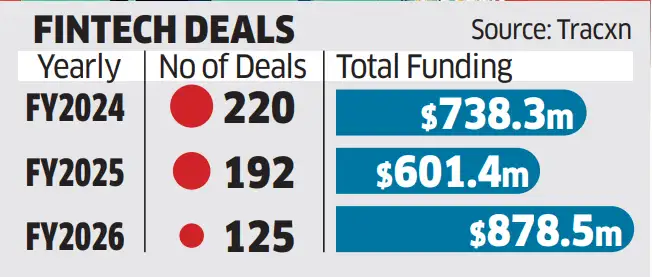
AI drives interest: A major catalyst is growing investor appetite for AI-led fintech, wealth tech, and insurance distribution. The category is drawing more money from family offices, new venture firms, and growth-stage funds, with marquee deal sizes rising to about $30–40 million.
But why: Investors attribute the momentum to startups raising back-to-back rounds on stronger financials, as well as a new crop of second-time founders returning to build across the broader financial services space.
Also Read: AI-led wealthtech rising as VCs bet on a fintech disruption

IT services bench shrinks under AI assault: Unlike cricket, India's IT services industry is hurting from a shrinking bench. Bench strength, long seen as the sector's safety net, has fallen by a quarter and is unlikely to be rebuilt quickly even if growth returns.
CoinDCX sets aside Rs 100 crore for fraud prevention: Crypto trading platform CoinDCX plans to commit Rs 100 crore to fraud detection and customer awareness, following the recent arrest of its founders in connection with an alleged investment scam.
■ Meet the man making music with his brain implant (Wired)
■ AI satellite start-ups gain traction with investors ahead of SpaceX IPO (FT)
■ EVs were meant to bypass oil. Now they're stuck at the Strait of Hormuz (Rest of World)
Also in the letter:
■ Cyber threat against India rises
■ Upswing in fintech early-stage deals
■ IT services bench shrinks
Quick commerce expands beyond groceries with VC funding, but scale questions persist
India's quick commerce boom, best known so far for grocery deliveries, is rapidly spilling into categories such as food, baby care, construction material and medicine, even as questions over unit economics and scalability refuse to go away.
Cropping up: A clutch of startups has rushed in to tap this demand, raising substantial capital over the past year. According to Tracxn, quick commerce companies across verticals raised $586 million between January 2025 and March 2026.
For instance: Startups that have recently raised funds or are in talks with investors include:
- Dazzl: Promises beauty services in 10 minutes; raised $3.2 million from Stellaris Venture Partners and others in January.
- Plazza: Delivers medicines in 10–15 minutes within a 3–4 km radius.
- Ozi, Peeko: Focus on rapid delivery of baby care essentials.
- HomeRun: Delivers construction and home-improvement materials within 60 minutes in Bengaluru; in talks to raise Rs 100 crore in a round led by Nexus Venture Partners.
Expansion and scale: Even as these startups ramp up operations on the back of strong consumer demand, doubts linger over whether a model built purely on speed can hold up over the long term.
Experts say the viability of quick commerce, and its adjacent formats, hinges on getting both demand and supply-side economics right, cautioning that the grocery playbook cannot simply be copy-pasted across categories.
Who survives? Instant house help emerged as an early breakout about a year ago, but most other categories are still testing demand and struggling for capital. Gurugram-based Zing, which offered 10-minute food delivery, shut down in August 2025, while Swiggy's 10-minute food-delivery arm, Snacc, also folded earlier this year.
ETtech Explainer: What Emergent's ARR really tells us about AI's numbers game
SoftBank and Lightspeed-backed AI startup Emergent has triggered a debate over its growth claims after saying in February that it had hit $100 million in ARR within eight months of launch, a number many in the ecosystem are now questioning.
Jargon buster: Traditionally, ARR refers to annual recurring revenue, which is stable, contractually committed income. In Emergent's case, however, the figure represents annualised revenue run rate, a far more speculative projection.
Why it matters: Investors and founders say such headline metrics are useful mainly for fundraising. Much like GMV in ecommerce or GOV in quick commerce, they help startups signal momentum and attract capital, one investor told us, but they do not always reflect the underlying economics.
Emergent way: Manav Garg, cofounder of Together Fund, one of Emergent's earliest backers, said, “For companies like Emergent, actual revenue is the primary metric because it reflects what customers are paying today to use the platform. Annualised run rate is simply a way to contextualise current scale in a fast-growing business, where numbers change week on week at this stage due to hypergrowth.”
Also Read: AI startup Emergent raises $70 million from Khosla Ventures, SoftBank; valuation triples to $300 million
Cyber pirates at large, India readies moats
Cybersecurity threats against India's critical infrastructure are mounting, as state-backed actors from Europe, Russia, Israel, Iran and Southeast Asia hunt for data they can steal to disrupt operations or extort ransom.
What is happening: Authorities, including CERT-In, RBI, Sebi and the defence ministry, have issued multiple advisories to sectors such as energy, telecom, banking and stock exchanges.
Experts say companies are increasingly worried about vulnerabilities in legacy systems, especially as tensions in West Asia heighten the risk of cyber warfare spilling beyond conflict zones.
Also Read: IT, BFSI & telecom headline India's AI cybersecurity push
Verbatim: “Energy utilities, banks and aviation networks in the Middle East have already emerged as prime targets for state-backed actors, with several recent breaches. If tensions continue to escalate, cyber warfare could spill beyond conflict zones and trigger wider economic disruptions,” PwC's Sundareshwar Krishnamurthy said.
Active campaigns: Security firms are tracking groups such as Handala and Seedworm, both widely considered state-backed advanced persistent threat outfits.
Also Read: Cybersecurity talent squeeze paints a big target on India Inc
Early-stage funding value ticks up 46%, but numbers decrease
Early-stage fintech startups are drawing more capital this fiscal, even as the broader startup ecosystem grapples with muted sentiment and choppy public markets.
Driving the news:
- Investments in seed to Series B fintech startups have surged 46% in value to $879 million in FY26 so far, even as deal volume dropped to 129 from 192 a year earlier, according to Tracxn.
- Series A and B funding has nearly doubled to $794 million, from $417 million last year and $570 million in FY24.
AI drives interest: A major catalyst is growing investor appetite for AI-led fintech, wealth tech, and insurance distribution. The category is drawing more money from family offices, new venture firms, and growth-stage funds, with marquee deal sizes rising to about $30–40 million.
But why: Investors attribute the momentum to startups raising back-to-back rounds on stronger financials, as well as a new crop of second-time founders returning to build across the broader financial services space.
Also Read: AI-led wealthtech rising as VCs bet on a fintech disruption
Other Top Stories By Our Reporters
IT services bench shrinks under AI assault: Unlike cricket, India's IT services industry is hurting from a shrinking bench. Bench strength, long seen as the sector's safety net, has fallen by a quarter and is unlikely to be rebuilt quickly even if growth returns.
CoinDCX sets aside Rs 100 crore for fraud prevention: Crypto trading platform CoinDCX plans to commit Rs 100 crore to fraud detection and customer awareness, following the recent arrest of its founders in connection with an alleged investment scam.
Global Picks We Are Reading
■ Meet the man making music with his brain implant (Wired)
■ AI satellite start-ups gain traction with investors ahead of SpaceX IPO (FT)
■ EVs were meant to bypass oil. Now they're stuck at the Strait of Hormuz (Rest of World)
Want this newsletter delivered to your inbox?
I agree to receive newsletters and marketing communications via e-mail
Thank you for subscribing to Morning Dispatch
We'll soon meet in your inbox.

