

 Morning Dispatch Morning Dispatch |
India's tech hiring chills; Polymarket's IPL bet
Want this newsletter delivered to your inbox?
I agree to receive newsletters and marketing communications via e-mail

Thank you for subscribing to Morning Dispatch
We'll soon meet in your inbox.
Happy Tuesday! The tech sector is seeing a slowdown in hiring driven by internal cost controls. This and more in today's ETtech Morning Dispatch.
Also in the letter:
■ Nandan Nilekani's next global rail
■ Wingify raises funds
■ Nykaa's Q4 outlook

India's tech slowdown is getting harder to ignore. Active openings fell another 8% in April to 110,000 from 119,000 in March, per staffing firm Xpheno.
Number-wise:
Structural reset: Industry executives say clients are deferring mandates rather than scrapping them, while tech firms are squeezing more out of existing teams and tools.
“The slowdown is now being driven more by internal cost control. Organisations are prioritising productivity, leveraging AI to reduce incremental hiring, and focusing on margin expansion. This is a structural reset rather than a cyclical dip,” Sanketh Chengappa, director at Adecco India, said.
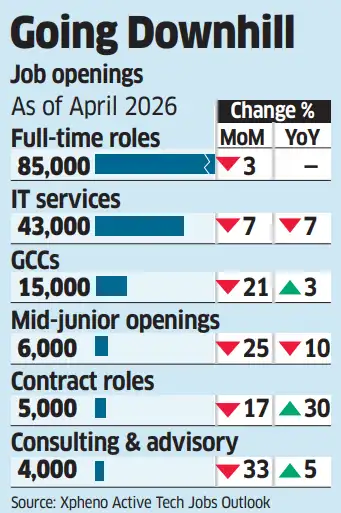
Ground shift: The shift is evident in how companies are designing their workforce.
“Short-term hiring is more prominent in IT services companies as they want to keep their hiring decisions flexible while being able to get the right talent at the right time,” TeamLease Digital’s Neeti Sharma noted.
Also Read: India’s tech hiring opens FY27 on a cautious note with fresher roles under most pressure: Report

India's real-money gaming (RMG) crackdown has created a curious winner: US-based prediction markets like Polymarket and Kalshi, which are quietly picking up Indian Premier League (IPL) traffic.
The post-ban gap:
Still a niche corner: Usage is far from mainstream. For now, these platforms mostly attract urban, crypto-savvy users. But activity is building. In one IPL-linked market, trading volumes have crossed $250,000, with the Mumbai Indians currently placed as favourites for the 2026 title.
Where it gets tricky: Payments. Unlike offshore betting sites such as Parimatch, 1XBet and Stake, these platforms are fully crypto-native.
Legal grey zone: Experts warn that funding such platforms may run afoul of India’s foreign exchange rules under FEMA.
Enforcement levers remain: Even if these platforms sit outside legal jurisdiction, legal experts say that the government retains the power to restrict access to such platforms under existing laws.
Also Read: ETtech In-depth: Banned in India, but it’s business as usual for offshore real money gaming firms
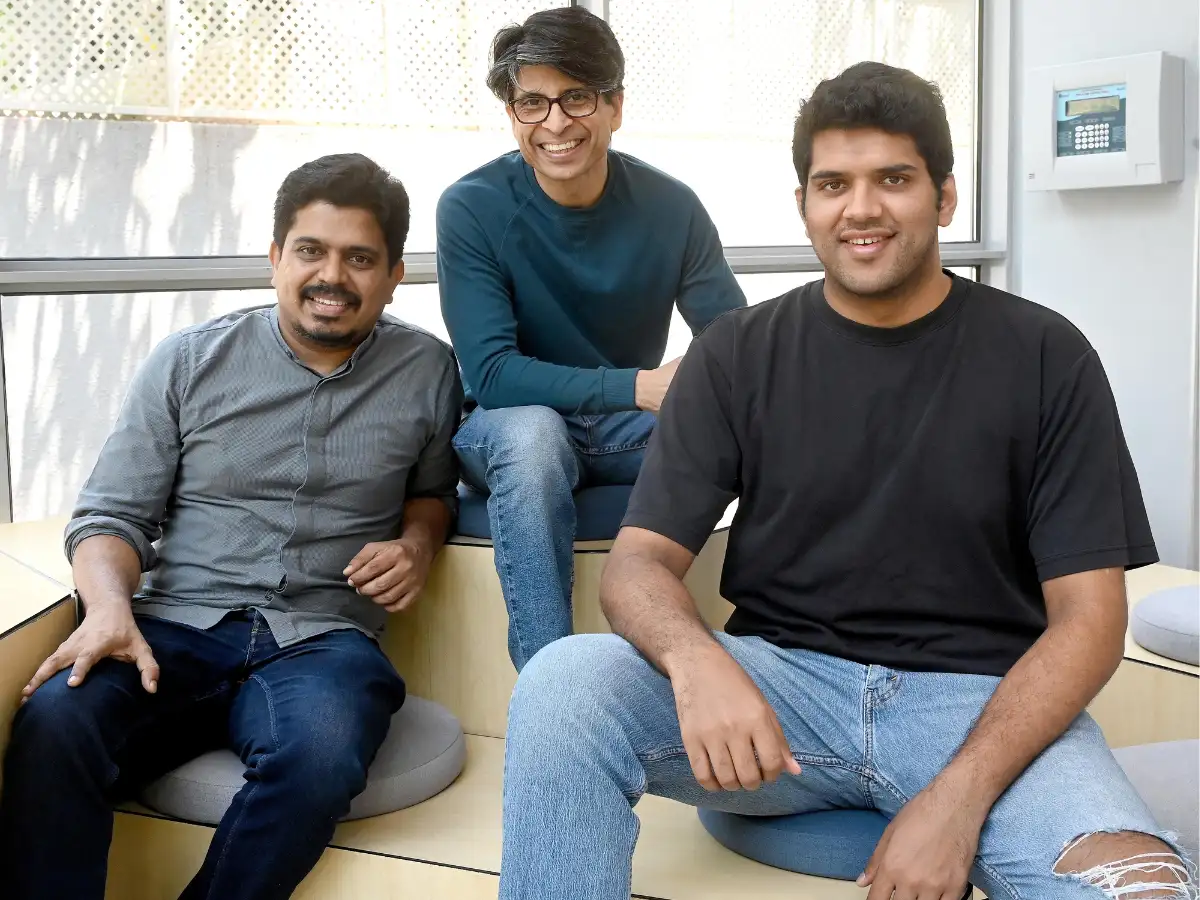 (L-R) Sujith Nair, Pramod Varma and Siddharth Shetty, founders, NFH
Nandan Nilekani and Pramod Varma, architects of the Unified Payments Interface (UPI), are now trying to rewire how the world trades and moves value. Their new non-profit, Networks for Humanity, is building an open digital fabric for identity, payments, assets, and commerce.
What they are after: NFH wants to take the design logic behind Aadhaar and UPI and apply it to global commerce and financial assets. The goal is to create neutral, interoperable rails that anyone can plug into, rather than rely on a few dominant platforms.
Backers include Google.org, Nilekani Philanthropies, Asian Development Bank, Spectrum Impact, and the Bill & Melinda Gates Foundation.
How does it work: NFH combines Beckn Protocol, which supports open commerce networks, with Finternet, which focuses on how assets are represented and moved digitally across systems. Together, they form a plumbing layer where buyers, sellers, service providers and even AI agents can find each other and close deals without a central gatekeeper.
What's funded: NFH has raised about $30 million to run pilots, seed partnerships, and build out the ecosystem. The tech stack itself is relatively lean. The harder problem is coordination and adoption across regulators, banks, fintechs, and merchants.
The architecture is being designed for an “agentic” future, where AI agents, not humans, will increasingly search, negotiate, and execute transactions. Millions of these agents could continuously optimise prices, match buyers and sellers, and complete transactions on behalf of users.
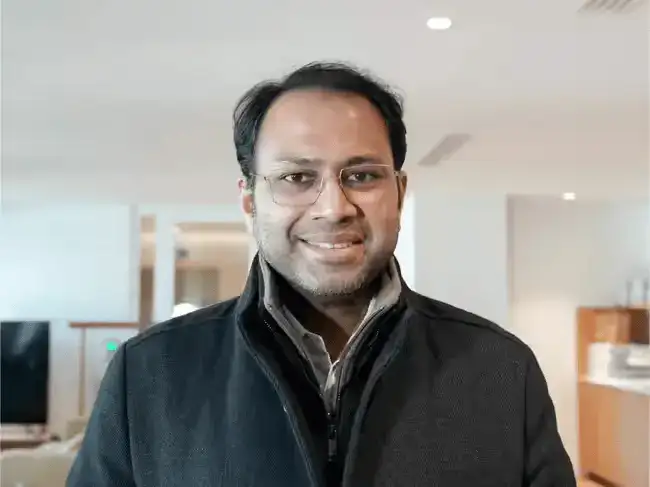 Sparsh Gupta, CEO, Wingify
Wingify's $150 million raise: Private equity firm (PE) Everstone Capital has led a Rs 1,381-crore ($150 million) infusion into software company Wingify, which it acquired in early 2025.
Nykaa on fourth quarter growth: Nykaa's parent FSN E-Commerce Ventures said on Monday that its consolidated GMV growth is expected to be in the “late twenties” in the March quarter of FY26, and net revenue growth for the year is expected to come in at the upper end of the “mid-twenties”.
Wipro's $1 billion deal: IT services firm Wipro has secured an eight-year transformation deal with Singapore-based food and agri-business major Olam Group, which is expected to exceed $1 billion (about Rs 9,314 crore) in contract value.
■ Microsoft launches ‘mid-class’ AI model as compute limits bite (FT)
■ “Data embassies” and safeguarding digital assets during wartime (Rest of World)
■ How China fell for a lobster: What an AI assistant tells us about Beijing's ambition (BBC)
Also in the letter:
■ Nandan Nilekani's next global rail
■ Wingify raises funds
■ Nykaa's Q4 outlook
Tech job openings fall 8% in April as AI replaces headcount
India's tech slowdown is getting harder to ignore. Active openings fell another 8% in April to 110,000 from 119,000 in March, per staffing firm Xpheno.
Number-wise:
- Tech's share of total hiring is down to 49%, from a peak of 83% in April 2022.
- Active tech openings have more than halved from 256,000 in April 2022.
- Hiring has now been sluggish for four straight quarters.
Structural reset: Industry executives say clients are deferring mandates rather than scrapping them, while tech firms are squeezing more out of existing teams and tools.
“The slowdown is now being driven more by internal cost control. Organisations are prioritising productivity, leveraging AI to reduce incremental hiring, and focusing on margin expansion. This is a structural reset rather than a cyclical dip,” Sanketh Chengappa, director at Adecco India, said.
Ground shift: The shift is evident in how companies are designing their workforce.
- Full-time roles, which account for 77% of all openings, fell by 3%.
- Contract roles fell much faster, dropping 17%.
“Short-term hiring is more prominent in IT services companies as they want to keep their hiring decisions flexible while being able to get the right talent at the right time,” TeamLease Digital’s Neeti Sharma noted.
Also Read: India’s tech hiring opens FY27 on a cautious note with fresher roles under most pressure: Report
US prediction market players make a play for Indian IPL fans
India's real-money gaming (RMG) crackdown has created a curious winner: US-based prediction markets like Polymarket and Kalshi, which are quietly picking up Indian Premier League (IPL) traffic.
The post-ban gap:
- The 2026 IPL season is the first since India’s RMG ban took effect, clipping local giants such as Dream11 and Games24*7.
- That has opened a window for global players to test demand in India.
- Polymarket, backed by investors such as Intercontinental Exchange, Founders Fund and General Catalyst, has become one of the main beneficiaries.
Still a niche corner: Usage is far from mainstream. For now, these platforms mostly attract urban, crypto-savvy users. But activity is building. In one IPL-linked market, trading volumes have crossed $250,000, with the Mumbai Indians currently placed as favourites for the 2026 title.
Where it gets tricky: Payments. Unlike offshore betting sites such as Parimatch, 1XBet and Stake, these platforms are fully crypto-native.
- Onboarding is clunky and slow for new users.
- Small ticket participation is hard
- Many users fall back on informal channels, moving money through friends (peer-to-peer routes) and settling via UPI to get around direct payment blocks.
Legal grey zone: Experts warn that funding such platforms may run afoul of India’s foreign exchange rules under FEMA.
- Moving cryptocurrencies to offshore wallets could be treated as capital account transactions.
- That can invite questions from regulators such as the RBI and Enforcement Directorate.
Enforcement levers remain: Even if these platforms sit outside legal jurisdiction, legal experts say that the government retains the power to restrict access to such platforms under existing laws.
Also Read: ETtech In-depth: Banned in India, but it’s business as usual for offshore real money gaming firms
Nandan Nilekani, Pramod Varma eye AI-led global rails for commerce in next leap
Nandan Nilekani and Pramod Varma, architects of the Unified Payments Interface (UPI), are now trying to rewire how the world trades and moves value. Their new non-profit, Networks for Humanity, is building an open digital fabric for identity, payments, assets, and commerce.
What they are after: NFH wants to take the design logic behind Aadhaar and UPI and apply it to global commerce and financial assets. The goal is to create neutral, interoperable rails that anyone can plug into, rather than rely on a few dominant platforms.
Backers include Google.org, Nilekani Philanthropies, Asian Development Bank, Spectrum Impact, and the Bill & Melinda Gates Foundation.
How does it work: NFH combines Beckn Protocol, which supports open commerce networks, with Finternet, which focuses on how assets are represented and moved digitally across systems. Together, they form a plumbing layer where buyers, sellers, service providers and even AI agents can find each other and close deals without a central gatekeeper.
What's funded: NFH has raised about $30 million to run pilots, seed partnerships, and build out the ecosystem. The tech stack itself is relatively lean. The harder problem is coordination and adoption across regulators, banks, fintechs, and merchants.
The architecture is being designed for an “agentic” future, where AI agents, not humans, will increasingly search, negotiate, and execute transactions. Millions of these agents could continuously optimise prices, match buyers and sellers, and complete transactions on behalf of users.
Other Top Stories By Our Reporters
Wingify's $150 million raise: Private equity firm (PE) Everstone Capital has led a Rs 1,381-crore ($150 million) infusion into software company Wingify, which it acquired in early 2025.
Nykaa on fourth quarter growth: Nykaa's parent FSN E-Commerce Ventures said on Monday that its consolidated GMV growth is expected to be in the “late twenties” in the March quarter of FY26, and net revenue growth for the year is expected to come in at the upper end of the “mid-twenties”.
Wipro's $1 billion deal: IT services firm Wipro has secured an eight-year transformation deal with Singapore-based food and agri-business major Olam Group, which is expected to exceed $1 billion (about Rs 9,314 crore) in contract value.
Global Picks We Are Reading
■ Microsoft launches ‘mid-class’ AI model as compute limits bite (FT)
■ “Data embassies” and safeguarding digital assets during wartime (Rest of World)
■ How China fell for a lobster: What an AI assistant tells us about Beijing's ambition (BBC)
Want this newsletter delivered to your inbox?
I agree to receive newsletters and marketing communications via e-mail
Thank you for subscribing to Morning Dispatch
We'll soon meet in your inbox.

