
 ET Online
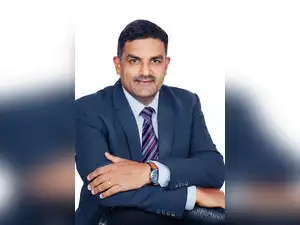
Invoice-backed securitisation and credit guarantees may expand liquidity channels beyond traditional lending, says Mohan Ramaswamy, Founder and CEO, Rubix Data Sciences.
As India pushes to formalise MSME (micro, small, and medium enterprise) financing through platforms like TReDS and expand liquidity channels, the conversation shifts from access to capital to the quality of risk assessment underpinning it. In an increasingly interconnected and data-rich environment, lenders and corporates are moving beyond traditional balance-sheet metrics toward more dynamic, ecosystem-level evaluation. In an interaction with ET Digital, Mohan Ramaswamy, Founder and CEO of Rubix Data Sciences, explains how structural reforms, alternative data models, and real-time risk monitoring are reshaping credit decisions and how to build more resilient supply chains. Edited excerpts:
ET: With measures such as TReDS strengthening, improved payment systems, and a top-up to the Self-Reliant India Fund, the government’s focus appears to be on easing cash-flow stress for MSMEs. Do you see these steps improving liquidity discipline across supply chains?
Mohan Ramaswamy (MR): Yes, these measures can materially improve liquidity discipline, provided execution sustains momentum. India’s 60-70 million MSMEs contribute nearly 45% to the country’s total exports and about a third of manufacturing output, yet delayed payments remain a chronic constraint.
Mandating TReDS as the settlement platform for all MSME purchases by central public sector enterprises (CPSEs) is a structural shift. Digital invoice acceptance on a regulated platform, anchored to large public buyers, introduces transparency and reduces off-platform settlements. The proposed CGTMSE credit guarantee for TReDS discounting can widen financier participation and improve pricing for MSMEs, while linking GeM with TReDS strengthens information flow critical to credit discipline.
Recognising TReDS receivables as asset-backed securities is particularly significant. With securitisation volumes already scaling, even modest allocation to invoice-backed pools can expand liquidity channels and attract institutional capital to supply chain finance. Besides the Rs 10,000 crore SME Growth Fund and the Rs 2,000 crore Self-Reliant India Fund top-up, this signals a shift toward formalising and stabilising cash-flow cycles, rather than offering temporary relief.
ET: Risk has become far more complex for lenders and corporates. How is Rubix helping institutions make more confident decisions?
MR: The risk landscape has fundamentally changed—from balance-sheet-centric to ecosystem-centric. Institutions now grapple with macro volatility, regulatory shifts, cyber risks, and ESG considerations. It is no longer enough to underwrite a borrower in isolation; understanding counterparty exposure, ownership structures and supply-chain linkages is essential.
This is where Rubix creates value. Through our Rubix ARMSTM platform, we evaluate companies using statutory filings, financials, litigation records, regulatory data, and adverse news. These inputs are synthesised into a standardised Rubix Risk Score, enabling structured, comparable assessments. Our Nexus Check solution uncovers ultimate beneficial ownership and related-party linkages critical for identifying hidden exposure risks. For lenders, this supports sharper underwriting, dynamic limit setting and continuous monitoring. For corporates, it improves distributor selection, onboarding and receivables risk management.
Post onboarding, our early warning system continuously tracks legal, compliance, and media developments, shifting clients from static underwriting to dynamic risk surveillance. Increasingly, the question is not just creditworthiness today, but resilience under stress, and our role is to make that assessment continuous and actionable.
ET: A large part of India’s business landscape still operates with limited financial disclosure. How do you build a credible risk picture for smaller enterprises?
MR: This remains a structural challenge. Many small and medium enterprises (SMEs) operate as proprietorships or partnerships with limited or tax-optimised disclosures. Relying solely on reported financials can distort risk assessment.
We address this through our SME income range estimation and financial ratio benchmarking model. Instead of depending only on filed P&Ls, we triangulate GST (goods and services) behaviour, business activity, geography, compliance history, and other observable markers to estimate a credible revenue range and benchmark it against similar enterprises.
This creates a structured risk view even for “thin-file” entities. In our validation framework, over 90% of profiles align with defined peer benchmarks, excluding outliers. The objective is to reduce uncertainty, minimise false rejections and enable more confident credit decisions in a data-constrained environment.
ET: What key risk indicators typically shape your final risk assessment?
MR: We avoid relying on any single indicator. For us, risk emerges through patterns across multiple dimensions.
Our framework draws on over 120 structured and unstructured data sources, including financial disclosures, GST behaviour, litigation records, compliance signals, adverse media and ownership linkages. Broadly, we assess five categories: financial strength, compliance behaviour, legal and conduct risk, ownership transparency, and behavioural shifts, such as sudden changes in filings or governance events.
These inputs are synthesised into the Rubix Risk Score, standardising risk across entities and sectors. When financial stress, compliance gaps, and ownership opacity intersect, risk compounds. Conversely, consistency across these dimensions strengthens confidence.
ET: Speed is becoming critical in credit and trade decisions. How is this influencing your processes?
MR: Turnaround time is now central. Lenders and corporates operate with tighter approval windows and faster onboarding cycles, requiring risk assessment to keep pace.
At Rubix, we generate a fresh report for every request, even for existing profiles because risk is dynamic. Legal actions, filing behaviour, or ownership changes can materially alter assessments. Our standard turnaround is typically within 36 hours, ensuring decisions are based on current intelligence.
AI/ML enables this responsiveness through automated data aggregation, document parsing and trigger monitoring, while analysts focus on interpretation. The objective is to combine automation with judgement. Faster expectations have also led to risk checks being embedded directly into onboarding and credit workflows, making timely intelligence integral to business operations.
ET: Where are you seeing the strongest momentum as you scale?
MR: Momentum is visible across three areas. First, sectorally, demand is strong from banks and NBFCs scaling MSME portfolios and from industries such as chemicals, pharmaceuticals, FMCG and auto ancillaries managing complex distributor and supplier networks.
Second, geographically, while we continue to deepen our presence across India’s Tier II and Tier III hubs, cross-border risk assessment is growing rapidly. We are expanding in the Middle East and beyond, helping Indian exporters evaluate global buyers and international firms assess Indian partners.
Third, in emerging use cases, compliance-led demand is rising sharply. Identifying ultimate beneficial ownership for AML/KYC requirements is now a priority, while ESG risk scoring has become essential for companies integrated into global supply chains.
ET: How do you see risk assessment evolving as businesses become more data-driven and globally connected?
MR: Risk assessment must now reflect a far more interconnected reality. Financials remain important, but they are only one layer. Ownership structures, cross-border linkages, supply chains and regulatory exposure all shape how risk accumulates.
Three shifts are underway. First, greater reliance on alternative and behavioural data over static financials. Second, deeper network visibility, where our focus is on understanding ownership and supply-chain interdependencies to manage contagion risk. Third, embedded analytics, where risk assessment becomes part of transaction workflows rather than a standalone checkpoint. As data volumes grow, the differentiator will be the ability to convert fragmented information into structured, decision-ready insights. Businesses that do this effectively will be far better positioned to manage volatility.
ET: With measures such as TReDS strengthening, improved payment systems, and a top-up to the Self-Reliant India Fund, the government’s focus appears to be on easing cash-flow stress for MSMEs. Do you see these steps improving liquidity discipline across supply chains?
Mohan Ramaswamy (MR): Yes, these measures can materially improve liquidity discipline, provided execution sustains momentum. India’s 60-70 million MSMEs contribute nearly 45% to the country’s total exports and about a third of manufacturing output, yet delayed payments remain a chronic constraint.
Mandating TReDS as the settlement platform for all MSME purchases by central public sector enterprises (CPSEs) is a structural shift. Digital invoice acceptance on a regulated platform, anchored to large public buyers, introduces transparency and reduces off-platform settlements. The proposed CGTMSE credit guarantee for TReDS discounting can widen financier participation and improve pricing for MSMEs, while linking GeM with TReDS strengthens information flow critical to credit discipline.
Recognising TReDS receivables as asset-backed securities is particularly significant. With securitisation volumes already scaling, even modest allocation to invoice-backed pools can expand liquidity channels and attract institutional capital to supply chain finance. Besides the Rs 10,000 crore SME Growth Fund and the Rs 2,000 crore Self-Reliant India Fund top-up, this signals a shift toward formalising and stabilising cash-flow cycles, rather than offering temporary relief.
ET: Risk has become far more complex for lenders and corporates. How is Rubix helping institutions make more confident decisions?

MR: The risk landscape has fundamentally changed—from balance-sheet-centric to ecosystem-centric. Institutions now grapple with macro volatility, regulatory shifts, cyber risks, and ESG considerations. It is no longer enough to underwrite a borrower in isolation; understanding counterparty exposure, ownership structures and supply-chain linkages is essential.
This is where Rubix creates value. Through our Rubix ARMSTM platform, we evaluate companies using statutory filings, financials, litigation records, regulatory data, and adverse news. These inputs are synthesised into a standardised Rubix Risk Score, enabling structured, comparable assessments. Our Nexus Check solution uncovers ultimate beneficial ownership and related-party linkages critical for identifying hidden exposure risks. For lenders, this supports sharper underwriting, dynamic limit setting and continuous monitoring. For corporates, it improves distributor selection, onboarding and receivables risk management.
Post onboarding, our early warning system continuously tracks legal, compliance, and media developments, shifting clients from static underwriting to dynamic risk surveillance. Increasingly, the question is not just creditworthiness today, but resilience under stress, and our role is to make that assessment continuous and actionable.
ET: A large part of India’s business landscape still operates with limited financial disclosure. How do you build a credible risk picture for smaller enterprises?
MR: This remains a structural challenge. Many small and medium enterprises (SMEs) operate as proprietorships or partnerships with limited or tax-optimised disclosures. Relying solely on reported financials can distort risk assessment.
We address this through our SME income range estimation and financial ratio benchmarking model. Instead of depending only on filed P&Ls, we triangulate GST (goods and services) behaviour, business activity, geography, compliance history, and other observable markers to estimate a credible revenue range and benchmark it against similar enterprises.
This creates a structured risk view even for “thin-file” entities. In our validation framework, over 90% of profiles align with defined peer benchmarks, excluding outliers. The objective is to reduce uncertainty, minimise false rejections and enable more confident credit decisions in a data-constrained environment.
ET: What key risk indicators typically shape your final risk assessment?
MR: We avoid relying on any single indicator. For us, risk emerges through patterns across multiple dimensions.
Our framework draws on over 120 structured and unstructured data sources, including financial disclosures, GST behaviour, litigation records, compliance signals, adverse media and ownership linkages. Broadly, we assess five categories: financial strength, compliance behaviour, legal and conduct risk, ownership transparency, and behavioural shifts, such as sudden changes in filings or governance events.
These inputs are synthesised into the Rubix Risk Score, standardising risk across entities and sectors. When financial stress, compliance gaps, and ownership opacity intersect, risk compounds. Conversely, consistency across these dimensions strengthens confidence.
ET: Speed is becoming critical in credit and trade decisions. How is this influencing your processes?
MR: Turnaround time is now central. Lenders and corporates operate with tighter approval windows and faster onboarding cycles, requiring risk assessment to keep pace.
At Rubix, we generate a fresh report for every request, even for existing profiles because risk is dynamic. Legal actions, filing behaviour, or ownership changes can materially alter assessments. Our standard turnaround is typically within 36 hours, ensuring decisions are based on current intelligence.
AI/ML enables this responsiveness through automated data aggregation, document parsing and trigger monitoring, while analysts focus on interpretation. The objective is to combine automation with judgement. Faster expectations have also led to risk checks being embedded directly into onboarding and credit workflows, making timely intelligence integral to business operations.
ET: Where are you seeing the strongest momentum as you scale?
MR: Momentum is visible across three areas. First, sectorally, demand is strong from banks and NBFCs scaling MSME portfolios and from industries such as chemicals, pharmaceuticals, FMCG and auto ancillaries managing complex distributor and supplier networks.
Second, geographically, while we continue to deepen our presence across India’s Tier II and Tier III hubs, cross-border risk assessment is growing rapidly. We are expanding in the Middle East and beyond, helping Indian exporters evaluate global buyers and international firms assess Indian partners.
Third, in emerging use cases, compliance-led demand is rising sharply. Identifying ultimate beneficial ownership for AML/KYC requirements is now a priority, while ESG risk scoring has become essential for companies integrated into global supply chains.
ET: How do you see risk assessment evolving as businesses become more data-driven and globally connected?
MR: Risk assessment must now reflect a far more interconnected reality. Financials remain important, but they are only one layer. Ownership structures, cross-border linkages, supply chains and regulatory exposure all shape how risk accumulates.
Three shifts are underway. First, greater reliance on alternative and behavioural data over static financials. Second, deeper network visibility, where our focus is on understanding ownership and supply-chain interdependencies to manage contagion risk. Third, embedded analytics, where risk assessment becomes part of transaction workflows rather than a standalone checkpoint. As data volumes grow, the differentiator will be the ability to convert fragmented information into structured, decision-ready insights. Businesses that do this effectively will be far better positioned to manage volatility.
Add  as a Reliable and Trusted News Source
as a Reliable and Trusted News Source Add Now!












 ETPrime Membership