
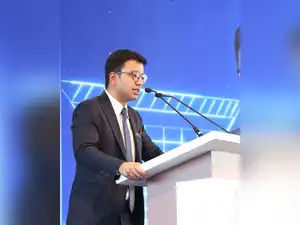
At a time when many education infrastructure players chased aggressive expansion through leverage, Jassar Dental Medical Education Health Foundation (JDMEHF) quietly took the opposite route, prioritising financial discipline over speed. In a conversation with The Economic Times Digital, Chairman Rhitik Jassar recounted leading the institution past personal grief, regulatory turbulence, and economic downturns, resulting in a debt-free and structurally fortified organization. By eliminating over Rs 215 crore in debt, rebuilding credibility during crises, and now investing fresh capital in a large-scale medicity project, Jassar's strategy illuminates’ resilience, prudence, and enduring institution-building within India's evolving healthcare education sector. Edited excerpts.
Economic Times (ET): JDMEHF moved from significant leverage to a net debt-free position while continuing to expand. What triggered the decision to prioritise debt reduction over faster growth?
Rhitik Jassar (RJ): The shift towards reducing the institution’s debt was not a strategic choice as much as a necessity created by unforeseen circumstances. The untimely passing of my father, our founder-chairman, became a turning point for the institution and forced us to reassess our priorities at a very difficult moment.
Around the same time, the sector itself was undergoing major regulatory changes. The introduction of the NEET regime fundamentally altered the admissions landscape. Earlier, several allied healthcare courses such as nursing, pharmacy, dentistry, and Ayurveda operated outside the centralised admission system. With NEET coming into force, admissions moved under tighter regulatory control, which created both a demand and supply shock for institutions like ours.
Soon after, demonetisation added another layer of disruption. With these internal and external shocks occurring simultaneously, the most prudent course of action was to focus on reducing our debt and protecting the institution’s stability.
Importantly, this was not done by liquidating institutional assets. Instead, we relied on strong operational performance, particularly stable admissions, and the promoters made the personal decision to sell their own assets to reduce the debt burden.
Our intent was always very clear, the society and the institution had to come first. Preserving its integrity and ensuring its long-term stability was the priority.
ET: Eliminating Rs 215 crore of debt over eight years is rare in education infrastructure. What structural changes, not just financial tactics, made this possible?
RJ: Over a period of nearly eight years, we worked towards eliminating approximately Rs 215 crore of debt, guided by one clear principle-creditor discipline.
The entire institution aligned around a single objective that no debt obligation should ever be delayed. Once that became the shared priority across stakeholders, the way we operated naturally changed.
We adopted a very lean cost structure and paused most infrastructure investments for the time being. Capital expenditure was deliberately put on hold so that operational surpluses, as well as funds generated from the sale of assets, could be directed towards reducing the debt.
Another important factor was the personal commitment from the promoters. For nearly seven to eight years, the entire family worked in a professional capacity within the institution without drawing salaries, ensuring that liquidity was preserved during a challenging phase.
Even during the COVID-19 period, when many organisations opted for repayment moratoriums, we continued to honour our obligations -to our staff, students, and bankers.
Therefore, beyond financial measures, what really enabled this outcome was institution-wide discipline, a lean operating approach, and a shared commitment to meeting every obligation on time.
ET: Your turnaround at ZTA Infratech wiped out Rs 55 crore of debt in 18 months, even during COVID-19. What did that experience teach you about managing crisis-era liabilities?
RJ: The most important learning for me was that clarity of intent matters above everything else in difficult situations. My objective was never to maximise returns from the project, but it was simply to complete it and deliver homes to families who had already waited far too long.
When I stepped in, the project carried the baggage of stalled construction, unresolved debt, and litigation. In many such situations, promoters often get drawn into prolonged legal disputes with lenders or other stakeholders, which can further delay resolution. My approach was to focus on resolving issues, rebuilding stakeholder confidence, and ensuring that the project moved forward.
If it meant accelerating sales, spending more on brokerage to move inventory, or deploying promoter capital, those choices were made.
During the COVID-19 period, while many opted for moratoriums, we did not take that route for this project. The moratorium offered a temporary cash flow breathing space where creditor payments could be paused.
At a time when people were opting for moratoriums and established companies were going into insolvency, we liquidated our assets and invested capital to turn the project around. The same approach was followed for the medical college as well, and we continued to meet our obligations and repay on time.
Both the project and the medical college had no cash flows at the time. My agenda was not to make anything off the project, my agenda was to finish the project, and every resource was spent doing that. What I have earned from the project is credibility with the state government and with the bank; both of which have been priceless.
ET: In your view, what are the most common mistakes institutions make when trying to resolve large debt burdens?
RJ: The most common mistake institutions make is not prioritising lenders and long-term banking relationships. Many institutions switch lenders for short-term arbitrage or treat financial creditors as transactional partners rather than long-term stakeholders. Over time, that erodes trust. Institutional finance is built on credibility and continuity. Public sector banks, in particular, often stand by institutions during difficult periods, but that support comes only when institutions demonstrate discipline, transparency, and a consistent commitment to honouring obligations.
Another issue is the lack of discipline in compliance and documentation, especially when compared to structured corporate entities. Institutions sometimes underestimate the importance of maintaining the same level of financial governance and operational discipline that professionally run organisations and large listed corporates follow.
There are also structural issues that are sometimes ignored. For instance, unresolved land-related encumbrances can affect the mortgageability of assets, which directly impacts the ability to raise financing.
But fundamentally, it comes down to discipline and credibility. If institutions delay payments, fail to invest in compliance, or treat lenders as short-term partners, they weaken the relationships that sustain them. Strong banking relationships are built over decades. When institutions prioritise lenders and consistently honour commitments, credibility strengthens over time. In our case, that discipline translated into a significant improvement in our internal banking ratings—from CMR-10 to CMR-1 and from BOB-7 to BOB-2, levels comparable to those assigned to large AAA-rated and blue-chip listed corporates. It reinforced a simple principle- reduction of debt and consistent repayment only increases the confidence of banks and strengthens long-term access to capital.
ET: You emphasise “structured borrowing” and long-term banking relationships. How can organisations reduce debt responsibly without damaging lender confidence or future access to capital?
RJ: Reducing debt, when done properly, actually strengthens lender confidence rather than weakening it. In my view, the most important factor is how that debt is reduced.
Organisations typically have a few options-they can restructure obligations, negotiate settlements, or honour the terms they originally agreed to. Our approach has always been very clear, which is we pay what is contractually owed, and we make those payments on time, and wherever possible, even ahead of time.
That consistency builds trust with lenders. Over time, it creates a strong repayment track record and reinforces credibility. In many ways, disciplined and timely repayment is the most effective way to ensure continued access to capital in the future.
ET: Despite becoming debt-free, the group mobilised nearly Rs 300 crore for DJ Medicity. How do you determine when it is prudent to re-leverage for expansion?
RJ: The country is currently witnessing a major push in medical education. During this phase, the policy environment and governance approach under the leadership of Prime Minister Narendra Modi and Chief Minister of Uttar Pradesh Yogi Adityanath, has provided stability and direction, helping sustain confidence across sectors.
Many of the regulatory challenges that existed earlier under the Medical Council of India have been addressed through a more transparent framework under the National Medical Commission. At the same time, states like Uttar Pradesh have set ambitious goals such as “one district, one medical college,” and are rapidly expanding medical education capacity.
In a macroeconomic environment that is so supportive of healthcare and higher education, we believe this is one of the most opportune phases to invest in building medical education infrastructure. In fact, I often say that since independence, this may be one of the best periods to build capacity in healthcare and medical education.
For us, this is also a natural extension of our existing ecosystem. We already operate institutions in dental, nursing, pharmacy, paramedical and allied healthcare education. A medical college therefore, becomes the missing piece in a system that is already built around healthcare education.
At the same time, we are seeing significant capital interest in healthcare and hospital infrastructure, including growing participation from private equity. All these factors together made this the right moment for us to invest in DJ Medicity and expand in the medical education space.
ET: DJ Medicity represents a shift from incremental expansion to an integrated campus model. What operational risks accompany projects of this scale, and how are you mitigating them?
RJ: DJ Medicity is being developed as a unified 75-acre campus integrating education, healthcare, housing, and research, the four pillars that, in our view, define a true medicity. Importantly, this is not a greenfield development but a brownfield expansion within an existing campus. We already have functional assets in place, including academic blocks, hostels, and residential facilities, and we are not acquiring new land. This significantly reduces execution complexity and allows us to build on a well-established institutional ecosystem.
The majority of the investment is being directed towards building advanced hospital infrastructure, which is the central component of the medicity. Because the project is being developed within a unified campus, it enables stronger operational control, coordination, and economies of scale across education, healthcare, and residential facilities.
Rather than introducing operational risks, the integrated campus model is actually a defining strength of the project. If there is any challenge, it lies primarily in execution timelines at this scale—the overall development spans around 15 lakh square feet, with approximately 11 lakh square feet in the first phase. Our focus, therefore, remains on disciplined planning and timely delivery.
At the same time, the project also addresses a significant infrastructure gap in the region. In a city like Modinagar, which is part of the NCR, access to advanced healthcare infrastructure remains limited, with very few tertiary care facilities available. DJ Medicity aims to bridge that gap by bringing integrated medical education and healthcare infrastructure to the region.
Overall, the integrated campus approach strengthens execution capability, enhances operational efficiency, and enables the creation of a long-term institutional ecosystem for healthcare and medical education.
ET: Having overseen financial restructuring as COO, how does stepping in as Chairman change your priorities, from stabilising the balance sheet to building a long-term institution?
RJ: The fortunate bit is that no financial restructuring has ever taken place—only fulfillment of commitments. Over the past decade, since joining the organization in December 2016, I have served across multiple roles and responsibilities during a period of significant regulatory change. That experience has provided deep exposure to how institutional systems function at the district, state, and national levels.
Stepping into the role of Chairman does not fundamentally change the mission or the character of the organization, it primarily adds a greater sense of responsibility. The work remains the same and the institutional values that have guided us through difficult phases continue to remain central.
A key focus now is to build a strong professional team across critical domains such as finance, construction, and healthcare infrastructure so that the institution is equipped to execute projects at scale. Strengthening this leadership capacity is essential to supporting the next phase of growth.
At the same time, infrastructure development remains a priority area. Over the last two to three years, we have already undertaken a significant investment cycle across the campus—renovating and restoring nearly 50 acres of existing infrastructure before initiating the Medicity project, which itself spans around 22 acres. These investments include upgrades in academic facilities, student housing, and institutional infrastructure.
Therefore, while the role evolves, the underlying philosophy remains unchanged, which is continue the discipline that helped the institution navigate challenging periods, strengthen the team, and build long-term institutional capacity for the future.
Economic Times (ET): JDMEHF moved from significant leverage to a net debt-free position while continuing to expand. What triggered the decision to prioritise debt reduction over faster growth?
Rhitik Jassar (RJ): The shift towards reducing the institution’s debt was not a strategic choice as much as a necessity created by unforeseen circumstances. The untimely passing of my father, our founder-chairman, became a turning point for the institution and forced us to reassess our priorities at a very difficult moment.
Around the same time, the sector itself was undergoing major regulatory changes. The introduction of the NEET regime fundamentally altered the admissions landscape. Earlier, several allied healthcare courses such as nursing, pharmacy, dentistry, and Ayurveda operated outside the centralised admission system. With NEET coming into force, admissions moved under tighter regulatory control, which created both a demand and supply shock for institutions like ours.
Soon after, demonetisation added another layer of disruption. With these internal and external shocks occurring simultaneously, the most prudent course of action was to focus on reducing our debt and protecting the institution’s stability.

Importantly, this was not done by liquidating institutional assets. Instead, we relied on strong operational performance, particularly stable admissions, and the promoters made the personal decision to sell their own assets to reduce the debt burden.
Our intent was always very clear, the society and the institution had to come first. Preserving its integrity and ensuring its long-term stability was the priority.
ET: Eliminating Rs 215 crore of debt over eight years is rare in education infrastructure. What structural changes, not just financial tactics, made this possible?
RJ: Over a period of nearly eight years, we worked towards eliminating approximately Rs 215 crore of debt, guided by one clear principle-creditor discipline.
The entire institution aligned around a single objective that no debt obligation should ever be delayed. Once that became the shared priority across stakeholders, the way we operated naturally changed.
We adopted a very lean cost structure and paused most infrastructure investments for the time being. Capital expenditure was deliberately put on hold so that operational surpluses, as well as funds generated from the sale of assets, could be directed towards reducing the debt.
Another important factor was the personal commitment from the promoters. For nearly seven to eight years, the entire family worked in a professional capacity within the institution without drawing salaries, ensuring that liquidity was preserved during a challenging phase.
Even during the COVID-19 period, when many organisations opted for repayment moratoriums, we continued to honour our obligations -to our staff, students, and bankers.
Therefore, beyond financial measures, what really enabled this outcome was institution-wide discipline, a lean operating approach, and a shared commitment to meeting every obligation on time.
ET: Your turnaround at ZTA Infratech wiped out Rs 55 crore of debt in 18 months, even during COVID-19. What did that experience teach you about managing crisis-era liabilities?
RJ: The most important learning for me was that clarity of intent matters above everything else in difficult situations. My objective was never to maximise returns from the project, but it was simply to complete it and deliver homes to families who had already waited far too long.
When I stepped in, the project carried the baggage of stalled construction, unresolved debt, and litigation. In many such situations, promoters often get drawn into prolonged legal disputes with lenders or other stakeholders, which can further delay resolution. My approach was to focus on resolving issues, rebuilding stakeholder confidence, and ensuring that the project moved forward.
If it meant accelerating sales, spending more on brokerage to move inventory, or deploying promoter capital, those choices were made.
During the COVID-19 period, while many opted for moratoriums, we did not take that route for this project. The moratorium offered a temporary cash flow breathing space where creditor payments could be paused.
At a time when people were opting for moratoriums and established companies were going into insolvency, we liquidated our assets and invested capital to turn the project around. The same approach was followed for the medical college as well, and we continued to meet our obligations and repay on time.
Both the project and the medical college had no cash flows at the time. My agenda was not to make anything off the project, my agenda was to finish the project, and every resource was spent doing that. What I have earned from the project is credibility with the state government and with the bank; both of which have been priceless.
ET: In your view, what are the most common mistakes institutions make when trying to resolve large debt burdens?
RJ: The most common mistake institutions make is not prioritising lenders and long-term banking relationships. Many institutions switch lenders for short-term arbitrage or treat financial creditors as transactional partners rather than long-term stakeholders. Over time, that erodes trust. Institutional finance is built on credibility and continuity. Public sector banks, in particular, often stand by institutions during difficult periods, but that support comes only when institutions demonstrate discipline, transparency, and a consistent commitment to honouring obligations.
Another issue is the lack of discipline in compliance and documentation, especially when compared to structured corporate entities. Institutions sometimes underestimate the importance of maintaining the same level of financial governance and operational discipline that professionally run organisations and large listed corporates follow.
There are also structural issues that are sometimes ignored. For instance, unresolved land-related encumbrances can affect the mortgageability of assets, which directly impacts the ability to raise financing.
But fundamentally, it comes down to discipline and credibility. If institutions delay payments, fail to invest in compliance, or treat lenders as short-term partners, they weaken the relationships that sustain them. Strong banking relationships are built over decades. When institutions prioritise lenders and consistently honour commitments, credibility strengthens over time. In our case, that discipline translated into a significant improvement in our internal banking ratings—from CMR-10 to CMR-1 and from BOB-7 to BOB-2, levels comparable to those assigned to large AAA-rated and blue-chip listed corporates. It reinforced a simple principle- reduction of debt and consistent repayment only increases the confidence of banks and strengthens long-term access to capital.
ET: You emphasise “structured borrowing” and long-term banking relationships. How can organisations reduce debt responsibly without damaging lender confidence or future access to capital?
RJ: Reducing debt, when done properly, actually strengthens lender confidence rather than weakening it. In my view, the most important factor is how that debt is reduced.
Organisations typically have a few options-they can restructure obligations, negotiate settlements, or honour the terms they originally agreed to. Our approach has always been very clear, which is we pay what is contractually owed, and we make those payments on time, and wherever possible, even ahead of time.
That consistency builds trust with lenders. Over time, it creates a strong repayment track record and reinforces credibility. In many ways, disciplined and timely repayment is the most effective way to ensure continued access to capital in the future.
ET: Despite becoming debt-free, the group mobilised nearly Rs 300 crore for DJ Medicity. How do you determine when it is prudent to re-leverage for expansion?
RJ: The country is currently witnessing a major push in medical education. During this phase, the policy environment and governance approach under the leadership of Prime Minister Narendra Modi and Chief Minister of Uttar Pradesh Yogi Adityanath, has provided stability and direction, helping sustain confidence across sectors.
Many of the regulatory challenges that existed earlier under the Medical Council of India have been addressed through a more transparent framework under the National Medical Commission. At the same time, states like Uttar Pradesh have set ambitious goals such as “one district, one medical college,” and are rapidly expanding medical education capacity.
In a macroeconomic environment that is so supportive of healthcare and higher education, we believe this is one of the most opportune phases to invest in building medical education infrastructure. In fact, I often say that since independence, this may be one of the best periods to build capacity in healthcare and medical education.
For us, this is also a natural extension of our existing ecosystem. We already operate institutions in dental, nursing, pharmacy, paramedical and allied healthcare education. A medical college therefore, becomes the missing piece in a system that is already built around healthcare education.
At the same time, we are seeing significant capital interest in healthcare and hospital infrastructure, including growing participation from private equity. All these factors together made this the right moment for us to invest in DJ Medicity and expand in the medical education space.
ET: DJ Medicity represents a shift from incremental expansion to an integrated campus model. What operational risks accompany projects of this scale, and how are you mitigating them?
RJ: DJ Medicity is being developed as a unified 75-acre campus integrating education, healthcare, housing, and research, the four pillars that, in our view, define a true medicity. Importantly, this is not a greenfield development but a brownfield expansion within an existing campus. We already have functional assets in place, including academic blocks, hostels, and residential facilities, and we are not acquiring new land. This significantly reduces execution complexity and allows us to build on a well-established institutional ecosystem.
The majority of the investment is being directed towards building advanced hospital infrastructure, which is the central component of the medicity. Because the project is being developed within a unified campus, it enables stronger operational control, coordination, and economies of scale across education, healthcare, and residential facilities.
Rather than introducing operational risks, the integrated campus model is actually a defining strength of the project. If there is any challenge, it lies primarily in execution timelines at this scale—the overall development spans around 15 lakh square feet, with approximately 11 lakh square feet in the first phase. Our focus, therefore, remains on disciplined planning and timely delivery.
At the same time, the project also addresses a significant infrastructure gap in the region. In a city like Modinagar, which is part of the NCR, access to advanced healthcare infrastructure remains limited, with very few tertiary care facilities available. DJ Medicity aims to bridge that gap by bringing integrated medical education and healthcare infrastructure to the region.
Overall, the integrated campus approach strengthens execution capability, enhances operational efficiency, and enables the creation of a long-term institutional ecosystem for healthcare and medical education.
ET: Having overseen financial restructuring as COO, how does stepping in as Chairman change your priorities, from stabilising the balance sheet to building a long-term institution?
RJ: The fortunate bit is that no financial restructuring has ever taken place—only fulfillment of commitments. Over the past decade, since joining the organization in December 2016, I have served across multiple roles and responsibilities during a period of significant regulatory change. That experience has provided deep exposure to how institutional systems function at the district, state, and national levels.
Stepping into the role of Chairman does not fundamentally change the mission or the character of the organization, it primarily adds a greater sense of responsibility. The work remains the same and the institutional values that have guided us through difficult phases continue to remain central.
A key focus now is to build a strong professional team across critical domains such as finance, construction, and healthcare infrastructure so that the institution is equipped to execute projects at scale. Strengthening this leadership capacity is essential to supporting the next phase of growth.
At the same time, infrastructure development remains a priority area. Over the last two to three years, we have already undertaken a significant investment cycle across the campus—renovating and restoring nearly 50 acres of existing infrastructure before initiating the Medicity project, which itself spans around 22 acres. These investments include upgrades in academic facilities, student housing, and institutional infrastructure.
Therefore, while the role evolves, the underlying philosophy remains unchanged, which is continue the discipline that helped the institution navigate challenging periods, strengthen the team, and build long-term institutional capacity for the future.
Add  as a Reliable and Trusted News Source
as a Reliable and Trusted News Source Add Now!











 ETPrime Membership