

Listen to this article in summarized format
×
Subscribe to

Unlock AI Briefing and Premium Content
New Year Offer 24 Hours Left
Subscribe NowAlready a member? Sign In
What's Included
- Exclusive Stories
- Daily ePaper Access
- Smart Market Tools
- Curated Investment Ideas
- Ad-lite Experience
Subscription


Michiel Baas
The writer is author of Muscular India: Masculinity, Mobility & the New Middle Class
While some futurists speculate that quantum technologies may one day transform our understanding of time, for now, crossing borders remains the closest thing we have to time travel. A trip to Seoul or Beijing can leave one with the distinct sensation of having landed in the future. Our recent journey through the Balkans seemed to move in the opposite direction. It took a while for that impression to reveal itself, partly because it arrived concealed within a thick haze of cigarette smoke.
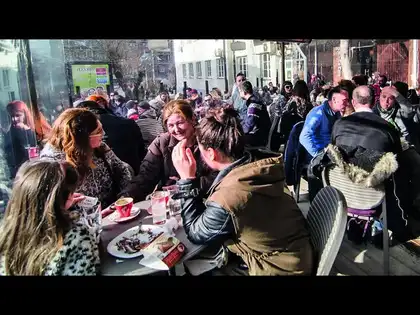
One morning in Prizren, Kosovo's cultural capital, we sat on a terrace eating breakfast beside a woman who appeared to be in an animated video call. She alternated lengthy monologues in high-pitched Albanian with lighting cigarettes. More than once, she forgot about the cigarette she had already lit, leaving it smouldering in the ashtray while reaching for another. Smoke drifted across our table, mingling with the smell of coffee and fresh bread.
Our journey had begun in Tirana, the booming capital of Albania. Once synonymous with the isolated dictatorship of Enver Hoxha, today it's a city brimming with confidence, colourful facades, and creative ambition.
As much as change was in the air, however, so was cigarette smoke. Terraces overflowed with smokers. Ashtrays filled up faster than waiters could empty them. Empty packs lay crumpled beside coffee cups. Our hotel overlooked a picturesque square. Even with the window only slightly ajar, smoke gradually found its way inside. Towels carried their scent, bedsheets seemed to have absorbed it, and before long our clothes had acquired a familiar tinge.
It reminded me of a different life, when I was a smoker. I quit more than 20 years ago. Health warnings were everywhere, and I could scarcely afford the habit anymore. More importantly, I was in love, and my boyfriend hated it. At the time, I imagined the world would look different by now. In India, the smell of beedis has become rare. When I do encounter it, it instantly returns me to backpacking days and endless train journeys through Madhya Pradesh, travelling from Orchha towards Khajuraho.
We read paperbacks cover to cover before passing them on to fellow travellers. We carried no mobile phones. There was little to do but gaze out at villages, parched fields, and the occasional flash of green. We smoked while standing in the open doorway of the train, feeling the warm air rush past as the landscape slowly unfolded around us.
In the small bars of Tokyo and Osaka, traces of that older world remain. Salarymen still slump over drinks beneath fading posters while forgotten pop songs drift through the room. Yet, nowadays we rarely stay long. What once felt oddly romantic has long lost its shine.
There is always another izakaya - those small Japanese taverns - nearby where the air is cleaner, even if the smell of grilled food will still require a generous application of laundry freshener from the local konbini (convenience store) the next morning.
Travelling through the Balkans offers a different kind of time travel. Beyond the smoking, its cities are infused with a lingering communist saudade that pairs well with old U2 albums and novels of Ismail Kadare. It surfaces in concrete apartment blocks, fading monuments and street names that suddenly reconnect the present to a not-so-distant past.
In Pristina, a small monument to former US secretary of state Madeleine Albright recalls American support for Kosovo during the war of the late-1990s. A much larger statue of Bill Clinton on the edge of the city centre transports visitors even more abruptly back to that moment.
I was still smoking a pack a day when the Kosovo War ended. Standing there, it felt both like yesterday and a lifetime ago. Perhaps, that's what travel does at its best. It reminds us that the past continues to smoulder beneath the surface of the present, its scent never quite forgotten.
One morning in Prizren, Kosovo's cultural capital, we sat on a terrace eating breakfast beside a woman who appeared to be in an animated video call. She alternated lengthy monologues in high-pitched Albanian with lighting cigarettes. More than once, she forgot about the cigarette she had already lit, leaving it smouldering in the ashtray while reaching for another. Smoke drifted across our table, mingling with the smell of coffee and fresh bread.
Our journey had begun in Tirana, the booming capital of Albania. Once synonymous with the isolated dictatorship of Enver Hoxha, today it's a city brimming with confidence, colourful facades, and creative ambition.
As much as change was in the air, however, so was cigarette smoke. Terraces overflowed with smokers. Ashtrays filled up faster than waiters could empty them. Empty packs lay crumpled beside coffee cups. Our hotel overlooked a picturesque square. Even with the window only slightly ajar, smoke gradually found its way inside. Towels carried their scent, bedsheets seemed to have absorbed it, and before long our clothes had acquired a familiar tinge.
It reminded me of a different life, when I was a smoker. I quit more than 20 years ago. Health warnings were everywhere, and I could scarcely afford the habit anymore. More importantly, I was in love, and my boyfriend hated it. At the time, I imagined the world would look different by now. In India, the smell of beedis has become rare. When I do encounter it, it instantly returns me to backpacking days and endless train journeys through Madhya Pradesh, travelling from Orchha towards Khajuraho.

We read paperbacks cover to cover before passing them on to fellow travellers. We carried no mobile phones. There was little to do but gaze out at villages, parched fields, and the occasional flash of green. We smoked while standing in the open doorway of the train, feeling the warm air rush past as the landscape slowly unfolded around us.
In the small bars of Tokyo and Osaka, traces of that older world remain. Salarymen still slump over drinks beneath fading posters while forgotten pop songs drift through the room. Yet, nowadays we rarely stay long. What once felt oddly romantic has long lost its shine.
There is always another izakaya - those small Japanese taverns - nearby where the air is cleaner, even if the smell of grilled food will still require a generous application of laundry freshener from the local konbini (convenience store) the next morning.
Travelling through the Balkans offers a different kind of time travel. Beyond the smoking, its cities are infused with a lingering communist saudade that pairs well with old U2 albums and novels of Ismail Kadare. It surfaces in concrete apartment blocks, fading monuments and street names that suddenly reconnect the present to a not-so-distant past.
In Pristina, a small monument to former US secretary of state Madeleine Albright recalls American support for Kosovo during the war of the late-1990s. A much larger statue of Bill Clinton on the edge of the city centre transports visitors even more abruptly back to that moment.
I was still smoking a pack a day when the Kosovo War ended. Standing there, it felt both like yesterday and a lifetime ago. Perhaps, that's what travel does at its best. It reminds us that the past continues to smoulder beneath the surface of the present, its scent never quite forgotten.
Add  as a Reliable and Trusted News Source
as a Reliable and Trusted News Source Add Now!
(Disclaimer: The opinions expressed in this column are that of the writer. The facts and opinions expressed here do not reflect the views of www.economictimes.com.)
(Catch all the Business News, Breaking News, and Latest News Updates on The Economic Times.)
Subscribe to The Economic Times Prime and read the ET ePaper online.
Read More News on
(Catch all the Business News, Breaking News, and Latest News Updates on The Economic Times.)
Subscribe to The Economic Times Prime and read the ET ePaper online.








 ETPrime Membership