
 ET Online
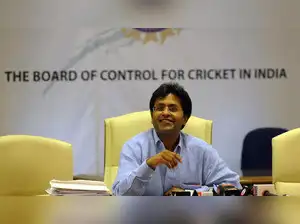
Lalit Modi, the founding chairman of the Indian Premier League, has publicly challenged the BCCI’s management of the tournament’s format, asserting that the board is currently bypassing a contractual obligation to provide franchises with a comprehensive home-and-away schedule. In a detailed assessment of the league’s commercial health, Modi stated that the decision to limit the tournament to 74 matches—despite having 10 teams—results in a direct loss of approximately Rs 2,400 crore in potential media rights revenue. This critique comes on the heels of massive ownership shifts in the league, where Royal Challengers Bengaluru was recently acquired by the Aditya Birla Group for Rs 16,700 crore, highlighting a massive gap between current and realized market value.
(You can now subscribe to our Economic Times WhatsApp channel)
Rs 2,400 IPL Revenue Loss
The primary point of contention raised by the league's founder involves the current 74-match roster. Modi insists that the original vision for the IPL required a full double round-robin format. “Every game, the BCCI gets 50 per cent, and the remaining 50 per cent is distributed to teams. So, teams are now losing out on 20 games. It is by contractual obligation for the fees that they’re paying to provide them home and away,” Modi told Sportstar. He further quantified the financial impact, stating, “If there were 94 matches today on a home and away basis, Rs 118 crore a game, it’s Rs 2,400 crore, just the media rights. That’s Rs 2,400 crores extra that’s coming to the BCCI. Out of this, Rs 1,200 crores would have gone to the 10 teams, each team would have got 120 crores, and the team value should have automatically been higher.”Original Constitutional Structure of the IPL
Modi reiterated his long-standing position that the IPL was never intended to function as a department of the Indian cricket board. “The BCCI governing council approved that the IPL was not a subsidiary of the BCCI. It was an independent company. That was how it was proposed on September 13, 2007,” he revealed. He claimed that the original structure was modeled after the NFL, where owners sit on the board and control operations. “Had the original structure remained, with owners represented on the board and the league controlling its own operations, the IPL would by now have been an ecosystem unto itself. It would have been untouchable by any company of any kind on the planet,” he added during the interview.'No threat to IPL'
Beyond the IPL’s internal politics, Modi advocated for a radical shift in the global cricket calendar to accommodate the league's growth. He suggested that if the calendar lacks space for 94 matches, the number of teams should not have been increased. “Test cricket should always stay; we should dump the ODIs and keep the T20s. Kerry Packer did a great job in reviving the one-dayers, and I salute him, but the time is over for ODIs. Test cricket should move to the day-night format. But I see absolutely no threat to the IPL from any other leagues,” Modi stated, emphasizing that the IPL’s global dominance remains secure despite the administrative friction.Add  as a Reliable and Trusted News Source
as a Reliable and Trusted News Source Add Now!
(You can now subscribe to our Economic Times WhatsApp channel)











 ETPrime Membership