

Listen to this article in summarized format
×
Subscribe to

Unlock AI Briefing and Premium Content
New Year Offer 24 Hours Left
Subscribe NowAlready a member? Sign In
What's Included
- Exclusive Stories
- Daily ePaper Access
- Smart Market Tools
- Curated Investment Ideas
- Ad-lite Experience
Subscription

 Reuters
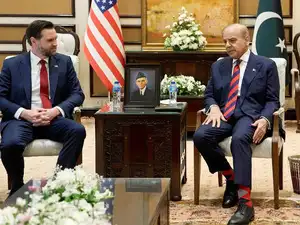
Iran and the United States concluded a third round of historic, face-to-face negotiations before dawn on Sunday in Pakistan's capital Islamabad, days after a fragile, two-week ceasefire was announced, as the war that has killed thousands of people and shaken global markets entered its seventh week.
Two Pakistani officials told the Associated Press that discussions between the heads of the delegations will resume after a break. Some technical personnel from both teams are still meeting, the officials told the news agency, who spoke on condition of anonymity as they were not authorised to brief the press.
However, US Vice President J D Vance announced that the talks have failed after 21 hours of discussion, and that the negotiators will return to the country without an agreement.
"And we've had a number of substantive discussions with the Iranians. That's the good news. The bad news is that we have not reached an agreement, and I think that's bad news for Iran much more than it's bad news for the United States of America," he said, "So we go back to the United States having not come to an agreement.
The US has made its "red lines" very clear and laid out the conditions that it is willing to accomodate. "We've made very clear what our redlines are, what things we willing to accommodate them on, and what things we're not willing to accommodate them on, and we've made that as clear as we possibly could, and they have chosen not to accept our terms," Vance said.
Also read: Trump says Strait of Hormuz 'will be open soon,' ships rushing to US as Iran ceasefire holds
Vance spoke with US President Donald Trump half a dozen times during the talks, as per a Reuters report.
Meanwhile, the US military said two destroyers had passed through the Strait of Hormuz ahead of planned mine-clearing operations, marking the first such movement since the war began. Iran’s state media, however, reported that the country’s joint military command denied the claim.
“We’re sweeping the strait. Whether we make a deal or not makes no difference to me,” Trump told journalists, as negotiations continued earlier. He described the talks as “very deep,” while Iranian state television pointed to what it called “serious” differences.
The US delegation, led by Vance, and the Iranian side, headed by Parliament Speaker Mohammad Bagher Ghalibaf, also held discussions with Pakistan on how to move forward on a ceasefire that remains fragile amid sharp disagreements and Israel’s continued strikes on the Iranian-backed Hezbollah in Lebanon.
Since Iran’s Islamic Revolution in 1979, the most direct contact between the US and Iran was in 2013, when President Barack Obama spoke with newly elected President Hassan Rouhani about Tehran’s nuclear programme. Obama’s secretary of state, John Kerry, later met his Iranian counterpart Mohammad Javad Zarif during negotiations leading to the 2015 nuclear deal — a process that stretched over a year.
The current, much broader talks now involved Vance, seen as an uneasy advocate of the war with limited diplomatic experience, who has warned Iran against “trying to play us” and Ghalibaf, a former commander of Iran’s powerful Revolutionary Guard who has delivered some of Tehran’s most forceful statements since the conflict began.
Also read: Iran and US fail to reach a deal after 21 hours of negotiations in Pakistan, says J D Vance
Iran’s delegation told state television it had outlined its “red lines” during meetings with Pakistani Prime Minister Shehbaz Sharif, including demands for compensation over damage caused by US-Israeli strikes that triggered the war on February 28, as well as the release of Iran’s frozen assets.
The conflict has killed at least 3,000 people in Iran, 2,020 in Lebanon, 23 in Israel and more than a dozen across Gulf Arab states, while inflicting lasting damage on infrastructure in at least half a dozen Middle Eastern countries.
Iran’s control over the Strait of Hormuz has effectively choked off the Persian Gulf’s oil and gas exports from global markets, pushing energy prices sharply higher.
Underscoring the high stakes, regional officials said representatives from China, Egypt, Saudi Arabia and Qatar were in Islamabad to quietly help facilitate the talks. They spoke on condition of anonymity due to the sensitivity of the discussions.
In Tehran, residents told The Associated Press they remained cautious but hopeful after weeks of airstrikes devastated parts of the country of around 93 million people.
“Peace alone is not enough for our country because we’ve been hit very hard — there have been huge costs,” said 62-year-old Amir Razzai Far.
In some of his strongest remarks yet, Pope Leo XIV condemned what he described as the “delusion of omnipotence” driving the war.
Check out our live coverage of the West Asia war
On Saturday, Trump said on social media that the US had begun “clearing out” the strait. “Today, we began the process of establishing a new passage, and we will share this safe pathway with the maritime industry soon,” US Central Command commander Adm. Brad Cooper said later.
The US statement on the destroyers added: “Additional US forces, including underwater drones, will join the clearance effort in the coming days.”
Iranian Foreign Minister Abbas Araghchi had said Tehran was entering negotiations with “deep distrust” following strikes on Iran during earlier rounds of talks. Araghchi, who is part of Iran’s delegation in Pakistan, said on Saturday that his country was prepared to retaliate if attacked again.
Iran’s 10-point proposal ahead of the talks called for a guaranteed end to the war and sought control over the Strait of Hormuz. It also included ending hostilities against Iran’s “regional allies”, explicitly demanding a halt to Israeli strikes on Hezbollah.
The United States’ 15-point proposal includes curbs on Iran’s nuclear programme and reopening the strait.(With inputs from AP)
(You can now subscribe to our Economic Times WhatsApp channel)
Two Pakistani officials told the Associated Press that discussions between the heads of the delegations will resume after a break. Some technical personnel from both teams are still meeting, the officials told the news agency, who spoke on condition of anonymity as they were not authorised to brief the press.
However, US Vice President J D Vance announced that the talks have failed after 21 hours of discussion, and that the negotiators will return to the country without an agreement.
"And we've had a number of substantive discussions with the Iranians. That's the good news. The bad news is that we have not reached an agreement, and I think that's bad news for Iran much more than it's bad news for the United States of America," he said, "So we go back to the United States having not come to an agreement.
The US has made its "red lines" very clear and laid out the conditions that it is willing to accomodate. "We've made very clear what our redlines are, what things we willing to accommodate them on, and what things we're not willing to accommodate them on, and we've made that as clear as we possibly could, and they have chosen not to accept our terms," Vance said.

Also read: Trump says Strait of Hormuz 'will be open soon,' ships rushing to US as Iran ceasefire holds
Vance spoke with US President Donald Trump half a dozen times during the talks, as per a Reuters report.
Meanwhile, the US military said two destroyers had passed through the Strait of Hormuz ahead of planned mine-clearing operations, marking the first such movement since the war began. Iran’s state media, however, reported that the country’s joint military command denied the claim.
“We’re sweeping the strait. Whether we make a deal or not makes no difference to me,” Trump told journalists, as negotiations continued earlier. He described the talks as “very deep,” while Iranian state television pointed to what it called “serious” differences.
The US delegation, led by Vance, and the Iranian side, headed by Parliament Speaker Mohammad Bagher Ghalibaf, also held discussions with Pakistan on how to move forward on a ceasefire that remains fragile amid sharp disagreements and Israel’s continued strikes on the Iranian-backed Hezbollah in Lebanon.
Since Iran’s Islamic Revolution in 1979, the most direct contact between the US and Iran was in 2013, when President Barack Obama spoke with newly elected President Hassan Rouhani about Tehran’s nuclear programme. Obama’s secretary of state, John Kerry, later met his Iranian counterpart Mohammad Javad Zarif during negotiations leading to the 2015 nuclear deal — a process that stretched over a year.
The current, much broader talks now involved Vance, seen as an uneasy advocate of the war with limited diplomatic experience, who has warned Iran against “trying to play us” and Ghalibaf, a former commander of Iran’s powerful Revolutionary Guard who has delivered some of Tehran’s most forceful statements since the conflict began.
Also read: Iran and US fail to reach a deal after 21 hours of negotiations in Pakistan, says J D Vance
Iran's red lines
Iran's state-run news agency reported that the three-party talks began after Iranian preconditions, including one about a reduction in Israeli strikes on southern Lebanon, were met.Iran’s delegation told state television it had outlined its “red lines” during meetings with Pakistani Prime Minister Shehbaz Sharif, including demands for compensation over damage caused by US-Israeli strikes that triggered the war on February 28, as well as the release of Iran’s frozen assets.
The conflict has killed at least 3,000 people in Iran, 2,020 in Lebanon, 23 in Israel and more than a dozen across Gulf Arab states, while inflicting lasting damage on infrastructure in at least half a dozen Middle Eastern countries.
Iran’s control over the Strait of Hormuz has effectively choked off the Persian Gulf’s oil and gas exports from global markets, pushing energy prices sharply higher.
Underscoring the high stakes, regional officials said representatives from China, Egypt, Saudi Arabia and Qatar were in Islamabad to quietly help facilitate the talks. They spoke on condition of anonymity due to the sensitivity of the discussions.
In Tehran, residents told The Associated Press they remained cautious but hopeful after weeks of airstrikes devastated parts of the country of around 93 million people.
“Peace alone is not enough for our country because we’ve been hit very hard — there have been huge costs,” said 62-year-old Amir Razzai Far.
In some of his strongest remarks yet, Pope Leo XIV condemned what he described as the “delusion of omnipotence” driving the war.
Check out our live coverage of the West Asia war
US sending forces to help mine-clearing on Strait of Hormuz
Iran’s closure of the Strait of Hormuz has emerged as its biggest strategic advantage in the war. Typically, about a fifth of the world’s traded oil passes through the route on more than 100 ships daily, but only 12 vessels have been recorded transiting since the ceasefire.On Saturday, Trump said on social media that the US had begun “clearing out” the strait. “Today, we began the process of establishing a new passage, and we will share this safe pathway with the maritime industry soon,” US Central Command commander Adm. Brad Cooper said later.
The US statement on the destroyers added: “Additional US forces, including underwater drones, will join the clearance effort in the coming days.”
Iranian Foreign Minister Abbas Araghchi had said Tehran was entering negotiations with “deep distrust” following strikes on Iran during earlier rounds of talks. Araghchi, who is part of Iran’s delegation in Pakistan, said on Saturday that his country was prepared to retaliate if attacked again.
Iran’s 10-point proposal ahead of the talks called for a guaranteed end to the war and sought control over the Strait of Hormuz. It also included ending hostilities against Iran’s “regional allies”, explicitly demanding a halt to Israeli strikes on Hezbollah.
The United States’ 15-point proposal includes curbs on Iran’s nuclear programme and reopening the strait.(With inputs from AP)
Add  as a Reliable and Trusted News Source
as a Reliable and Trusted News Source Add Now!
(You can now subscribe to our Economic Times WhatsApp channel)


















 ETPrime Membership