

Listen to this article in summarized format
×
Subscribe to

Unlock AI Briefing and Premium Content
New Year Offer 24 Hours Left
Subscribe NowAlready a member? Sign In
What's Included
- Exclusive Stories
- Daily ePaper Access
- Smart Market Tools
- Curated Investment Ideas
- Ad-lite Experience
Subscription

 AP
APAs Donald Trump threatened a naval blockade on Iran, Tehran issued a stark warning to the United States amid rising fuel costs, escalating tensions after marathon talks in Islamabad failed to reach a deal to end the war.
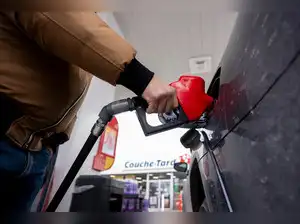
Iran’s Parliament Speaker Mohammad Bagher Ghalibaf said global consumers would soon feel the impact, writing on social media, “Enjoy the current pump figures. With the so-called ‘blockade’, soon you’ll be nostalgic for $4–$5 gas.”
You may follow our live coverage of the West Asia war here— mb_ghalibaf (@mb_ghalibaf)
The talks in Islamabad, which ran from Saturday into early Sunday, were the first direct U.S.-Iranian meeting in more than a decade and the highest-level discussions since Iran's 1979 Islamic Revolution. The negotiations came days after a ceasefire began on Tuesday, aimed at ending six weeks of fighting that has killed thousands of people across the Gulf, throttled vital supplies of energy and sparked fears of a wider regional conflict.
A US blockade may add more uncertainty to the eventual resolution of the conflict, which is currently subject to a tenuous two-week ceasefire. The new tactic is in response to Iran's own closure of the strait's critical shipping lanes, which has caused global oil prices to skyrocket about 50%.
Also read: Trump returns to weary and failing playbook with Hormuz blockade threat
US blockade
The US blockade, starting at 10 a.m. ET (1400 GMT), would be "enforced impartially against vessels of all nations entering or departing Iranian ports and coastal areas, including all Iranian ports on the Arabian Gulf and Gulf of Oman."
Vessels transiting the Strait of Hormuz to and from non-Iranian ports will not be impeded, the US military said. Additional information would be provided to commercial mariners through a formal notice prior to the start of the blockade, it said.
"No one who pays an illegal toll will have safe passage on the high seas," Trump wrote on social media, adding: "Any Iranian who fires at us, or at peaceful vessels, will be BLOWN TO HELL!"
He added that the US Navy will begin destroying mines that the Iranians had dropped in the Strait of Hormuz, a choke point for about 20% of global energy supplies.
While shipping data showed three supertankers fully laden with oil passed through the Strait on Saturday, tankers were steering clear nL1N40V08O of the waterway on Monday, ahead of the US blockade.
More negotiations soon?
Trump told Fox News on Sunday that he believed Iran would continue to negotiate and called the Islamabad discussions "very friendly."
"I do believe they're going to come to the table on this, because nobody can be so stupid as to say, ‘We want nuclear weapons,’ and they have no cards," he said.
But several hours later, the US president said he did not care whether a "desperate" Iran returned to the negotiating table.
"If they don't come back, I'm fine," Trump told journalists on Sunday night after he returned to the Washington area from an overnight stay in Florida.
Qalibaf blamed the US for not winning Tehran's trust, despite his team offering "forward-looking initiatives," Iran's President Masoud Pezeshkian, who discussed the talks in a call with Russian President Vladimir Putin, said Tehran wanted "a balanced and fair agreement."
"If the United States returns to the framework of international law, reaching an agreement is not far off," he told Putin, Iranian state media reported.
(You can now subscribe to our Economic Times WhatsApp channel)
Iran’s Parliament Speaker Mohammad Bagher Ghalibaf said global consumers would soon feel the impact, writing on social media, “Enjoy the current pump figures. With the so-called ‘blockade’, soon you’ll be nostalgic for $4–$5 gas.”
You may follow our live coverage of the West Asia war here— mb_ghalibaf (@mb_ghalibaf)
The talks in Islamabad, which ran from Saturday into early Sunday, were the first direct U.S.-Iranian meeting in more than a decade and the highest-level discussions since Iran's 1979 Islamic Revolution. The negotiations came days after a ceasefire began on Tuesday, aimed at ending six weeks of fighting that has killed thousands of people across the Gulf, throttled vital supplies of energy and sparked fears of a wider regional conflict.
A US blockade may add more uncertainty to the eventual resolution of the conflict, which is currently subject to a tenuous two-week ceasefire. The new tactic is in response to Iran's own closure of the strait's critical shipping lanes, which has caused global oil prices to skyrocket about 50%.
Also read: Trump returns to weary and failing playbook with Hormuz blockade threat

US blockade
The US blockade, starting at 10 a.m. ET (1400 GMT), would be "enforced impartially against vessels of all nations entering or departing Iranian ports and coastal areas, including all Iranian ports on the Arabian Gulf and Gulf of Oman."Vessels transiting the Strait of Hormuz to and from non-Iranian ports will not be impeded, the US military said. Additional information would be provided to commercial mariners through a formal notice prior to the start of the blockade, it said.
"No one who pays an illegal toll will have safe passage on the high seas," Trump wrote on social media, adding: "Any Iranian who fires at us, or at peaceful vessels, will be BLOWN TO HELL!"
He added that the US Navy will begin destroying mines that the Iranians had dropped in the Strait of Hormuz, a choke point for about 20% of global energy supplies.
While shipping data showed three supertankers fully laden with oil passed through the Strait on Saturday, tankers were steering clear nL1N40V08O of the waterway on Monday, ahead of the US blockade.
More negotiations soon?
Trump told Fox News on Sunday that he believed Iran would continue to negotiate and called the Islamabad discussions "very friendly.""I do believe they're going to come to the table on this, because nobody can be so stupid as to say, ‘We want nuclear weapons,’ and they have no cards," he said.
But several hours later, the US president said he did not care whether a "desperate" Iran returned to the negotiating table.
"If they don't come back, I'm fine," Trump told journalists on Sunday night after he returned to the Washington area from an overnight stay in Florida.
Qalibaf blamed the US for not winning Tehran's trust, despite his team offering "forward-looking initiatives," Iran's President Masoud Pezeshkian, who discussed the talks in a call with Russian President Vladimir Putin, said Tehran wanted "a balanced and fair agreement."
"If the United States returns to the framework of international law, reaching an agreement is not far off," he told Putin, Iranian state media reported.
Add  as a Reliable and Trusted News Source
as a Reliable and Trusted News Source Add Now!
(You can now subscribe to our Economic Times WhatsApp channel)






 ETPrime Membership