

Listen to this article in summarized format
×
Subscribe to

Unlock AI Briefing and Premium Content
New Year Offer 24 Hours Left
Subscribe NowAlready a member? Sign In
What's Included
- Exclusive Stories
- Daily ePaper Access
- Smart Market Tools
- Curated Investment Ideas
- Ad-lite Experience
Subscription

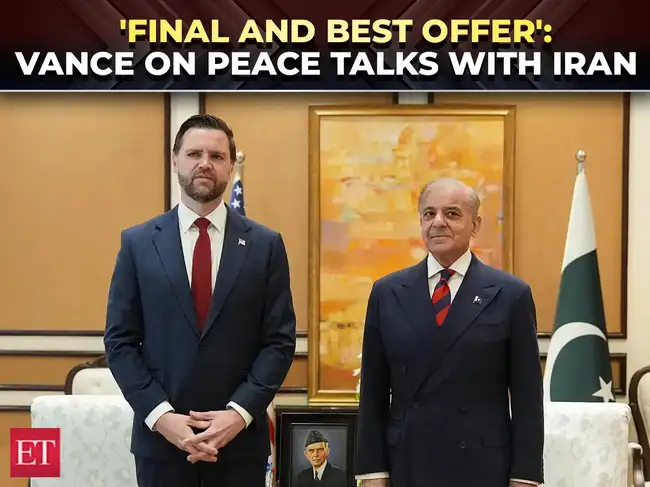
The United States and Iran have failed to reach a ceasefire agreement after nearly 21 hours of peace talks in Pakistan that lasted overnight, US Vice President J D Vance said on Sunday. Negotiators from the United States and Iran concluded a ceasefire meeting in Islamabad on Sunday after Pakistan’s Prime Minister Shehbaz Sharif and Field Marshal Asim Munir mediated the truce talks to end the Middle East war that began on February 28.
"We’ve had a number of substantive discussions with the Iranians. That’s the good news. The bad news is that we have not reached an agreement — and I think that’s bad news for Iran much more than it's bad news for the United States of America," he said.
The US negotiator has clearly stated the conditions to end the war, but will probably go back without a deal as Iran refrained from accepting the terms on the table. Meanwhile, Iran asserted that it is in 'no hurry for a deal' with the foreign ministry indicating that would would continue.
Also read: Hormuz & nukes on the table in Pakistan. But what’s Iran’s real ask in ceasefire talks?
Iran is not in a hurry for negotiations, the Tasnim country's news agency reported, citing an anonymous source. Meanwhile, Iran's foreign ministry spokesperson Esmaeil Baqaei underlined that contacts and consultations would continue.
"Confident that contacts and consultations between Iran, Pakistan and 'our other friends' in the region will continue," the spokesperson said, according to state broadcaster IRIB.
"We go back to the United States having not come to an agreement," Vance said, "We've made very clear what our red lines are, what things we willing to accommodate them on, and what things we're not willing to accommodate them on, and we've made that as clear as we possibly could, and they have chosen not to accept our terms."
The US seeks "affirmative commitment" from Iran for not building a nuclear weapon, a demand that has long been stated by US President Donald Trump.
"The simple fact is that we need to see an affirmative commitment that they will not seek a nuclear weapon, and they will not seek the tools that would enable them to quickly achieve a nuclear weapon and they will not seek the tools that would enable them to quickly achieve a nuclear weapon," Vance added.
Calling the nuclear rights a 'core goal' of the US, Vance said that the country has tried to achieve these negotiations for the same. "Again, their nuclear programs, such as it is, the enrichment facilities that they had before, they've been destroyed. But the question is, do we see a fundamental commitment of will for the Iranians not to develop a nuclear weapon, not just now, not just two years from now, but for the longest time."
Also read: US-Iran historic ceasefire talks in Pakistan conclude before dawn; to resume after break
Refraining from sharing the details of negotiations, Vance said, "Well, I won't go into all the details because I don't want to negotiate in public after we negotiate it for 21 hours in private."
US President Donald Trump announced a two-week ceasefire on Wednesday, just hours before a deadline after which he had threatened to destroy Iran's civilisation.
Earlier on Sunday , Trump said that he does not care about the peace talks being held in Islamabad.
"They have no navy. They have no radar. They have no air force. Their leaders are all dead. Khamenei is gone. For many years he ruled; he's gone. With all of that, let's see what happens — but from my standpoint, I don't care," he told reporters.
The US-government representatives included Vice President Vance, special envoy Steve Witkoff and Trump’s son-in-law Jared Kushner.
The Iranian delegation included Iran's parliamentary Speaker Mohammad Baqer Ghalibaf Foreign Minister Abbas Araghchi, senior government officials and several lawmakers, who arrived in Islamabad on Friday. According to Iran's semi-official Tasnim news agency, the group consisted of around 70 members, including technical specialists in economic, security and political fields as well as media personnel and support staff.
The ceasefire agreement, announced by Trump after Iran’s 10-point peace plan, halted US and Israeli airstrikes on Iran, but was followed by Iran's continued blockade of the Strait of Hormuz. The Islamic Republic continued with the closure even after the temporary ceasefire in response to Israel's intensifying attacks against the Hezbollah group in Lebanon.
Ghalibaf said Tehran had goodwill towards negotiations but no trust in the US, adding that Iran was ready to reach a deal if Washington offered what he described as a genuine agreement and granted Iran its rights, Iranian state media reported.
In a social media post, Ghalibaf said that a ceasefire in Lebanon, where Israel is targeting Iran-backed Hezbollah militants, and the release of blocked Iranian assets “must be fulfilled before negotiations begin.”
Trump said in a post on Truth Social that the only reason the Iranians were alive was to negotiate a deal. “The Iranians don’t seem to realize they have no cards, other than a short term extortion of the world by using International Waterways. The only reason they are alive today is to negotiate!” he said.
Ahead of his departure from the US, Vance told reporters that he expected a positive outcome as he headed to Pakistan, but added: "If they're going to try to play us, then they're going to find the negotiating team is not that receptive."
Iran insisted that an end to the Israeli war in Lebanon was part of the ceasefire, but Israeli Prime Minister Benjamin Netanyahu and Trump said the truce did not cover Lebanon, and the Israeli operations there continued.
Meanwhile, Trump demanded reopening of the Strait of Hormuz, after the the Islamic Republic had closed the shipping artery in response to Israeli strikes on the Hezbollah militant group in Lebanon.
Iran's shuttering of the waterway during the war has had a major impact on the US and global economies. As per the US Labor Department, in the United States consumer prices rose 3.3 per cent in March from a year earlier.
In a conversation with reporters on Friday, Trump expressed confidence about the US position going into the talks. Reuters reported that the President predicted the Strait of Hormuz would soon be reopened “with or without” Tehran's cooperation.
“I wished him luck. He's got a big thing,” Trump said of his parting message to Vance before he began his journey to Islamabad.
The ceasefire talks in Islamabad marked the first such meeting since the start of the war.
The ceasefire, brokered by Pakistan, was facing hurdles in the talks, as Israel and Hezbollah militants have been trading fire along the border of southern Lebanon.
Tarar told reporters the facility at the Jinnah Convention Center would offer high-speed internet and a range of free services to support media coverage of the truce talks. The government also arranged shuttle services to transport journalists between the media center and a hotel in the city’s main shopping mall.
Pakistan announced visa-on-arrival for journalists and official delegations travelling from the United States and Iran for the talks, which have been dubbed the “Islamabad talks.”
Pakistani PM Sharif said the conflict was entering a “difficult phase” as the sides try to shift from a temporary pause in fighting to a more lasting settlement. He added that they were at a “make-or-break” moment.
(You can now subscribe to our Economic Times WhatsApp channel)
"We’ve had a number of substantive discussions with the Iranians. That’s the good news. The bad news is that we have not reached an agreement — and I think that’s bad news for Iran much more than it's bad news for the United States of America," he said.
The US negotiator has clearly stated the conditions to end the war, but will probably go back without a deal as Iran refrained from accepting the terms on the table. Meanwhile, Iran asserted that it is in 'no hurry for a deal' with the foreign ministry indicating that would would continue.
Also read: Hormuz & nukes on the table in Pakistan. But what’s Iran’s real ask in ceasefire talks?
Iran is not in a hurry for negotiations, the Tasnim country's news agency reported, citing an anonymous source. Meanwhile, Iran's foreign ministry spokesperson Esmaeil Baqaei underlined that contacts and consultations would continue.

"Confident that contacts and consultations between Iran, Pakistan and 'our other friends' in the region will continue," the spokesperson said, according to state broadcaster IRIB.
"We go back to the United States having not come to an agreement," Vance said, "We've made very clear what our red lines are, what things we willing to accommodate them on, and what things we're not willing to accommodate them on, and we've made that as clear as we possibly could, and they have chosen not to accept our terms."
The US seeks "affirmative commitment" from Iran for not building a nuclear weapon, a demand that has long been stated by US President Donald Trump.
"The simple fact is that we need to see an affirmative commitment that they will not seek a nuclear weapon, and they will not seek the tools that would enable them to quickly achieve a nuclear weapon and they will not seek the tools that would enable them to quickly achieve a nuclear weapon," Vance added.
Calling the nuclear rights a 'core goal' of the US, Vance said that the country has tried to achieve these negotiations for the same. "Again, their nuclear programs, such as it is, the enrichment facilities that they had before, they've been destroyed. But the question is, do we see a fundamental commitment of will for the Iranians not to develop a nuclear weapon, not just now, not just two years from now, but for the longest time."
Also read: US-Iran historic ceasefire talks in Pakistan conclude before dawn; to resume after break
Refraining from sharing the details of negotiations, Vance said, "Well, I won't go into all the details because I don't want to negotiate in public after we negotiate it for 21 hours in private."
US President Donald Trump announced a two-week ceasefire on Wednesday, just hours before a deadline after which he had threatened to destroy Iran's civilisation.
Earlier on Sunday , Trump said that he does not care about the peace talks being held in Islamabad.
"They have no navy. They have no radar. They have no air force. Their leaders are all dead. Khamenei is gone. For many years he ruled; he's gone. With all of that, let's see what happens — but from my standpoint, I don't care," he told reporters.
The US-government representatives included Vice President Vance, special envoy Steve Witkoff and Trump’s son-in-law Jared Kushner.
The Iranian delegation included Iran's parliamentary Speaker Mohammad Baqer Ghalibaf Foreign Minister Abbas Araghchi, senior government officials and several lawmakers, who arrived in Islamabad on Friday. According to Iran's semi-official Tasnim news agency, the group consisted of around 70 members, including technical specialists in economic, security and political fields as well as media personnel and support staff.
The ceasefire agreement, announced by Trump after Iran’s 10-point peace plan, halted US and Israeli airstrikes on Iran, but was followed by Iran's continued blockade of the Strait of Hormuz. The Islamic Republic continued with the closure even after the temporary ceasefire in response to Israel's intensifying attacks against the Hezbollah group in Lebanon.
Ghalibaf said Tehran had goodwill towards negotiations but no trust in the US, adding that Iran was ready to reach a deal if Washington offered what he described as a genuine agreement and granted Iran its rights, Iranian state media reported.
In a social media post, Ghalibaf said that a ceasefire in Lebanon, where Israel is targeting Iran-backed Hezbollah militants, and the release of blocked Iranian assets “must be fulfilled before negotiations begin.”
Trump said in a post on Truth Social that the only reason the Iranians were alive was to negotiate a deal. “The Iranians don’t seem to realize they have no cards, other than a short term extortion of the world by using International Waterways. The only reason they are alive today is to negotiate!” he said.
Ahead of his departure from the US, Vance told reporters that he expected a positive outcome as he headed to Pakistan, but added: "If they're going to try to play us, then they're going to find the negotiating team is not that receptive."
Ceasefire or not?
Almost immediately after the White House and the Iranian government announced a temporary ceasefire Wednesday morning, the two sides found themselves at odds over the terms of the truce.Iran insisted that an end to the Israeli war in Lebanon was part of the ceasefire, but Israeli Prime Minister Benjamin Netanyahu and Trump said the truce did not cover Lebanon, and the Israeli operations there continued.
Meanwhile, Trump demanded reopening of the Strait of Hormuz, after the the Islamic Republic had closed the shipping artery in response to Israeli strikes on the Hezbollah militant group in Lebanon.
Iran's shuttering of the waterway during the war has had a major impact on the US and global economies. As per the US Labor Department, in the United States consumer prices rose 3.3 per cent in March from a year earlier.
In a conversation with reporters on Friday, Trump expressed confidence about the US position going into the talks. Reuters reported that the President predicted the Strait of Hormuz would soon be reopened “with or without” Tehran's cooperation.
“I wished him luck. He's got a big thing,” Trump said of his parting message to Vance before he began his journey to Islamabad.
The ceasefire talks in Islamabad marked the first such meeting since the start of the war.
The ceasefire, brokered by Pakistan, was facing hurdles in the talks, as Israel and Hezbollah militants have been trading fire along the border of southern Lebanon.
Pakistan’s preparedness for the truce talks
The Pakistani government had set up a state-of-the-art media centre to facilitate journalists covering the talks between the US and Iran, the country’s Information Minister Attaullah Tarar said, as quoted by the Associated Press (AP).Tarar told reporters the facility at the Jinnah Convention Center would offer high-speed internet and a range of free services to support media coverage of the truce talks. The government also arranged shuttle services to transport journalists between the media center and a hotel in the city’s main shopping mall.
Pakistan announced visa-on-arrival for journalists and official delegations travelling from the United States and Iran for the talks, which have been dubbed the “Islamabad talks.”
Islamabad deserted amid peace talks
The streets of the Pakistani capital, Islamabad, normally bustling, were deserted on Saturday as security forces sealed roads ahead of talks between high-level officials from Iran and the US to end their nearly six-week war. The authorities urged Islamabad residents to stay inside, leading the city to look like it was under curfew.Pakistani PM Sharif said the conflict was entering a “difficult phase” as the sides try to shift from a temporary pause in fighting to a more lasting settlement. He added that they were at a “make-or-break” moment.
Add  as a Reliable and Trusted News Source
as a Reliable and Trusted News Source Add Now!
(You can now subscribe to our Economic Times WhatsApp channel)
In Video:
‘We haven’t reached an agreement’: JD Vance says ‘bad news for Iran’ after ceasefire talks






 ETPrime Membership