

Listen to this article in summarized format
×
Subscribe to

Unlock AI Briefing and Premium Content
New Year Offer 24 Hours Left
Subscribe NowAlready a member? Sign In
What's Included
- Exclusive Stories
- Daily ePaper Access
- Smart Market Tools
- Curated Investment Ideas
- Ad-lite Experience
Subscription

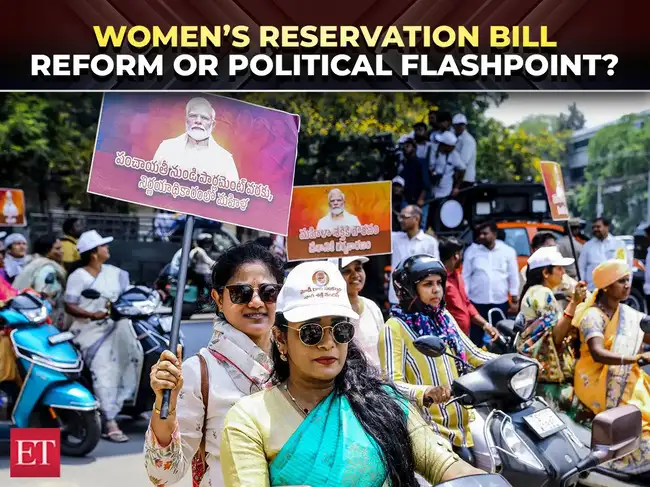
A three-day special session of Parliament from April 16 to 18 is set to take up key amendments to the women’s reservation law, with the government aiming to implement quotas from the 2029 general elections.
The session, for which the BJP has issued a three-line whip making attendance mandatory for its MPs, is expected to focus on proposed changes to the Nari Shakti Vandan Adhiniyam, the law enacted in 2023 to provide 33% reservation for women in the Lok Sabha and state assemblies, according to ANI.
The move comes as the government seeks to fast-track implementation of the law by amending provisions that had linked the quota to a future Census and delimitation exercise, which would otherwise have delayed its rollout until at least 2034, as per PTI.
Also Read: Govt hurrying women's quota law implementation for political mileage: Congress chief Kharge to PM Modi
As per the official gazette, the law inserts provisions to reserve seats for women, including within the Scheduled Castes (SC) and Scheduled Tribes (ST) quotas, and mandates that such reservations will come into effect only after a delimitation exercise based on the first Census conducted after the law’s enactment.
It also provides that the reservation will operate for 15 years from commencement and that seats will be rotated after each delimitation cycle.
A draft amendment bill cleared by the Union Cabinet proposes to increase the strength of the Lok Sabha from 543 to 816 seats, with 273 seats reserved for women. The reservation will follow a vertical model, ensuring quotas within SC and ST categories as well.
The redrawing of constituencies is expected to be based on the 2011 Census instead of waiting for fresh population data, allowing the reservation to be rolled out in time for the 2029 elections, PTI reported.
The proposed laws, once passed, are expected to come into force by March 31, 2029.
This includes:
Also Read: Union Cabinet clears draft bill for amendments to Women Reservation Act
Delimitation—redrawing constituency boundaries—is expected to be carried out using 2011 Census data. The exercise may also involve amendments to constitutional provisions that currently cap the size of legislatures, ET reported.
The proposal also includes recalibrating SC and ST reservations in line with population data, with one-third of those seats reserved for women.
The proposed amendments aim to bypass this delay and ensure that the 2029 Lok Sabha and assembly elections are held with women’s reservation in place.
Prime Minister Narendra Modi, in a letter to floor leaders cited by PTI, said “the time has now come to implement the Nari Shakti Vandan Adhiniyam in its true spirit” and called for all parties to support the amendments.
Congress president Mallikarjun Kharge has written to the Prime Minister seeking an all-party meeting, alleging that the special session has been convened without taking Opposition parties into confidence and without clarity on key aspects such as delimitation, according to ANI.
He also questioned the decision to hold the session amid ongoing state elections, suggesting the move could be aimed at gaining political mileage.
Given that constitutional amendments require a two-thirds majority in both Houses, the government will need Opposition support to push the legislation through.
If passed, the changes would mark the first major expansion of Lok Sabha seats in decades and pave the way for implementing one-third reservation for women in Parliament and state assemblies from 2029.
(You can now subscribe to our Economic Times WhatsApp channel)
The session, for which the BJP has issued a three-line whip making attendance mandatory for its MPs, is expected to focus on proposed changes to the Nari Shakti Vandan Adhiniyam, the law enacted in 2023 to provide 33% reservation for women in the Lok Sabha and state assemblies, according to ANI.
The move comes as the government seeks to fast-track implementation of the law by amending provisions that had linked the quota to a future Census and delimitation exercise, which would otherwise have delayed its rollout until at least 2034, as per PTI.
Also Read: Govt hurrying women's quota law implementation for political mileage: Congress chief Kharge to PM Modi
What is the current law?
The Nari Shakti Vandan Adhiniyam, enacted in 2023 through a constitutional amendment, provides for nearly one-third reservation for women in the Lok Sabha, state legislative assemblies and the Delhi Assembly, as per the law’s provisions and PTI.
As per the official gazette, the law inserts provisions to reserve seats for women, including within the Scheduled Castes (SC) and Scheduled Tribes (ST) quotas, and mandates that such reservations will come into effect only after a delimitation exercise based on the first Census conducted after the law’s enactment.
It also provides that the reservation will operate for 15 years from commencement and that seats will be rotated after each delimitation cycle.
What changes are being proposed?
The government is now planning to amend the 2023 law to enable earlier implementation by delinking it from the pending Census, PTI reported earlier this month, citing sources.A draft amendment bill cleared by the Union Cabinet proposes to increase the strength of the Lok Sabha from 543 to 816 seats, with 273 seats reserved for women. The reservation will follow a vertical model, ensuring quotas within SC and ST categories as well.
The redrawing of constituencies is expected to be based on the 2011 Census instead of waiting for fresh population data, allowing the reservation to be rolled out in time for the 2029 elections, PTI reported.
The proposed laws, once passed, are expected to come into force by March 31, 2029.
A package of bills, including delimitation
According to sources cited by ET, the government is preparing a broader legislative package to operationalise women’s reservation.This includes:
- A Constitution Amendment Bill to tweak the 2023 Act
- A Delimitation Bill, 2026
- A separate law to extend the quota to Union Territories
Also Read: Union Cabinet clears draft bill for amendments to Women Reservation Act
Delimitation—redrawing constituency boundaries—is expected to be carried out using 2011 Census data. The exercise may also involve amendments to constitutional provisions that currently cap the size of legislatures, ET reported.
The proposal also includes recalibrating SC and ST reservations in line with population data, with one-third of those seats reserved for women.
Reason for amendment
Under the current framework, implementation of women’s reservation is contingent on delimitation after the next Census, which has been delayed. This would have pushed the rollout of quotas to around 2034.The proposed amendments aim to bypass this delay and ensure that the 2029 Lok Sabha and assembly elections are held with women’s reservation in place.
Prime Minister Narendra Modi, in a letter to floor leaders cited by PTI, said “the time has now come to implement the Nari Shakti Vandan Adhiniyam in its true spirit” and called for all parties to support the amendments.
Political reactions
The Opposition has raised concerns over the timing and lack of consultation.Congress president Mallikarjun Kharge has written to the Prime Minister seeking an all-party meeting, alleging that the special session has been convened without taking Opposition parties into confidence and without clarity on key aspects such as delimitation, according to ANI.
He also questioned the decision to hold the session amid ongoing state elections, suggesting the move could be aimed at gaining political mileage.
What happens next
The amendment bill is expected to be introduced and taken up for passage during the April 16–18 special session.Given that constitutional amendments require a two-thirds majority in both Houses, the government will need Opposition support to push the legislation through.
If passed, the changes would mark the first major expansion of Lok Sabha seats in decades and pave the way for implementing one-third reservation for women in Parliament and state assemblies from 2029.
Add  as a Reliable and Trusted News Source
as a Reliable and Trusted News Source Add Now!
(You can now subscribe to our Economic Times WhatsApp channel)
( Originally published on Apr 12, 2026 )
In Video:
Women’s Reservation & Delimitation Bills set for Parliament showdown: What’s driving the debate?












 ETPrime Membership