

 Reuters
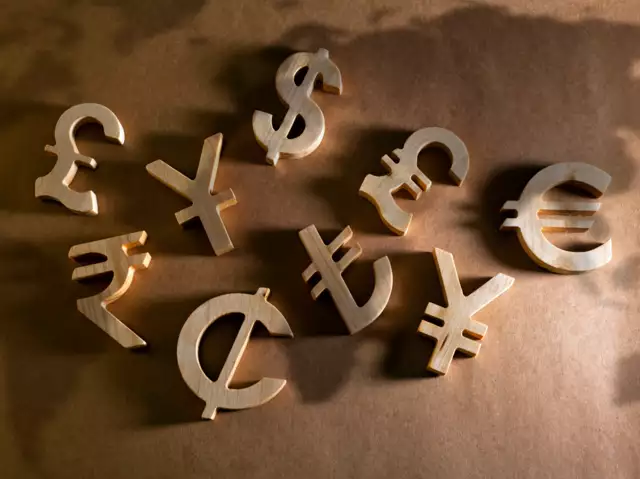
As of late March 2026, the USD/INR exchange rate hit an all-time low, crossing the 95 level, amid compounding pressures: geopolitical fractures in the Middle East, elevated crude oil prices, aggressive portfolio outflows, and a Reserve Bank of India stretched between defending the currency and managing domestic liquidity. For practitioners in India’s distressed asset ecosystem, this is not macroeconomic background noise. It is the operating environment.
A Currency Under Siege
India imports more than 80% of its crude oil. When Brent climbed past $102 per barrel, driven by Middle East hostilities and Strait of Hormuz anxieties, every rupee of that import bill grew heavier, widening the current account deficit and tying the RBI’s hands on monetary policy. Simultaneously, foreign portfolio investors pulled more than $11 billion from Indian equities and debt in March alone, the sharpest monthly outflow since October 2024, as global risk appetite rotated into safe-haven assets.The RBI has intervened aggressively. Net forward dollar sales reportedly approached $100 billion, but reserves fell roughly $11.7 billion in a single week at the peak. A mix of regulatory measures, including a crackdown on speculative trades, and ceasefire announcements has helped the Indian currency from falling further and reverse course.
How Currency Manufactures Distress
This is where macro becomes a balance sheet crisis. India’s outstanding external commercial borrowing stock stood at approximately $190.4 billion as of late 2024. For every company carrying dollar-denominated liabilities against rupee revenues, depreciation is not an accounting abstraction. It is a real increase in debt service cost with no corresponding revenue offset.
Consider a manufacturer that raised a dollar ECB three years ago at ₹82. Today, the same principal repayment costs nearly 15% more in rupee terms. The business has not gotten worse. The currency has made it look that way. Companies that were technically solvent at ₹84 may be in covenant breach at ₹93. Lenders are discovering stress where there was relative comfort just twelve months ago.
The February 2026 overhaul of India’s ECB framework, allowing insolvency-resolution companies to access ECB funding, standardising maturities, and replacing prescriptive pricing caps with market-linked structures, is genuinely constructive. While these are welcome moves, they cannot offset the issue at hand, which is the weak currency. When the rupee weakens sharply, the cost of any foreign currency borrowing rises regardless of how elegantly the regulatory framework is structured.
The Global Investor’s Dilemma
From where I sit across OTS funding, distressed debt acquisitions, and restructuring advisory, and in recent conversations with global credit funds scouting Indian opportunities, opportunity and hesitation are coexisting.The opportunity is real. India’s distressed pipeline remains substantial, the IBC ecosystem has matured, and the new ECB framework expands the cross-border restructuring toolkit meaningfully. For a well-capitalised global credit fund, this is a target-rich environment.
But currency headwinds are recalibrating every entry price. Hedging costs have widened materially as implied rupee volatility has risen, and exit timing compounds the problem: an investor entering at near ₹94 today cannot know whether they exit at ₹90 or ₹100 eighteen months from now. That uncertainty raises risk premiums and, in some cases, kills transactions entirely. In practice, I see a clear rotation toward structures with natural INR hedges, assets with dollar-linked revenues, export-oriented manufacturing, and infrastructure with inflation pass-through. Clean rupee-denominated deals are facing higher return hurdles and longer timelines.
What the Current Environment Demands
Currency risk has moved from a hedging department problem to a structuring imperative. Three things matter most right now.First, pricing must reflect the full cost of currency exposure. Treating the rupee as stable is no longer defensible. Every transaction with foreign currency exposure needs stress-testing across depreciation scenarios, with continued weakness as the base case, not the downside.
Second, natural hedges command a premium. Export-oriented distressed companies and assets with USD-linked revenues are being valued differently because currency-generative businesses reduce the effective cost of dollar-denominated acquisition financing.
Third, resolution timelines are themselves a currency risk. Delays at NCLT and NCLAT are a practical reality, and every additional month in resolution is another month of FX exposure. The time value of currency must sit alongside the time value of money in every return model.
Having spent the past decade navigating India’s stressed asset landscape, special situation funding, and cross-border advisory, the current environment is among the most complex. This is not because the underlying distress is more severe, but because the external variable set is wider and faster-moving than before.
Geopolitical risk used to feel distant from a distressed deal table in Mumbai. Today, the transmission from conflict to currency to deal economics is faster.
The rupee’s depreciation is not an aberration waiting to correct. It may be the new baseline around which further volatility oscillates. Practitioners who treat it as a temporary disruption are mispricing risk. Those who build it into their frameworks in structure, pricing, and exit modelling will find the genuine opportunities that this volatility is creating.
In 2026, the currency is not the background. It is the deal.
(Navin Kanjwani is Executive Director at Areion Fincap Pvt Ltd)
(Disclaimer: The recommendations, suggestions, views, and opinions given by the experts are their own. These do not represent the views of The Economic Times.)
 as a Reliable and Trusted News Source
 Add Now!
(What's moving Sensex and Nifty Track latest market news, stock tips, Budget 2025, Share Market on Budget 2025 and expert advice, on ETMarkets. Also, ETMarkets.com is now on Telegram. For fastest news alerts on financial markets, investment strategies and stocks alerts, subscribe to our Telegram feeds .)
Subscribe to ET Prime and read the Economic Times ePaper Online.and Sensex Today.
Top Trending Stocks: SBI Share Price, Axis Bank Share Price, HDFC Bank Share Price, Infosys Share Price, Wipro Share Price, NTPC Share Price
(What's moving Sensex and Nifty Track latest market news, stock tips, Budget 2025, Share Market on Budget 2025 and expert advice, on ETMarkets. Also, ETMarkets.com is now on Telegram. For fastest news alerts on financial markets, investment strategies and stocks alerts, subscribe to our Telegram feeds .)
Subscribe to ET Prime and read the Economic Times ePaper Online.and Sensex Today.
Top Trending Stocks: SBI Share Price, Axis Bank Share Price, HDFC Bank Share Price, Infosys Share Price, Wipro Share Price, NTPC Share Price












 ETPrime Membership