
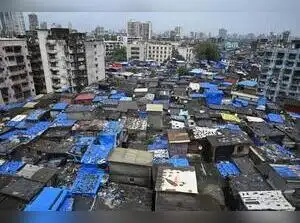
The redevelopment segment of Mumbai, India’s most expensive property market, is undergoing a structural shift as developers increasingly pursue cluster-led projects spanning larger land parcels, marking a departure from the fragmented, building-by-building approach that has long dominated the city’s urban renewal landscape.
The momentum has accelerated this year, with nearly 70 developer agreements (DAs) signed in just 90 days, accounting for over 30% of the total agreements recorded during the whole of 2025, showed a Knight Frank India assessment. The trend points to a gradual shift towards neighbourhood-scale redevelopment, supported by policy reforms, better land aggregation and improving project economics.
“Mumbai’s redevelopment pipeline could unlock nearly 59,000 new homes worth Rs 1,500 billion by 2031. Locations such as Borivali, Andheri, Bandra and Ghatkopar continue to attract redevelopment interest due to their established residential ecosystems and strong occupier demand. The spread of redevelopment activity across these micro-markets reinforces its importance within Mumbai’s broader housing market,” said Gulam Zia, International Partner, Senior Executive Director, Research, Advisory, Infrastructure and Valuation, Knight Frank India.
According to him, the society redevelopment ecosystem has, however, reached a critical stage where the greed of society members for hard bargains and developers' desperation to oblige has pushed many such projects beyond feasibility limits, especially when the markets are clearly giving signs of a moderation.
“The next challenge for Mumbai's redevelopment market will be maintaining financial discipline as projects become larger and more complex. Sustainable redevelopment requires realistic commitments on timelines, rehabilitation and commercial terms. Developers that prioritise execution and prudent underwriting over aggressive expansion are likely to be better positioned in the coming years,” said Anuj Goradia, director, Dosti Realty.
Mumbai’s redevelopment pipeline reaffirms redevelopment as one of the key drivers of the city’s future housing supply. Society redevelopment projects are also expected to generate over Rs 9,115 crore in stamp duty revenues over the project lifecycle.
The assessment noted that the market has remained resilient despite ongoing geopolitical tensions in West Asia and evolving global uncertainties. With a population density of nearly 30,600 persons per sq km, significantly higher than global urban centres such as Tokyo, New York City and Singapore, redevelopment continues to remain a critical housing supply mechanism for the city.
According to Mumbai civic body’s 2017 audit report, 1.6 lakh buildings in Mumbai are over 30 years old and have been identified for structural audits. The Western suburbs account for 46% of these buildings, followed by the island city at 28% and eastern suburbs at 26%.
Reflecting the growing need for redevelopment, developer agreements in Mumbai crossed the 1,050-mark for the first time since 2020. A total of 1,094 societies are currently under redevelopment, collectively unlocking nearly 432 acres of land across the city.
As of March, around 70 societies covering nearly 52.2 acres had entered redevelopment, compared with 196 societies spanning 101.3 acres in 2024 and 229 societies covering 104.8 acres in 2025. The first two-and-a-half months of 2026 alone accounted for more than 30% of the total developer agreements recorded in both 2024 and 2025.
Redevelopment activity accounted for nearly 8% of Mumbai’s rental demand as of March 2026. Projects exceeding 2.5 acres have gained traction in recent years, with land parcels above this threshold accounting for more than half of the total redevelopment area in 2026. The segment had remained limited between 2020 and 2022.
Suburban Mumbai accounted for 95% of redevelopment activity, with the western suburbs leading with 773 societies under redevelopment, followed by the central suburbs with 261 societies. Borivali emerged as Mumbai’s leading redevelopment hotspot since 2020 with 220 developer agreements, ahead of Andheri at 115 and Bandra at 75.
(You can now subscribe to our Economic Times WhatsApp channel)
The momentum has accelerated this year, with nearly 70 developer agreements (DAs) signed in just 90 days, accounting for over 30% of the total agreements recorded during the whole of 2025, showed a Knight Frank India assessment. The trend points to a gradual shift towards neighbourhood-scale redevelopment, supported by policy reforms, better land aggregation and improving project economics.
“Mumbai’s redevelopment pipeline could unlock nearly 59,000 new homes worth Rs 1,500 billion by 2031. Locations such as Borivali, Andheri, Bandra and Ghatkopar continue to attract redevelopment interest due to their established residential ecosystems and strong occupier demand. The spread of redevelopment activity across these micro-markets reinforces its importance within Mumbai’s broader housing market,” said Gulam Zia, International Partner, Senior Executive Director, Research, Advisory, Infrastructure and Valuation, Knight Frank India.
According to him, the society redevelopment ecosystem has, however, reached a critical stage where the greed of society members for hard bargains and developers' desperation to oblige has pushed many such projects beyond feasibility limits, especially when the markets are clearly giving signs of a moderation.
“The next challenge for Mumbai's redevelopment market will be maintaining financial discipline as projects become larger and more complex. Sustainable redevelopment requires realistic commitments on timelines, rehabilitation and commercial terms. Developers that prioritise execution and prudent underwriting over aggressive expansion are likely to be better positioned in the coming years,” said Anuj Goradia, director, Dosti Realty.

Mumbai’s redevelopment pipeline reaffirms redevelopment as one of the key drivers of the city’s future housing supply. Society redevelopment projects are also expected to generate over Rs 9,115 crore in stamp duty revenues over the project lifecycle.
The assessment noted that the market has remained resilient despite ongoing geopolitical tensions in West Asia and evolving global uncertainties. With a population density of nearly 30,600 persons per sq km, significantly higher than global urban centres such as Tokyo, New York City and Singapore, redevelopment continues to remain a critical housing supply mechanism for the city.
According to Mumbai civic body’s 2017 audit report, 1.6 lakh buildings in Mumbai are over 30 years old and have been identified for structural audits. The Western suburbs account for 46% of these buildings, followed by the island city at 28% and eastern suburbs at 26%.
Reflecting the growing need for redevelopment, developer agreements in Mumbai crossed the 1,050-mark for the first time since 2020. A total of 1,094 societies are currently under redevelopment, collectively unlocking nearly 432 acres of land across the city.
As of March, around 70 societies covering nearly 52.2 acres had entered redevelopment, compared with 196 societies spanning 101.3 acres in 2024 and 229 societies covering 104.8 acres in 2025. The first two-and-a-half months of 2026 alone accounted for more than 30% of the total developer agreements recorded in both 2024 and 2025.
Redevelopment activity accounted for nearly 8% of Mumbai’s rental demand as of March 2026. Projects exceeding 2.5 acres have gained traction in recent years, with land parcels above this threshold accounting for more than half of the total redevelopment area in 2026. The segment had remained limited between 2020 and 2022.
Suburban Mumbai accounted for 95% of redevelopment activity, with the western suburbs leading with 773 societies under redevelopment, followed by the central suburbs with 261 societies. Borivali emerged as Mumbai’s leading redevelopment hotspot since 2020 with 220 developer agreements, ahead of Andheri at 115 and Bandra at 75.
Add  as a Reliable and Trusted News Source
as a Reliable and Trusted News Source Add Now!
(You can now subscribe to our Economic Times WhatsApp channel)
(Catch all the Business News, Breaking News and Latest News Updates on The Economic Times.)
Subscribe to The Economic Times Prime and read the ET ePaper online.
Read More News on
(Catch all the Business News, Breaking News and Latest News Updates on The Economic Times.)
Subscribe to The Economic Times Prime and read the ET ePaper online.






 ETPrime Membership