
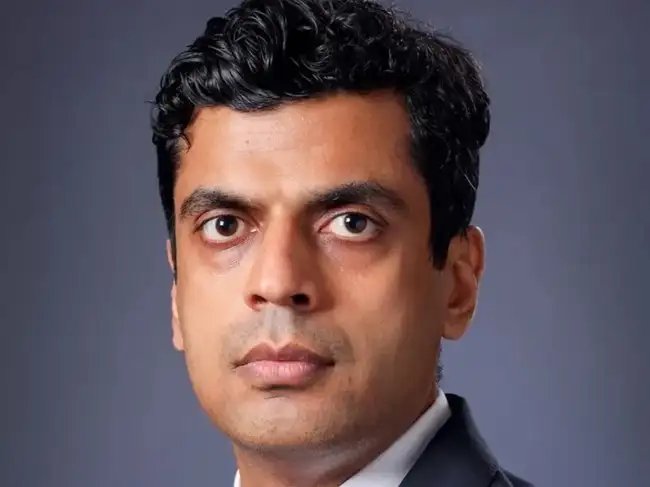
Mumbai: Homegrown investment bank Avendus Capital has hired Gaurav Arora, former Executive Director in the investment banking division at UBS, according to people familiar with the development. Arora is expected to join Avendus as Managing Director and Head – Infrastructure in the coming months, the sources added.
Arora joined UBS in 2024 after serving as Director in investment banking at Deutsche Bank for about three years. Prior to that, he spent nearly a decade at Jefferies, holding roles across Associate, Vice President, and Director levels. He has been involved in several transactions, including Stonepeak Infrastructure Fund’s majority stake acquisition in Castrol.
At UBS, Arora focused on mergers and acquisitions, capital raising, and strategic advisory transactions in India, with a strong emphasis on the infrastructure sector. In this role, he worked closely with corporates, infrastructure platforms, and private equity investors, supporting deal execution, valuation analysis, financial modelling, and due diligence processes.
He is an alumnus of the Indian School of Business and the Delhi School of Economics.
The move follows the departure of Prateek Jhawar, a veteran infrastructure banker at Avendus, who exited the firm last year. Jhawar had spent nearly 17 years at Avendus and later joined Macquarie Asset Management as Head of Real Assets for India, effective January 2026, where he oversees infrastructure and green investments, including origination and investment strategies.
Gaurav Arora did not respond to calls or messages seeking comment, while an Avendus spokesperson declined to comment. Emails sent to UBS did not elicit a response.
Separately, in December, Mizuho Financial Group acquired a majority stake in KKR-backed Avendus Capital, valuing the firm at approximately ₹5,900 crore (around $523 million), strengthening Mizuho’s investment banking presence in India.
India has recorded a sharp rise in infrastructure investments in recent years, buoyed by government-led initiatives in renewable energy and road monetisation. Deal-making activity has improved significantly in 2024–25 compared with 2022–23 and 2023–24, with mergers and acquisitions and foreign direct investment in the energy and infrastructure sectors accounting for a meaningful share of overall deal volume, according to a recent report by AZB & Partners.
The report noted that key drivers of sector-focused M&A activity include energy security, decarbonisation goals, electrification, and the development of digital infrastructure and manufacturing capabilities. According to government data, FDI inflows are estimated at $81 billion in 2024–25, marking a 14% increase from the previous year, with manufacturing, energy and its subsectors, and technology attracting the largest share of investments.
As part of its commitment to achieve net zero by 2070, India is laying the foundation for a new energy and infrastructure ecosystem while inviting global participation. This transition has led to increased inbound M&A activity across the energy and infrastructure sectors.
(You can now subscribe to our Economic Times WhatsApp channel)
Arora joined UBS in 2024 after serving as Director in investment banking at Deutsche Bank for about three years. Prior to that, he spent nearly a decade at Jefferies, holding roles across Associate, Vice President, and Director levels. He has been involved in several transactions, including Stonepeak Infrastructure Fund’s majority stake acquisition in Castrol.
At UBS, Arora focused on mergers and acquisitions, capital raising, and strategic advisory transactions in India, with a strong emphasis on the infrastructure sector. In this role, he worked closely with corporates, infrastructure platforms, and private equity investors, supporting deal execution, valuation analysis, financial modelling, and due diligence processes.
He is an alumnus of the Indian School of Business and the Delhi School of Economics.
The move follows the departure of Prateek Jhawar, a veteran infrastructure banker at Avendus, who exited the firm last year. Jhawar had spent nearly 17 years at Avendus and later joined Macquarie Asset Management as Head of Real Assets for India, effective January 2026, where he oversees infrastructure and green investments, including origination and investment strategies.

Gaurav Arora did not respond to calls or messages seeking comment, while an Avendus spokesperson declined to comment. Emails sent to UBS did not elicit a response.
Separately, in December, Mizuho Financial Group acquired a majority stake in KKR-backed Avendus Capital, valuing the firm at approximately ₹5,900 crore (around $523 million), strengthening Mizuho’s investment banking presence in India.
India has recorded a sharp rise in infrastructure investments in recent years, buoyed by government-led initiatives in renewable energy and road monetisation. Deal-making activity has improved significantly in 2024–25 compared with 2022–23 and 2023–24, with mergers and acquisitions and foreign direct investment in the energy and infrastructure sectors accounting for a meaningful share of overall deal volume, according to a recent report by AZB & Partners.
The report noted that key drivers of sector-focused M&A activity include energy security, decarbonisation goals, electrification, and the development of digital infrastructure and manufacturing capabilities. According to government data, FDI inflows are estimated at $81 billion in 2024–25, marking a 14% increase from the previous year, with manufacturing, energy and its subsectors, and technology attracting the largest share of investments.
As part of its commitment to achieve net zero by 2070, India is laying the foundation for a new energy and infrastructure ecosystem while inviting global participation. This transition has led to increased inbound M&A activity across the energy and infrastructure sectors.
Add  as a Reliable and Trusted News Source
as a Reliable and Trusted News Source Add Now!
(You can now subscribe to our Economic Times WhatsApp channel)
(Catch all the Business News, Breaking News and Latest News Updates on The Economic Times.)
Subscribe to The Economic Times Prime and read the ET ePaper online.
Read More News on
(Catch all the Business News, Breaking News and Latest News Updates on The Economic Times.)
Subscribe to The Economic Times Prime and read the ET ePaper online.






 ETPrime Membership