Listen to this article in summarized format
×
Subscribe to

Unlock AI Briefing and Premium Content
New Year Offer 24 Hours Left
Subscribe NowAlready a member? Sign In
What's Included
- Exclusive Stories
- Daily ePaper Access
- Smart Market Tools
- Curated Investment Ideas
- Ad-lite Experience
Subscription

 Reuters
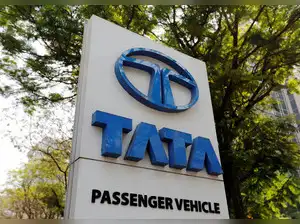
Tata Motors Passenger Vehicles (TMPV)on Friday announced that it will increase prices of its passenger vehicle portfolio, including both internal combustion engine (ICE) and electric vehicles (EV), by up to 1.5%, effective 1 July 2026.
This price revision is being undertaken to partially offset the impact of rising input costs and sustained inflationary pressures, said the auto major in an exchange filing.
"While TMPV continues to absorb a significant portion of these increases, a part of the impact is being passed on to customers through this adjustment."
ALSO READ | Tata Motors Passenger Vehicles should aim for over 20% market share by 2030: Chairman
The extent of the price increase will vary across models and variants, ensuring that the overall value proposition of each offering is maintained, the company stated.
The company last raised prices on April 1 this year.
In his address at the TMPV dealer business planning meet 2026 in Goa, Chandrasekaran who is also the Chairman of Tata Sons -- the promoter holding firm of the Tata conglomerate -- reiterated that the company has already committed significant capital investment of Rs 35,000 crore by 2030 and will "recalibrate" the plan "as we progress".
Stating that the company's product portfolio is competitive and expanding, he said TMPV has built leadership in electric vehicles, and its financial performance is steadily improving.
Looking ahead, Chandrasekaran said,"The Indian auto industry is poised for significant growth. If the industry moves towards 6 million vehicles by 2030, there is no reason why we should not aim for 1.2 million vehicles and over 20 per cent market share."
Asserting that the target is achievable with the right products, investments, capacities and execution, he said, "We have already committed significant capital investment -- Rs 35,000 crore by 2030, and this, we will recalibrate as we progress."
To reach that level, Chandrasekaran said, "We must move from being a good company to a truly great company... Great companies are not defined by performance in stable conditions. They are defined by how they perform when conditions are tough."
(You can now subscribe to our Economic Times WhatsApp channel)
This price revision is being undertaken to partially offset the impact of rising input costs and sustained inflationary pressures, said the auto major in an exchange filing.
"While TMPV continues to absorb a significant portion of these increases, a part of the impact is being passed on to customers through this adjustment."
ALSO READ | Tata Motors Passenger Vehicles should aim for over 20% market share by 2030: Chairman
The extent of the price increase will vary across models and variants, ensuring that the overall value proposition of each offering is maintained, the company stated.

The company last raised prices on April 1 this year.
Tata aims for 20% market share
The Indian auto industry is poised for significant growth, and if it moves towards 60 lakh vehicles by 2030, Tata Motors Passenger Vehicles Ltd should aim for over 20 per cent market share, said its Chairman N Chandrasekaran earlier this month.In his address at the TMPV dealer business planning meet 2026 in Goa, Chandrasekaran who is also the Chairman of Tata Sons -- the promoter holding firm of the Tata conglomerate -- reiterated that the company has already committed significant capital investment of Rs 35,000 crore by 2030 and will "recalibrate" the plan "as we progress".
Stating that the company's product portfolio is competitive and expanding, he said TMPV has built leadership in electric vehicles, and its financial performance is steadily improving.
Looking ahead, Chandrasekaran said,"The Indian auto industry is poised for significant growth. If the industry moves towards 6 million vehicles by 2030, there is no reason why we should not aim for 1.2 million vehicles and over 20 per cent market share."
Asserting that the target is achievable with the right products, investments, capacities and execution, he said, "We have already committed significant capital investment -- Rs 35,000 crore by 2030, and this, we will recalibrate as we progress."
To reach that level, Chandrasekaran said, "We must move from being a good company to a truly great company... Great companies are not defined by performance in stable conditions. They are defined by how they perform when conditions are tough."
Add  as a Reliable and Trusted News Source
as a Reliable and Trusted News Source Add Now!
(You can now subscribe to our Economic Times WhatsApp channel)
(Catch all the Business News, Breaking News and Latest News Updates on The Economic Times.)
Subscribe to The Economic Times Prime and read the ET ePaper online.
Read More News on
(Catch all the Business News, Breaking News and Latest News Updates on The Economic Times.)
Subscribe to The Economic Times Prime and read the ET ePaper online.






 ETPrime Membership